

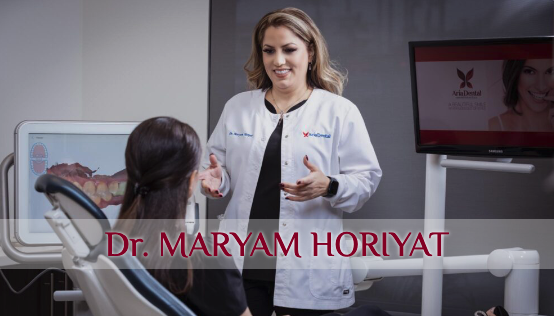




If you’ve recently been told you need your wisdom teeth removed, or you’re simply wondering what all the fuss is about, you’re far from alone. Wisdom tooth removal is one of the most frequently performed dental procedures in the United States, and millions of Americans undergo it every single year. But just how common is wisdom tooth removal, and is it always truly necessary? At Aria Dental Care, our founder Dr. Maryam Horiyat, DDS, AIAOMT, CIABDM, approaches every case with a holistic, biological, and minimally invasive philosophy, which means we never recommend a procedure unless it genuinely serves your long-term health.
In this comprehensive guide, we’ll explore how common wisdom tooth removal really is, why it’s performed so frequently, who actually needs it, and what to expect if you or a family member is facing this procedure. We’ll also address some common misconceptions and empower you to make an informed, confident decision about your oral health.
What Are Wisdom Teeth and Why Do They Cause Problems?
Wisdom teeth, technically called third molars, are the final set of permanent teeth to emerge in the human mouth. They typically appear between the ages of 17 and 25, which is why they’ve earned the nickname “wisdom teeth” (a nod to the idea that they arrive during a more mature phase of life). Most people develop four wisdom teeth, one in each corner of the mouth, though it’s not uncommon to have fewer, or in some rare cases, none at all.
From an evolutionary standpoint, wisdom teeth made perfect sense for our ancient ancestors, whose diet of raw roots, leaves, nuts, and tough meats required more grinding surface. But as the human diet evolved and became softer over millennia, our jaws gradually became smaller, too small, in most cases, to accommodate this extra set of molars comfortably.
This mismatch between jaw size and the number of teeth trying to fit into it is at the root of most wisdom tooth problems. Common issues include:
- Impaction: When a wisdom tooth cannot fully emerge through the gum because there isn’t enough space. It may remain partially or completely trapped beneath the gum and bone.
- Crowding: Wisdom teeth can push against adjacent teeth as they try to erupt, potentially disrupting alignment and even undoing years of orthodontic work.
- Infection and Pericoronitis: A partially erupted wisdom tooth creates a flap of gum tissue that traps food and bacteria, leading to painful infections known as pericoronitis.
- Cyst Formation: Impacted wisdom teeth can develop fluid-filled sacs (cysts) around them that damage surrounding bone, teeth, and nerves if left untreated.
- Decay and Gum Disease: Because wisdom teeth are so far back in the mouth, they are notoriously difficult to clean effectively, making them susceptible to cavities and periodontal disease.
How Common Is Wisdom Tooth Removal? The Statistics May Surprise You
So, exactly how common is wisdom tooth removal in the United States? The numbers are striking. According to data from the American Association of Oral and Maxillofacial Surgeons (AAOMS), approximately 10 million wisdom teeth are extracted from about 5 million people in the United States every year. That makes wisdom tooth extraction one of the most commonly performed surgical procedures in the country.
To put that in broader context:
- An estimated 85% of wisdom teeth will eventually need to be removed at some point in a person’s lifetime.
- Wisdom tooth removal accounts for a significant portion of all oral surgery procedures performed annually in the U.S.
- The procedure is most commonly performed on patients between the ages of 15 and 25, though adults of any age can require extraction.
- Research suggests that up to 35% of the population never develops wisdom teeth at all, a trait that appears to be increasing in prevalence due to evolutionary adaptation.
Globally, wisdom tooth removal is equally prevalent. In the UK, Australia, Canada, and most developed nations, third molar extraction ranks among the top oral surgical procedures performed each year. The widespread nature of this procedure reflects both the near-universal challenge of accommodating wisdom teeth in modern human jaws and the advances in dental care that have made the procedure safe, routine, and accessible.
Why Is Wisdom Tooth Extraction So Commonly Recommended?
Understanding why wisdom tooth removal is so common requires looking at both the biological factors unique to modern humans and the clinical reasoning that guides dental recommendations. There are several key reasons this procedure is so frequently advised:
Impaction Is Extremely Prevalent
Studies consistently show that the majority of wisdom teeth are impacted to some degree, meaning they cannot emerge fully and properly into the mouth. Impacted wisdom teeth may be angled toward adjacent teeth (mesially impacted), grow horizontally into the jawbone, or remain completely buried beneath the gum and bone. Impaction is a leading driver of wisdom tooth removal because impacted teeth cannot be cleaned effectively and create ongoing risks of infection, cyst formation, and damage to neighboring teeth.
Preventive Extraction to Avoid Future Complications
Many dentists recommend prophylactic (preventive) wisdom tooth removal in younger patients, typically in the late teens or early twenties, even before problems arise. The rationale is straightforward: younger patients have less developed roots and denser bone with more elasticity, making extraction easier, recovery faster, and the risk of complications lower. As patients age, wisdom tooth roots become longer and more curved, bone becomes denser, and the proximity to vital structures like the inferior alveolar nerve increases surgical complexity and risk.
However, it’s worth noting that this practice is not without debate. The American Dental Association (ADA) acknowledges that not all impacted wisdom teeth require removal and that clinical judgment should guide each individual case. At Aria Dental Care, Dr. Horiyat evaluates every patient comprehensively, using digital X-rays and 3D cone beam CT imaging where appropriate, to determine whether removal is genuinely indicated or whether watchful monitoring is the more appropriate path.
Oral Hygiene Challenges With Third Molars
Even wisdom teeth that erupt fully and in a favorable position are notoriously difficult to keep clean. Their location at the very back of the mouth makes them hard to reach with a toothbrush or floss, and food and bacteria tend to accumulate around them. Over time, this makes wisdom teeth disproportionately susceptible to cavities and gum disease, conditions that can spread to affect adjacent healthy teeth if left unchecked.
Pain, Infection, and Acute Dental Emergencies
In many cases, wisdom tooth removal is performed reactively, in response to acute pain, infection, or swelling that the patient is already experiencing. Pericoronitis (infection around the gum flap overlying a partially erupted wisdom tooth) can cause severe pain, facial swelling, difficulty swallowing, and systemic symptoms. In these situations, extraction is often the most definitive and effective solution to resolve the infection and prevent recurrence.
Who Actually Needs Wisdom Tooth Removal? Separating Fact from Myth
Not everyone who has wisdom teeth needs them removed, and this is an important distinction. At Aria Dental Care, we take a conservative, evidence-based approach to every extraction decision. Wisdom tooth removal is genuinely indicated in the following scenarios:
- The wisdom tooth is impacted and causing pain, infection, or cyst formation
- The partially erupted tooth has developed pericoronitis (recurrent gum infection around it)
- Significant decay has developed in the wisdom tooth or the adjacent second molar due to hygiene difficulties
- The wisdom tooth is causing measurable crowding or damage to adjacent teeth
- A cyst or tumor is associated with an impacted wisdom tooth
- The patient is undergoing orthodontic treatment and wisdom teeth pose a risk to tooth alignment
- The wisdom teeth cannot be adequately monitored due to their position or the patient’s health circumstances
Conversely, wisdom teeth that have fully erupted into a functional position, are properly aligned, can be effectively cleaned, and cause no symptoms or adjacent damage do not automatically require removal. Watchful waiting, with regular X-ray monitoring, may be entirely appropriate in these cases.
The key is individualized care. At Aria Dental Care, we believe that every patient deserves a thorough, personalized evaluation rather than a blanket recommendation. Dr. Horiyat takes the time to review your specific anatomy, symptoms, and long-term oral health goals before making any recommendation.
The Best Age for Wisdom Tooth Removal: Does Timing Really Matter?
One of the most common questions patients ask is: “Am I too old to have my wisdom teeth removed?” The answer is no, wisdom tooth extraction can be performed at any age when clinically indicated. However, timing does matter, and younger patients generally experience smoother extractions and faster recoveries for several reasons:
- Root Development: In the late teens and early twenties, wisdom tooth roots are typically only partially formed. Shorter, less curved roots are easier and safer to extract.
- Bone Density: Younger bone is more pliable, making it easier to remove teeth without excessive force and allowing for faster bone healing afterward.
- Nerve Proximity: As patients age, the risk that the roots of lower wisdom teeth will be in close proximity to the inferior alveolar nerve (which controls sensation in the lower lip and chin) tends to increase, elevating the risk of temporary or permanent numbness post-operatively.
- Recovery Time: Younger patients generally heal more quickly with fewer post-operative complications such as dry socket or infection.
That said, adults in their 30s, 40s, and beyond frequently and successfully undergo wisdom tooth extraction. The procedure is routine, and with proper surgical technique, pre-operative evaluation, and post-operative care, excellent outcomes are achieved across all age groups. At Aria Dental Care, Dr. Horiyat uses 3D cone beam CT scanning when needed to map the precise anatomy of your wisdom teeth and surrounding structures before surgery, ensuring the safest and most efficient approach for your specific case.

The Holistic & Biological Dentistry Approach to Wisdom Tooth Removal at Aria Dental Care
At Aria Dental Care, wisdom tooth removal isn’t just a surgical procedure, it’s a carefully considered health decision approached through the lens of biological and holistic dentistry. This means we consider the full picture of your health, not just the tooth in isolation.
Biocompatible Anesthesia and Sedation
We prioritize anesthetic and sedation protocols that minimize systemic toxicity while ensuring complete comfort throughout your procedure. Dr. Horiyat is trained in sedation dentistry and offers options ranging from local anesthesia to IV sedation, tailored to each patient’s anxiety level, health status, and procedural complexity.
Platelet-Rich Fibrin (PRF) for Enhanced Healing
One of the most exciting advances in biological oral surgery is the use of Platelet-Rich Fibrin (PRF), a concentration of your own blood’s growth factors, placed into the extraction socket to accelerate healing, reduce the risk of dry socket (alveolar osteitis), and support natural bone regeneration. This is a holistic, drug-free approach to post-operative healing that aligns perfectly with Aria Dental Care’s philosophy of working with the body’s innate healing capacity rather than against it.
Avoiding Unnecessary Extractions
In keeping with the principle of minimally invasive dentistry, we never recommend extraction unless it is clearly in the patient’s best long-term interest. For wisdom teeth that are fully erupted, well-positioned, and maintainable, we offer structured monitoring programs that include annual digital X-rays to track any changes without rushing to surgery.
Ozone Therapy for Infection Management
For patients presenting with active infection around a wisdom tooth (pericoronitis), we may use ozone therapy, a powerful, natural antimicrobial treatment, to reduce bacterial load before and after surgery. Ozone gas is one of the most effective known disinfectants and supports the body’s natural immune response without the systemic side effects of antibiotics.
What to Expect During and After Wisdom Tooth Removal
Fear of the unknown is one of the biggest barriers that stops patients from seeking timely care for problematic wisdom teeth. Here’s a clear, reassuring walkthrough of what the wisdom tooth removal process actually looks like at Aria Dental Care:
Before the Procedure
- A comprehensive examination and digital X-rays (or 3D CBCT scan if needed) are taken to assess the position, angle, and root development of your wisdom teeth.
- You’ll discuss your sedation and anesthesia preferences and receive clear pre-operative instructions, including fasting requirements if IV sedation is chosen.
- PRF preparation (if recommended) is performed on the day of surgery using a small sample of your blood, which is processed in a centrifuge.
During the Procedure
- Local anesthesia numbs the area completely. Sedation is administered if selected.
- PRF membranes or plug are placed into the socket to promote accelerated healing.
- Dissolvable or removable sutures close the extraction site. The entire procedure typically takes 30–60 minutes depending on the number and complexity of teeth removed.
After the Procedure: Recovery Timeline
- Day 1: Rest, manage swelling with ice packs (20 minutes on, 20 minutes off), and follow soft diet and medication instructions.
- Days 2–3: Swelling often peaks then begins to subside. Warm saltwater rinses (after 24 hours) help keep the area clean.
- Days 4–7: Most patients are significantly more comfortable and can return to normal activities. Avoid smoking, straws, and vigorous rinsing which can dislodge the blood clot.
- Weeks 2–4: Soft tissue heals and sutures (if non-dissolvable) are removed.
- Months 3–6: Bone remodeling and complete socket healing occur beneath the surface.

Potential Risks and Complications of Wisdom Tooth Extraction
Wisdom tooth removal is an extremely common and generally very safe procedure, but as with any surgical intervention, it carries some potential risks that patients should understand:
- Dry Socket (Alveolar Osteitis): The most common post-operative complication, occurring when the blood clot in the extraction socket becomes dislodged or dissolves prematurely, exposing the underlying bone. Symptoms include intense pain 3–5 days after extraction. The use of PRF significantly reduces this risk at Aria Dental Care.
- Nerve Injury: In rare cases, the roots of lower wisdom teeth lie very close to the inferior alveolar nerve, and removal can cause temporary or (rarely) permanent numbness or tingling in the lower lip, chin, or tongue. 3D CBCT imaging before surgery helps identify and minimize this risk.
- Infection: Post-operative infection can occur, particularly in patients with compromised immune systems or those who smoke. Proper aftercare significantly reduces this risk.
- Bleeding: Some post-operative bleeding is normal. Prolonged bleeding is rare and can usually be managed with gentle pressure and rest.
- Damage to Adjacent Teeth or Restorations: In complex impaction cases, adjacent teeth or existing restorations can occasionally be affected. Thorough pre-operative planning minimizes this risk.
It’s important to weigh these risks against the risks of not removing a problematic wisdom tooth, which include spreading infection, damage to adjacent teeth, cyst or tumor development, and worsening pain. In the vast majority of indicated cases, the benefits of removal far outweigh the risks.
What Research and Health Authorities Say About Wisdom Tooth Removal
The scientific and clinical literature on wisdom tooth removal is extensive. Here are key findings and positions from leading health authorities:
- The American Association of Oral and Maxillofacial Surgeons (AAOMS) reports that 9 out of 10 people have at least one impacted wisdom tooth, and recommends that patients have their wisdom teeth evaluated by the age of 16–19 for potential removal before full root development.
- Research published in the American Journal of Public Health found that wisdom tooth removal-related complications account for a small but significant proportion of emergency dental visits, underscoring the importance of proactive evaluation.
- The National Institute of Dental and Craniofacial Research (NIDCR), a division of the National Institutes of Health (NIH), acknowledges the prevalence and clinical significance of third molar disease and supports evidence-based clinical evaluation for each individual patient.
- The Cochrane Collaboration has reviewed evidence on prophylactic versus therapeutic wisdom tooth removal and concluded that while routine removal of asymptomatic impacted third molars is not justified in all cases, clinical judgment remains essential in each individual situation.
Conclusion: Knowledge Is Power, Let Aria Dental Care Guide Your Wisdom Tooth Decision
So, how common is wisdom tooth removal? Extremely common, but “common” doesn’t mean “automatic.” With millions of extractions performed in the United States every year, wisdom tooth removal is one of dentistry’s most routine procedures. Yet at Aria Dental Care, we believe that routine doesn’t mean rote. Every patient who sits in our chair deserves an individualized, thoughtful, and genuinely health-centered evaluation of their wisdom teeth, not a one-size-fits-all approach.
Whether your wisdom teeth are currently causing problems, you’ve been told removal may be in your future, or you simply want a second opinion on a previous recommendation, we’re here to help. Dr. Maryam Horiyat and the Aria Dental Care team bring together the precision of modern dental technology, the safety of biological dentistry principles, and the compassion of a truly patient-centered practice, all in the heart of Orange County.
Don’t let fear or uncertainty keep you from getting the answers you deserve. A healthier, more comfortable smile is just one appointment away.Schedule your wisdom tooth evaluation a Aria dental today, and take the first step toward lasting oral health with Orange County’s #1 Holistic, Biological, and Cosmetic Dental Care provider.
Frequently Asked Questions About Wisdom Tooth Removal
Q1: Is wisdom tooth removal always necessary?
No, wisdom tooth removal is not always necessary. Wisdom teeth that fully erupt into a proper position, remain healthy, can be effectively cleaned with good oral hygiene, and cause no pain or damage to adjacent teeth may not need to be extracted. However, because this ideal scenario is relatively uncommon, most people experience some degree of impaction, crowding, or hygiene difficulty with their third molars, removal is frequently recommended. The most important step is a thorough evaluation with panoramic X-rays or a 3D CBCT scan by a qualified dentist. At Aria Dental Care, Dr. Horiyat takes a conservative, evidence-based approach and will never recommend extraction unless it is genuinely in your long-term interest. If your wisdom teeth are not causing problems and can be monitored safely, we will say so honestly.
Q2: How painful is wisdom tooth removal, and what is recovery like?
Most patients are pleasantly surprised to find that the procedure itself is far more comfortable than anticipated, particularly when local anesthesia or sedation is used effectively. During the extraction, you should feel pressure and movement but no sharp pain. Post-operatively, some soreness, swelling, and mild to moderate discomfort is normal for the first 3–5 days, typically managed well with over-the-counter or prescription pain medication as directed. Most patients return to school or desk work within 3–5 days, though physical exertion should be avoided for about a week. Using PRF (Platelet-Rich Fibrin), as offered at Aria Dental Care, significantly accelerates healing and reduces post-operative discomfort. Following your after-care instructions carefully, including avoiding straws, smoking, vigorous rinsing, and hard foods, is the most important thing you can do to ensure a smooth recovery.
Q3: At what age should wisdom teeth be evaluated or removed?
Most dental professionals recommend that patients have their wisdom teeth evaluated with a panoramic X-ray between the ages of 16 and 19, before the roots are fully developed. If removal is indicated, performing it during this window typically results in a simpler, safer procedure and a faster recovery. That said, wisdom teeth can be, and frequently are, successfully removed in patients in their 20s, 30s, 40s, and beyond. There is no strict age cut-off. If you’re experiencing pain, swelling, infection, or other symptoms related to your wisdom teeth at any age, you should seek evaluation promptly rather than waiting. Delaying treatment when symptoms are present can lead to more serious complications such as spread of infection, cyst development, or irreversible damage to adjacent teeth.
Q4: What is an impacted wisdom tooth and why does it need to be removed?
An impacted wisdom tooth is one that cannot emerge fully and properly into the mouth due to insufficient space, an obstruction, or an unfavorable angle of growth. Impaction can be partial (the tooth partially breaks through the gum) or complete (the tooth remains entirely buried beneath the gum and bone). Impacted wisdom teeth are typically recommended for removal because they cannot be effectively cleaned, creating a chronic risk of infection (pericoronitis), cavities, and gum disease. They can also exert pressure on neighboring teeth, cause root resorption of the second molar, and in some cases develop cysts or tumors around them that damage the surrounding jawbone. The degree of impaction, whether mesial, distal, horizontal, or vertical, affects the complexity of the extraction procedure and is assessed through imaging before surgery.
Q5: How does Aria Dental Care’s holistic approach differ from conventional wisdom tooth removal?
At Aria Dental Care, wisdom tooth removal goes beyond simply extracting a tooth. Our holistic and biological approach means we consider your whole-body health at every step. We use the most biocompatible anesthetic and sedation options available, offer Platelet-Rich Fibrin (PRF) therapy to accelerate natural healing and reduce dry socket risk, and may incorporate ozone therapy for antimicrobial support before and after surgery. We use 3D cone beam CT imaging for complex cases to plan the safest possible surgical approach, minimizing risk to nerves and adjacent teeth. We also emphasize thorough informed consent, making sure every patient truly understands why removal is recommended, what alternatives exist, and what to realistically expect during recovery. Our goal is not just to treat your tooth, it’s to support your overall health and wellbeing through every procedure we perform.