

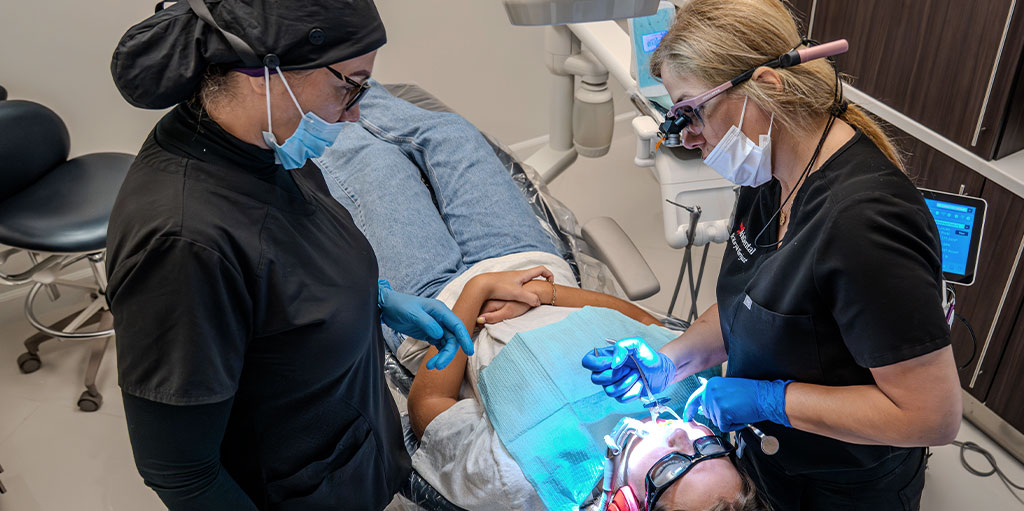





If your dentist has recommended a dental inlay, you may be wondering what exactly that means and what the process involves. Maybe you have a tooth that is too damaged for a simple filling but not so far gone that it needs a full crown. That in-between space is where a dental inlay shines, and it is one of the most conservative, natural-looking ways to restore a tooth.
The good news is that the dental inlay procedure is straightforward, comfortable, and well established. At Aria Dental Care, we place these restorations routinely, and most patients are pleasantly surprised by how smooth the experience is from start to finish.
In this guide, we will walk you through everything you need to know about the dental inlay procedure: what an inlay is, when you need one, the materials you can choose, each step of the appointment, what recovery looks like, how long the results last, and answers to the questions patients ask most. By the end, you will know exactly what to expect.
What Is a Dental Inlay?
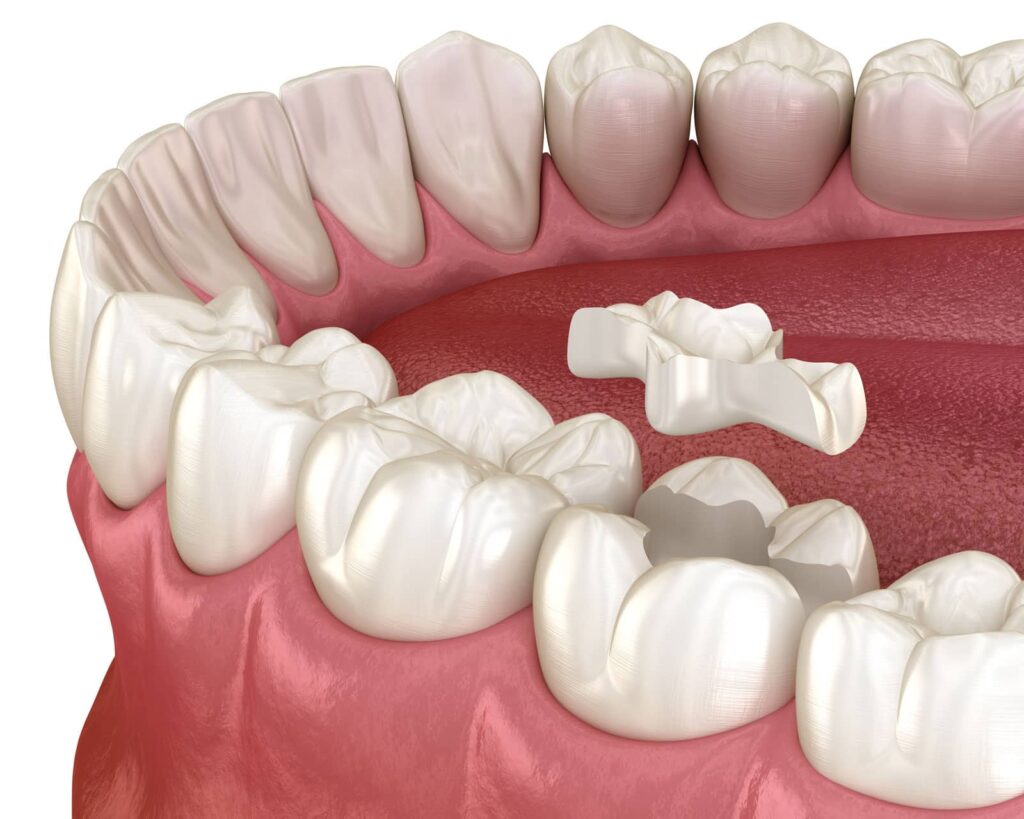
A dental inlay is a custom-made restoration that fits precisely into the chewing surface of a back tooth to repair moderate decay or damage. Think of it as a solid, pre-shaped piece that is bonded into the grooves of your tooth, sitting neatly within the cusps, which are the raised points on the biting surface.
The key word is indirect. Unlike a standard filling that your dentist shapes directly inside your mouth, a dental inlay is fabricated outside the mouth, either in a dental laboratory or with in-office digital milling technology, and then bonded into place. This allows for a more precise fit, a stronger restoration, and a smoother surface that is easy to keep clean.
According to the American Dental Association’s definition, an inlay is an intracoronal restoration made outside the oral cavity to fit the prepared tooth, restoring part of the biting surface without covering the cusp tips. That distinction, staying within the cusps, is what separates an inlay from its close cousin, the onlay.
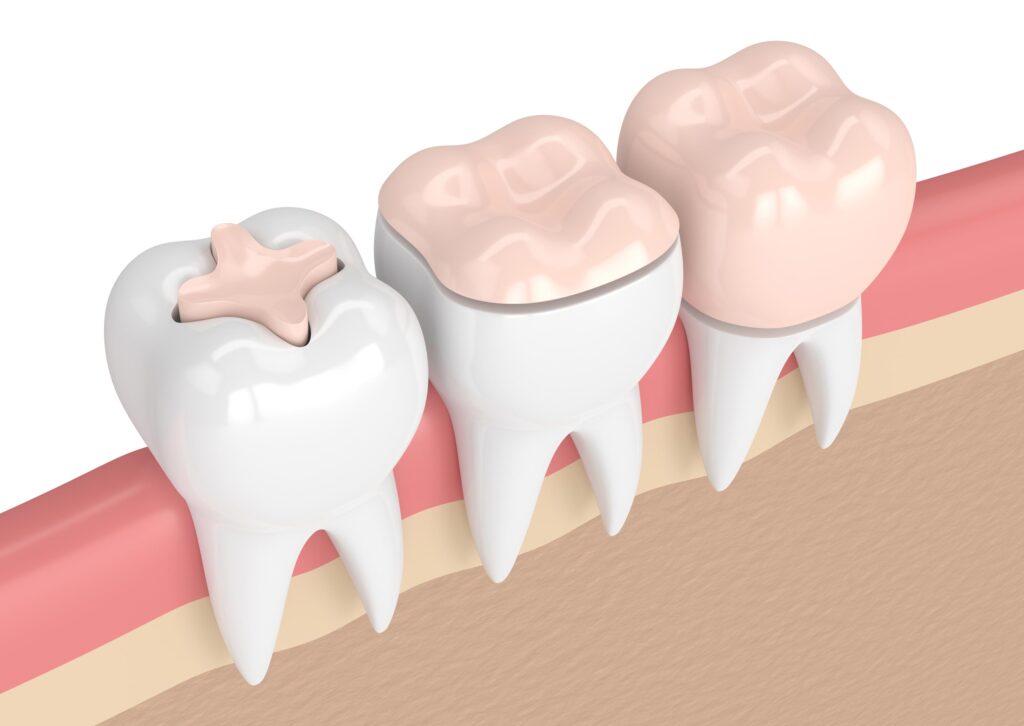
Dental Inlay vs. Filling vs. Crown
One of the most helpful ways to understand a dental inlay is to see where it sits on the spectrum of restorative options:
- Dental fillings are used for small cavities and are placed directly in a single visit. The material is soft when applied and hardened in place.
- Dental inlays handle moderate decay or damage that is too large for a reliable filling. They are custom-made and bonded for a precise, durable fit.
- Dental crowns cover the entire visible tooth and are reserved for teeth with extensive damage, large fractures, or after root canal treatment.
In short, a dental inlay is the middle ground. When a filling would be too weak and a crown would remove too much healthy tooth structure, an inlay is often the ideal choice. This conservative philosophy, preserving as much natural tooth as possible, is a core principle of both modern restorative dentistry and the holistic approach we take at Aria Dental Care.
Inlays vs. Onlays: What Is the Difference?
Inlays and onlays are often mentioned together, and they are made the same way, but they cover different amounts of the tooth:
- A dental inlay fills the area between the cusps, sitting inside the biting surface.
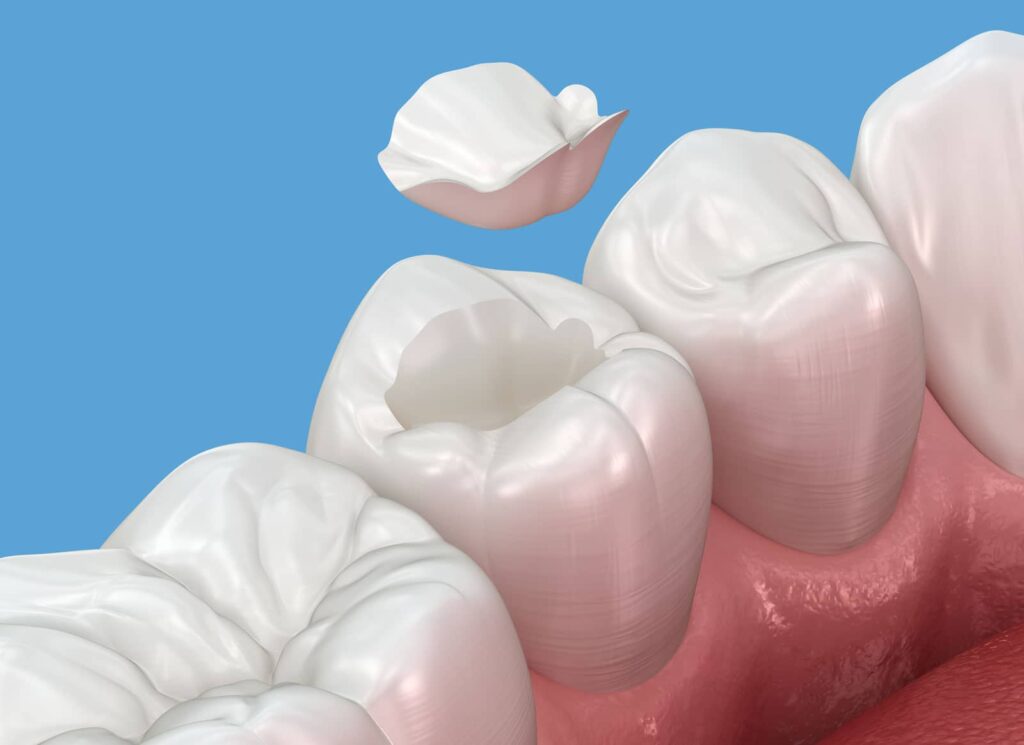
- An onlay covers one or more of the cusps, extending over the raised points of the tooth.
Both are indirect restorations, and both are more conservative than a crown. Your dentist will recommend an inlay or an onlay based on exactly how much of the tooth needs to be rebuilt. If the damage is contained within the grooves, a dental inlay is usually the answer.
When Do You Need a Dental Inlay?
A dental inlay is not the right fit for every situation, so it helps to know when this restoration is typically recommended. You may be a good candidate for a dental inlay if you have:
- Moderate tooth decay that is too large for a standard filling but has not reached the point of needing a crown
- A cracked or fractured tooth where the damage is limited to the chewing surface
- An old, failing filling that has broken down, leaked, or left the tooth weakened
- A tooth that needs added strength without sacrificing healthy structure
- A desire for a tooth-colored, metal-free restoration that blends in naturally
Back teeth, meaning molars and premolars, are the most common candidates for a dental inlay because they take the brunt of chewing forces. These teeth need a restoration that is strong enough to withstand daily grinding and biting, and an inlay delivers exactly that kind of durability.
Your dentist will confirm whether a dental inlay is appropriate after examining the tooth and taking X-rays to see the full extent of the decay or damage below the surface.
Types of Dental Inlays and Materials
One of the advantages of a dental inlay is that you have a choice of materials. Each option has its own strengths, and the right one depends on the location of the tooth, your bite, your priorities for appearance, and your preference for biocompatible, metal-free dentistry.
Porcelain and Ceramic Inlays
Porcelain and ceramic inlays are the most popular choice today, and for good reason. They are:
- Highly aesthetic, matching the natural color and translucency of enamel so the restoration is nearly invisible
- Strong and durable, standing up well to normal chewing forces
- Stain-resistant, holding their color over time better than many alternatives
- Metal-free and biocompatible, which appeals to patients who prefer holistic, mercury-free, and metal-free restorations
For patients who want a restoration that looks like a natural tooth and aligns with a biological dentistry philosophy, a ceramic or porcelain dental inlay is often the top recommendation. Research on modern glass-ceramics has shown these materials offer excellent long-term survival and reliability in everyday clinical practice.
Composite Resin Inlays
Composite resin inlays are made from a tooth-colored material that also provides a natural appearance. They tend to be:
- More affordable than porcelain or gold in many cases
- Tooth-colored for a discreet result
- Gentler on opposing teeth than harder materials
- A solid mid-range option when strength and aesthetics both matter
Composite inlays may not last quite as long as porcelain or gold in high-stress areas, but they remain a strong, conservative choice for many patients.
Gold Inlays
Gold inlays have been used in dentistry for well over a century, and they are still valued for one reason above all: durability. According to the American Dental Association, gold inlays and onlays are considered among the most durable restorations, often lasting twenty years or more, though they are also the most costly and, obviously, the least tooth-colored option.
Some patients still prefer gold for its long track record and gentleness on opposing teeth. That said, for patients seeking a metal-free, holistic approach, tooth-colored ceramic or composite inlays are usually the preferred path.
The Dental Inlay Procedure: Step by Step, Start to Finish
Here is what most patients really want to know: what actually happens during the appointment. The dental inlay procedure is typically completed in one or two visits, depending on whether your office uses same-day digital milling or a traditional dental laboratory. Let us walk through each step.
Step 1: Consultation and Examination
Every dental inlay begins with a thorough evaluation. Your dentist will:
- Examine the tooth and review your dental history
- Take X-rays to assess the depth and extent of decay or damage
- Confirm that a dental inlay is the best option compared with a filling, onlay, or crown
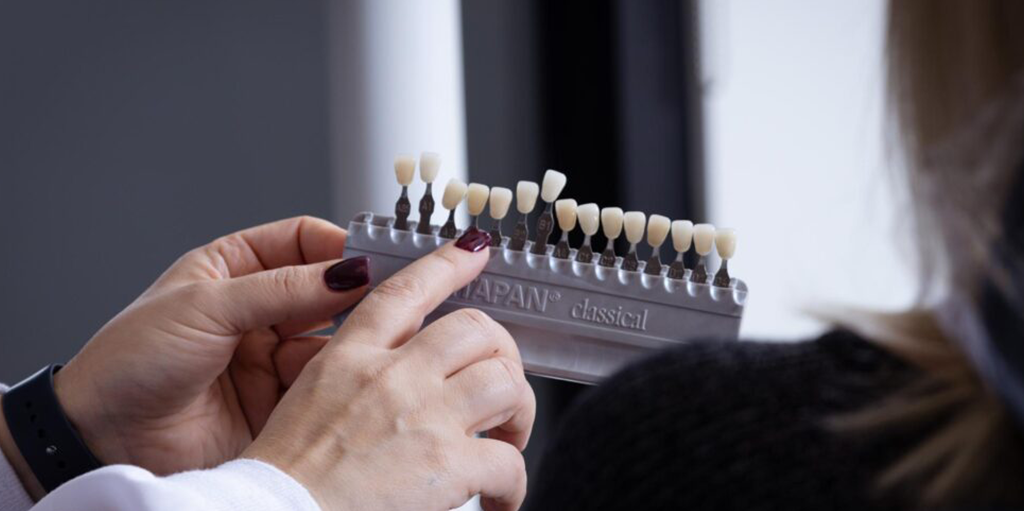
- Discuss material choices and answer your questions
This step is important. Choosing the right restoration for the right tooth is what separates a result that lasts for decades from one that fails early.
Step 2: Tooth Preparation
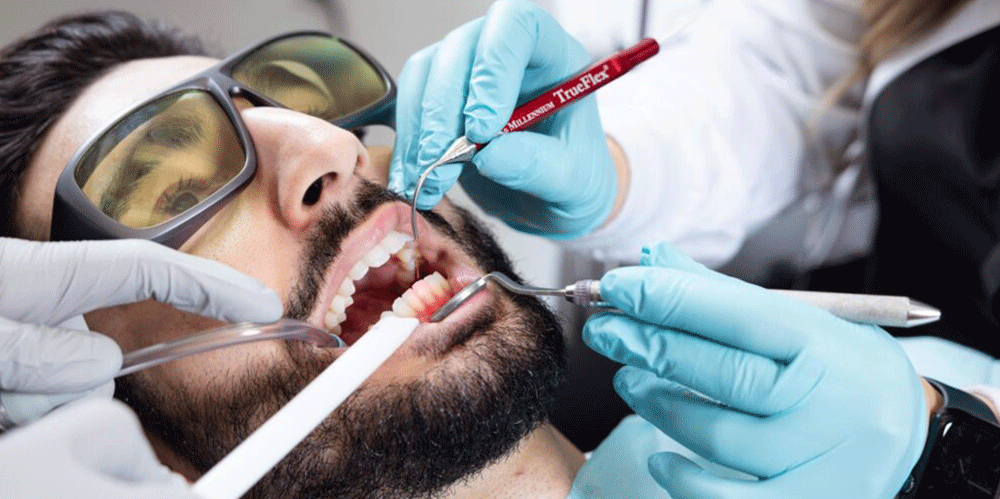
Once you and your dentist agree on a dental inlay, the tooth is gently prepared. This is usually done under local anesthesia so you stay comfortable throughout. During preparation, your dentist will:
- Numb the area so the process is painless
- Remove the decayed or damaged portion of the tooth
- Clean the cavity thoroughly
- Shape the space so the inlay will fit precisely
A defining feature of the dental inlay procedure is how conservative it is. Only the damaged tissue is removed, and far more healthy tooth structure is preserved compared with preparing a tooth for a crown. This tooth conservation is a key reason inlays are so well regarded.
Step 3: Impressions or a Digital Scan
Because a dental inlay is custom-made, your dentist needs an exact model of the prepared tooth. This is captured in one of two ways:
- A traditional impression, using a soft putty-like material that molds around the tooth
- A digital scan, using an intraoral scanner that creates a precise 3D image in minutes
Digital scanning is fast, comfortable, and highly accurate, and it is increasingly common in modern practices. Either method gives the lab or milling unit everything needed to craft an inlay that fits perfectly.
Step 4: Temporary Restoration or Same-Day Milling
What happens next depends on your dental office’s technology:
- Two-visit approach. If your inlay is being made at an outside dental laboratory, your dentist will place a temporary restoration to protect the tooth while your permanent inlay is fabricated. You will return in a couple of weeks to have it placed.
- Same-day approach. If your office uses CAD/CAM technology, which stands for computer-aided design and computer-aided manufacturing, your dental inlay can be designed and milled in-house, often allowing the entire procedure to be completed in a single visit with no temporary needed.
Both approaches produce excellent, precise results. The single-visit option is simply more convenient for many patients.
Step 5: Fabrication of the Inlay
Whether at a laboratory or chairside, this is where your custom dental inlay takes shape. Using your impression or scan, a technician or milling unit creates a restoration that matches the exact contours of your prepared tooth, in the material and shade you chose. Skilled fabrication is what gives a dental inlay its precise fit, smooth margins, and natural appearance.
Step 6: Fitting and Bonding the Inlay
At the placement appointment, your dentist will:
- Remove the temporary restoration, if you had one
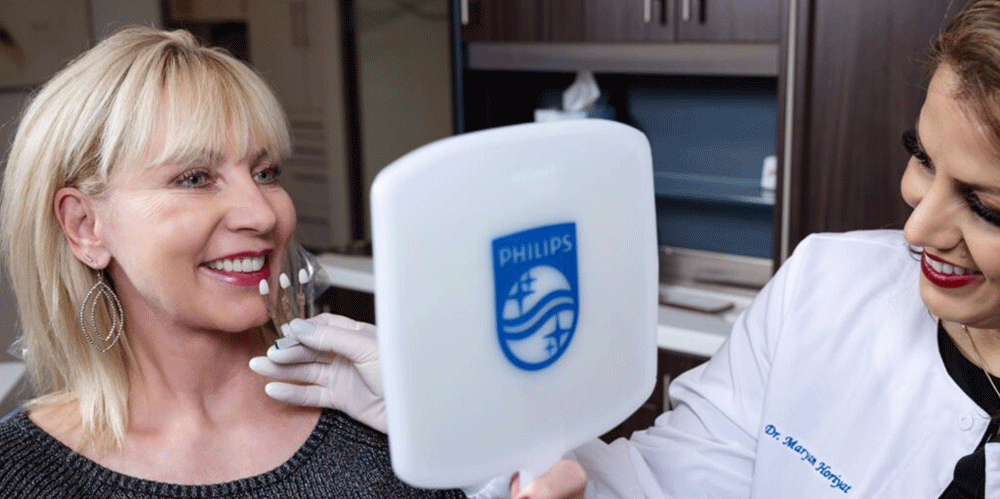
- Check the fit of your new dental inlay carefully
- Make any minor adjustments to ensure a comfortable bite
- Bond or cement the inlay securely into place
- Polish the restoration for a smooth, natural finish
The bonding step creates a tight seal and smooth margins that are friendly to your gums and easy to keep clean. Once the inlay is set, your tooth is restored to full function. Many patients say the tooth simply feels whole again.
What to Expect After Your Dental Inlay Procedure
Recovery from a dental inlay is generally easy, and most people return to their normal routine right away. Still, it helps to know what is normal.
Recovery and Sensitivity
In the first few days after your dental inlay procedure, you may notice:
- Mild sensitivity to hot or cold, which usually fades within a few days
- A slightly different feel in your bite as you adjust to the new surface
- Tenderness around the tooth, especially if the decay was deep
These sensations are typically minor and temporary. If sensitivity lingers, if your bite feels off, or if you notice a rough edge, call your dentist for a quick check. Small adjustments make a big difference and are simple to perform.
Caring for Your Dental Inlay
The best part about a dental inlay is that caring for it is no different from caring for a natural tooth. To help your restoration last as long as possible:
- Brush twice a day with fluoride toothpaste, or a fluoride-free option if that is your preference
- Floss daily to keep the margins clean and protect your gums
- Keep up with regular dental cleanings and checkups
- Avoid chewing ice, hard candy, or other hard objects
- Consider a nightguard if you clench or grind your teeth
Good home care and routine visits are what allow a well-placed dental inlay to protect your tooth for many years.
Benefits of Choosing a Dental Inlay
There is a reason dentists and patients alike appreciate this restoration. The benefits of a dental inlay include:
- Tooth conservation. Inlays preserve more healthy tooth structure than crowns, keeping your natural tooth stronger.
- Strength and durability. A custom-fitted inlay reinforces the tooth and stands up well to daily chewing.
- Natural appearance. Porcelain and composite inlays blend seamlessly with your smile.
- Precise fit. Because they are custom-made, inlays offer excellent margins and a comfortable bite.
- Easy maintenance. Smooth, well-finished surfaces support gum health and simple home care.
- Biocompatible options. Metal-free ceramic and composite choices suit patients who value a holistic approach.
For a tooth caught between a filling and a crown, the dental inlay often offers the ideal balance of strength, conservation, and beauty.
Are There Any Drawbacks or Risks?
To give you a complete and honest picture, it is worth noting a few considerations:
- More than one visit may be needed if your office does not offer same-day milling.
- Cost is higher than a filling, since inlays are custom-fabricated indirect restorations.
- Proper case selection matters. Published dental literature notes that inlays are not necessarily superior to well-placed direct restorations in every situation, so the choice should be based on the specific tooth.
- Skill dependent. As with any restoration, the quality of the preparation, fit, and bonding influences how long it lasts.
None of these are reasons to avoid a dental inlay. They are simply reasons to have the procedure done by an experienced dentist who will recommend it only when it is truly the best option for your tooth.
How Long Do Dental Inlays Last?
With good care, a dental inlay is a long-term investment. Porcelain and ceramic inlays commonly last many years, and long-term studies of ceramic restorations show strong survival rates over a decade or more. Gold inlays can last even longer, often twenty years or more, thanks to their exceptional durability.
Longevity depends on several factors:
- The material you chose
- The quality of the placement and bonding
- Your bite and whether you grind your teeth
- Your daily oral hygiene
- How consistently you keep up with dental checkups
In practical terms, a dental inlay placed in a healthy mouth and cared for well can protect your tooth for a very long time, which makes it a cost-effective choice over the life of the restoration.
Dental Inlay Cost and Insurance Considerations
Cost is a natural concern, and it is fair to address it directly. A dental inlay typically costs more than a standard filling but less than a crown, reflecting the custom fabrication involved. The exact price varies based on:
- The material selected, with gold and porcelain generally costing more than composite
- Whether the inlay is milled in-office or made at an outside laboratory
- The complexity of the tooth and the case
- Your geographic area and the practice
Many dental insurance plans provide partial coverage for inlays as a restorative treatment, though the amount varies by plan. It is always worth reviewing your benefits and asking the office to help you understand your out-of-pocket costs before treatment. When you factor in how long a quality dental inlay can last, it often represents excellent long-term value.
The Aria Dental Care Approach to Dental Inlays
At Aria Dental Care, we believe restorative dentistry should do more than fix a problem. It should protect your natural tooth, look beautiful, and support your overall health. That philosophy guides how we approach every dental inlay.
We prioritize conservative, tooth-preserving treatment, and we favor biocompatible, metal-free materials whenever they are the right clinical fit. We take the time to explain your options honestly, so you understand why an inlay, onlay, filling, or crown is being recommended, and we make sure the fit and finish of every restoration meet a high standard.
If you have a tooth that needs attention and you want a restoration that combines strength, natural beauty, and a holistic approach, we would be glad to help. To schedule a consultation or ask a question about the dental inlay procedure, visit Aria Dental.