







You wake up with a dull ache along your jaw, a headache pressing at your temples, and teeth that suddenly feel sensitive to your morning coffee. If that sounds familiar, your bite is likely trying to tell you something. Symptoms like these send thousands of people every year toward the same fork in the road: an occlusal adjustment or a night guard. Both treatments ease the stress your bite places on your teeth, muscles, and jaw joints, yet they solve the problem from opposite directions. One reshapes how your teeth come together. The other shields them while you sleep. Knowing the difference is the first step toward real, lasting relief.
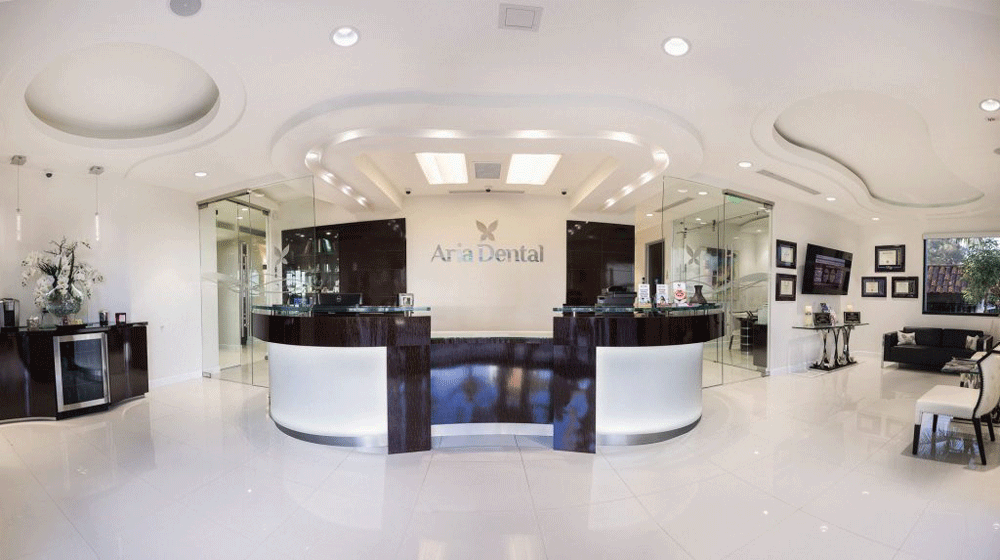
At Aria Dental Care in Mission Viejo, patients regularly ask which option is right for grinding, clenching, or unexplained jaw discomfort. The honest answer is that it depends on the root cause, the current condition of your teeth, and your long-term goals. This guide breaks down exactly what each treatment does, how the two compare side by side, and how a holistic, biologically minded dental team helps you make the right call with confidence.
What Is an Occlusal Adjustment?
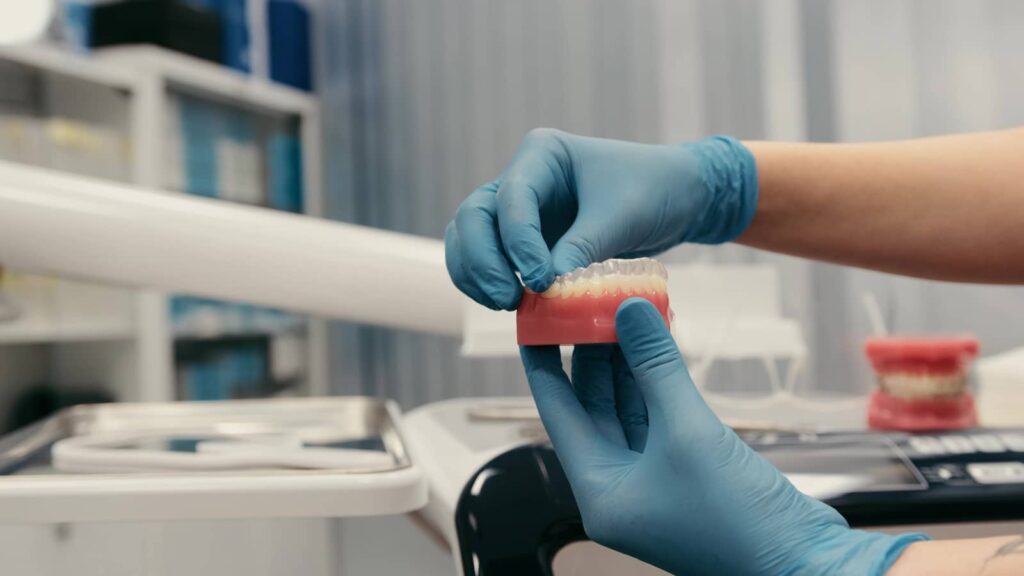
An occlusal adjustment is a precise dental procedure that reshapes the biting surfaces of your teeth so they meet evenly and share chewing forces the way nature intended. The word “occlusion” simply describes how your upper and lower teeth make contact. When that contact is uneven, a handful of teeth end up absorbing far more pressure than they were built to handle, which can set off a chain reaction of tooth wear, muscle fatigue, and joint strain.
Also known as bite equilibration or occlusal equilibration, this treatment carefully removes tiny amounts of enamel from the high spots on specific teeth. The objective is balanced, harmonious contact across the whole arch so no single tooth carries an unfair share of the load. Clinicians rely on colored marking paper, bite registration, and digital bite analysis to map exactly where the pressure points fall before altering anything. At Aria Dental, this careful, technology-guided process is part of dedicated occlusal bite correction care.
It helps to think of an occlusal adjustment as a conservative refinement rather than a dramatic reconstruction. When it is done correctly, the amount of enamel altered is minimal while the improvement in comfort can be significant. Because enamel does not grow back, this is a procedure best handled by an experienced clinician who measures twice and adjusts once.
How Does an Occlusal Adjustment Work?
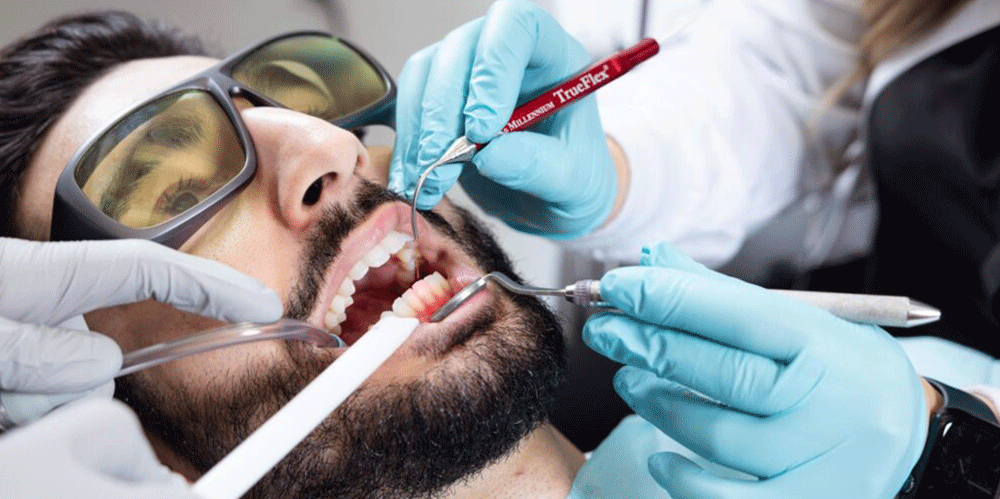
Correcting your bite alignment is methodical and comfortable. During a typical occlusal adjustment appointment, your dentist will usually:
- Analyze your bite with articulating paper, bite registration materials, and digital occlusal analysis to pinpoint premature contacts and interferences.
- Mark the high spots where teeth touch too early or too hard when you close, chew, or shift your jaw side to side.
- Reshape the enamel using a fine dental instrument, smoothing only the specific points that disrupt even contact.
- Recheck the bite repeatedly, refining a little at a time until pressure is shared evenly.
- Polish the adjusted surfaces so the teeth feel smooth and natural against the tongue.
Most bite adjustments require no anesthesia, because only the outer enamel is refined and enamel contains no nerve endings. Some cases call for more than one visit, since the muscles and jaw joint need time to settle into the new bite relationship before final refinements are made.
Signs You Might Need a Bite Adjustment
Not everyone with jaw discomfort needs an occlusal adjustment, but certain patterns point toward an uneven bite as the culprit. Consider a professional bite evaluation if you notice:
- Teeth that feel “high” or seem to hit first when you close your mouth.
- Uneven or accelerated tooth wear, chips, or flattened chewing surfaces.
- Sensitivity concentrated in specific teeth that appear to take the brunt of chewing.
- Recurring soreness in the jaw muscles or a tired feeling after meals.
- A new crown, filling, or restoration that simply does not feel right.
- Loose teeth or gum recession clustered around overworked teeth.
An accurate diagnosis matters here. Jaw pain and headaches have many possible sources, so a thorough exam is the only reliable way to confirm whether occlusal equilibration is the appropriate solution for you.
What Is a Night Guard?
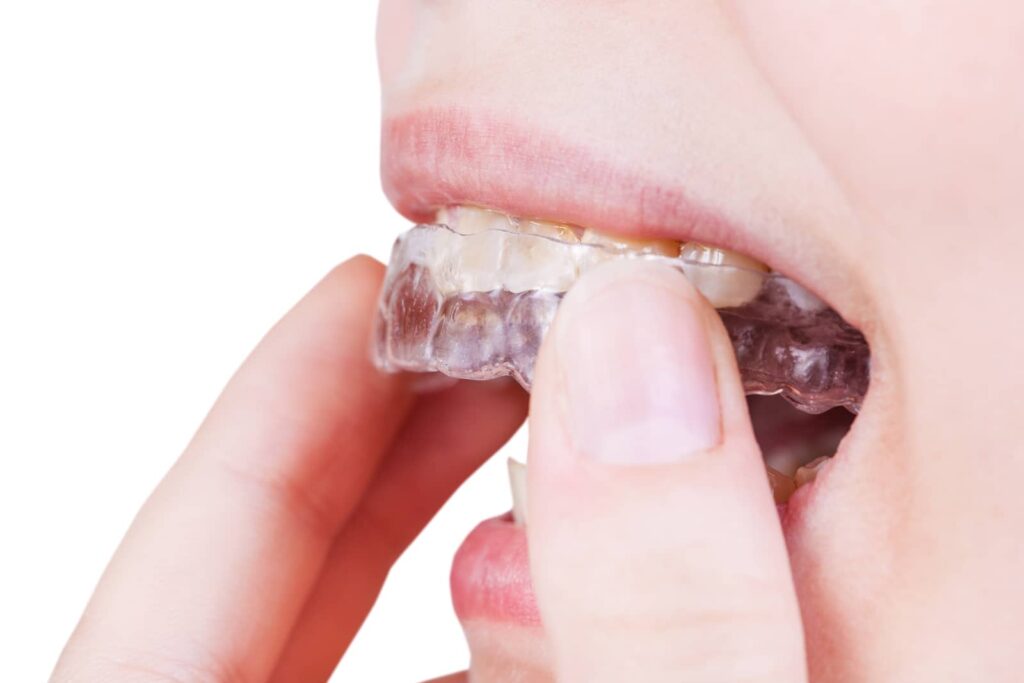
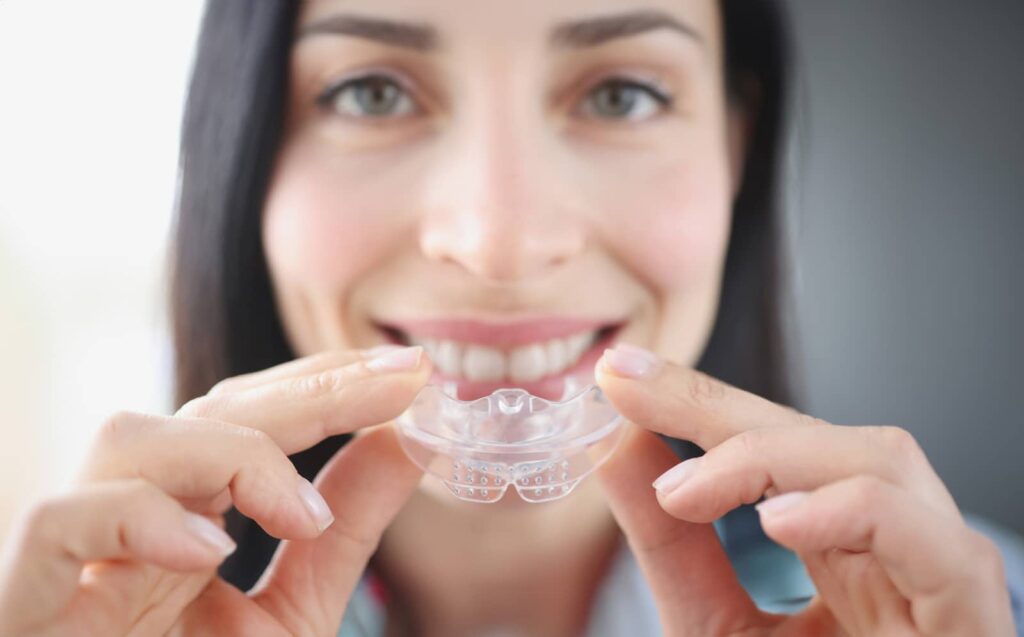
A night guard is a custom-fitted dental appliance worn over the teeth during sleep to protect them from the damaging forces of grinding and clenching. Rather than changing the shape of your teeth, it places a durable, cushioning barrier between the upper and lower arches so the enamel is spared and the muscles get a chance to relax. This is why a night guard is sometimes called an occlusal guard, bite guard, or bite splint.
Grinding and clenching, known clinically as bruxism, often happen unconsciously in the middle of the night when you have no way to stop them. According to the American Dental Association, a dentist may recommend a night guard to shield the teeth from the harm this habit can cause, and a custom guard made from a mold of your teeth delivers the closest and most comfortable fit (ADA MouthHealthy). By absorbing and redistributing pressure, a well-made guard helps prevent cracked teeth, worn enamel, and the morning headaches grinding tends to produce. A custom night guard for bruxism is one of the most common protective solutions offered at Aria Dental.
Types of Night Guards and Occlusal Guards
Night guards are not one-size-fits-all. The right style depends on how hard you grind, whether you also clench, and the health of your jaw joints. Common options include:
- Soft night guards. Made from flexible material, these suit mild, occasional grinding and tend to be the most comfortable for first-time users. They wear out faster and are not ideal for heavy clenchers.
- Hard acrylic guards. Rigid and highly durable, these are designed for moderate to severe bruxism and offer the strongest protection against powerful grinding forces.
- Dual-laminate (hybrid) guards. Soft on the inside for comfort and hard on the outside for durability, these balance protection and wearability for many patients.
- Custom versus over-the-counter guards. A dentist-fabricated appliance is molded to your exact dentition, which improves comfort, fit, and effectiveness compared with boil-and-bite versions sold in stores.
At a holistic dental practice, the material itself becomes part of the conversation. Patients who prefer metal-free and biocompatible restorative options can discuss appliance materials that align with a whole-body wellness philosophy.
When a Dental Night Guard Makes Sense
A night guard is often the first line of defense because it is completely reversible and noninvasive. It is frequently the right choice when:
- You grind or clench primarily at night and cannot control it consciously.
- Your teeth are structurally healthy but showing early signs of wear.
- Stress is a driving factor behind your bruxism.
- You want to protect existing dental work such as veneers, porcelain crowns, or implants.
- Your dentist wants to observe and manage symptoms before considering any irreversible treatment.
Because clenching and grinding are so closely tied to stress, an occlusal guard is often paired with relaxation strategies. The ADA notes that managing stress alongside wearing a guard helps protect the teeth and mouth from the damage grinding can cause.
Occlusal Adjustment vs. Night Guard: The Key Differences
Now for the heart of the matter. While both treatments aim to relieve the strain on your teeth and jaw, they differ in nearly every practical respect. Understanding these distinctions makes the decision far clearer.
Purpose. An occlusal adjustment corrects the source of an uneven bite by reshaping how the teeth meet. A night guard does not change your bite at all. It protects your teeth from the forces of grinding while you sleep.
Reversibility. This is perhaps the most important difference of all. Reshaping enamel during an occlusal adjustment is permanent, since enamel cannot regrow. A night guard is entirely reversible. If it does not suit you, you simply stop wearing it.
When it is worn. A bite adjustment is a one-time (or occasionally staged) procedure with no daily upkeep. A night guard must be worn consistently, typically every night, to keep working.
What it treats. Occlusal equilibration targets bite misalignment, premature contacts, and the uneven wear they cause. A night guard protects teeth from bruxism regardless of what triggers the grinding.
Invasiveness. Reshaping enamel is minimally invasive but irreversible. A night guard is completely noninvasive.
Here is an easy way to remember it: an occlusal adjustment changes the road, while a night guard cushions the ride. Some patients need one, some need the other, and some benefit most when the two work together.
Understanding the Root Cause: Bruxism, Malocclusion, and TMJ
Choosing between these treatments becomes far easier once you understand what is actually driving your symptoms. Jaw pain, worn teeth, and headaches are outcomes, not diagnoses. The real question is what lies beneath them.
Teeth Grinding and Jaw Clenching (Bruxism)
Bruxism is the involuntary grinding or clenching of the teeth, and it most often occurs during sleep when you are completely unaware of it. Many people first learn they grind their teeth only when a dentist spots the telltale wear or a sleep partner mentions the sound. The Journal of the American Dental Association explains how the clenching and grinding of bruxism relieve none of the pressure on the teeth and jaw, and can eventually damage restorations and even loosen teeth over time (JADA).
Stress and anxiety are well-recognized contributors to bruxism, which is why grinding tends to intensify during demanding stretches of life. Because the habit is subconscious, a night guard is frequently the most practical way to limit damage while the underlying triggers are addressed.
How Bite Misalignment Connects to TMJ Disorders
Your temporomandibular joints, the hinges connecting your lower jaw to your skull, work in concert with your teeth and muscles every time you chew, speak, or yawn. When the bite is uneven, the muscles and joints may be forced to compensate, and for some people this contributes to discomfort. Temporomandibular disorders, commonly called TMJ disorders or TMD, are a group of more than thirty conditions that cause pain and dysfunction in the jaw joint and surrounding muscles, as described by the National Institute of Dental and Craniofacial Research (NIDCR). Patients dealing with these symptoms can explore focused TMJ and orofacial pain care as part of a comprehensive evaluation.
It is worth emphasizing that the relationship between bite alignment and TMJ disorders is complex, and research does not support the idea that a misaligned bite is the sole cause of TMD. In many cases the exact cause is not clear, and factors such as genetics, stress, and how a person perceives pain may all play a role. For this reason, a careful diagnosis is essential before pursuing any irreversible treatment like an occlusal adjustment for jaw joint symptoms. A conservative, reversible approach is often recommended first.
The Whole-Body Connection
At Aria Dental Care, bite health is viewed as one thread in the larger fabric of overall wellness. The practice philosophy holds that how you breathe, sleep, and hold tension in your body can all interact with what happens in your mouth. Grinding, for instance, may relate to airway and sleep quality for some individuals, which is why a comprehensive evaluation looks beyond the teeth alone. This whole-body perspective reflects the values of holistic and biological dentistry rather than a claim that treating the bite will resolve unrelated medical conditions. Any connection between oral health and systemic health is best explored in partnership with your physician and other healthcare providers.
Which Treatment Do You Need?
With the causes clarified, the choice comes into much sharper focus. The following guidance reflects how experienced clinicians typically reason through the decision, though your own recommendation should always come from a personalized examination.
When an Occlusal Adjustment Is the Right Choice
A bite adjustment tends to be the appropriate solution when the primary problem is genuinely a structural bite imbalance rather than a grinding habit. It is often considered when:
- A specific tooth consistently hits first and creates a clear premature contact.
- A recent filling, crown, or restoration has left the bite feeling off, and a small refinement will restore even contact.
- Uneven wear is concentrated on a handful of overloaded teeth.
- Digital bite analysis confirms measurable interferences that can be corrected conservatively.
Because reshaping enamel is permanent, this treatment is best reserved for situations where the diagnosis is confident and the expected benefit is clear.
When a Night Guard Is the Better Option
A night guard is usually the preferred starting point when grinding or clenching is the main driver of your symptoms, especially when:
- Bruxism happens during sleep and cannot be controlled consciously.
- Stress is a significant contributor to the clenching.
- Your teeth are healthy and you want to protect them from future wear.
- You have valuable restorations or cosmetic work to safeguard.
- A reversible, noninvasive approach is preferred before considering anything permanent.
Many dentists favor beginning with a night guard precisely because it protects your teeth while preserving every future option.
When You Might Need Both
The two treatments are not mutually exclusive. In fact, they often complement one another beautifully. A patient may benefit from a conservative occlusal adjustment to correct a clear bite imbalance, then wear a night guard to protect the newly balanced bite from ongoing grinding. In these combination cases, the adjustment addresses the structural issue while the guard manages the habit. A thorough evaluation is what reveals whether one, the other, or both will serve you best over the long term.
The Aria Dental Care Approach to Bite Health
Deciding between an occlusal adjustment and a night guard is not something you should have to figure out alone, and it is not a decision that should be rushed. This is exactly where the experience and philosophy of your dental team make all the difference.
Aria Dental Care is led by Dr. Maryam Horiyat, DDS, AIAOMT, CIABDM, a certified biological and holistic dentist recognized as one of Orange County’s leading providers of holistic, biological, and cosmetic dentistry. Dr. Horiyat and her team bring a detail-oriented, perfection-driven mindset to every bite evaluation, combining advanced diagnostic technology with a genuinely conservative treatment philosophy. That means irreversible procedures are recommended only when they are truly warranted, and reversible, biocompatible solutions are always considered first.
What sets the practice apart for patients weighing these options includes:
- Precision diagnostics. Digital bite analysis and modern imaging technology help pinpoint exactly where the problem lies before any treatment begins.
- Biocompatible, metal-free materials. For patients who choose a night guard, appliance materials are selected with whole-body wellness in mind.
- A holistic, functional perspective. Bite concerns are evaluated in the context of your overall health, sleep, and comfort rather than in isolation.
- Conservative, patient-first care. The team prioritizes the least invasive path that solves the problem, protecting your natural enamel whenever possible.
- Comprehensive expertise. From general and cosmetic care to airway-focused and functional dentistry, the practice offers the full range of solutions under one roof.
Located at 27652 Crown Valley Pkwy in Mission Viejo, Aria Dental Care serves patients throughout Orange County, including Laguna Niguel, Rancho Santa Margarita, San Clemente, Ladera Ranch, and beyond. Whether you ultimately need a bite adjustment, a custom night guard, or a combination of both, the goal is always the same: healthy teeth, comfortable jaws, and lasting peace of mind.
Protecting Your Bite for the Long Term
Whichever treatment you and your dentist choose, a little ongoing care goes a long way. If you receive an occlusal adjustment, give your muscles and joints time to adapt to the new bite, and return for any recommended follow-up so the balance can be refined as needed. If you wear a night guard, rinse and clean it daily, store it in a ventilated case, keep it away from heat that could warp it, and bring it to your regular checkups so your dentist can inspect the fit and wear pattern. A guard that is cracked, thin, or no longer comfortable should be replaced to keep protecting your smile effectively.
Regular dental visits remain your best safeguard. During routine dental cleanings and preventive exams, your dentist can catch early signs of grinding or bite problems long before they turn painful or costly, which keeps your treatment as conservative and comfortable as possible.