





Biocompatible fillings are metal-free, mercury-free dental restorations made from materials chosen to work in harmony with the body while repairing a decayed or damaged tooth. In place of traditional silver-colored amalgam, which contains mercury, these tooth-colored restorations rely on composite resin, porcelain, ceramic, or glass ionomer to rebuild the tooth. They bond directly to the natural enamel and dentin, blend invisibly with the surrounding teeth, and are selected for patients who want dental work that respects both oral health and whole-body wellness.
A growing number of patients now approach the dental chair with one central question: what is actually going into their mouth, and how will it affect the rest of the body? That awareness has driven a steady move away from metal dentistry and toward biocompatible dental materials. This guide explains what biocompatible fillings are, how they compare to conventional metal fillings, the main types available, how material selection works, and what patients can expect from the procedure. The aim is to make the choice of metal-free dental restorations clear and confident.
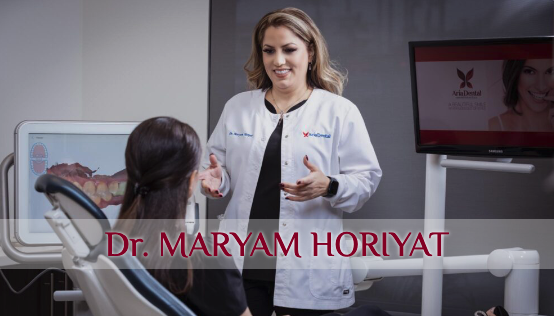
At Aria Dental Care in Mission Viejo, Dr. Maryam Horiyat has built her practice around materials and methods that support long-term health. As an accredited member of leading holistic, biological, and oral-medicine associations, she treats every restoration as a decision that reaches well beyond a single tooth.
What Are Biocompatible Fillings, Exactly?
A dental filling restores a tooth after decay, a fracture, or wear has removed part of its structure. The dentist clears the damaged portion, cleans the area, and fills the space with a material that rebuilds the tooth’s shape, strength, and function.
Biocompatible fillings apply a stricter standard to the materials used to do that job. The term “biocompatible” describes substances the body tolerates well, without provoking irritation, sensitivity, or an immune reaction in most people. In everyday terms, a biocompatible filling is a metal-free restoration that avoids mercury and other components some patients prefer not to have in their bodies.
The defining features of these restorations include:
- Metal-free composition, with no mercury, silver, or amalgam alloys
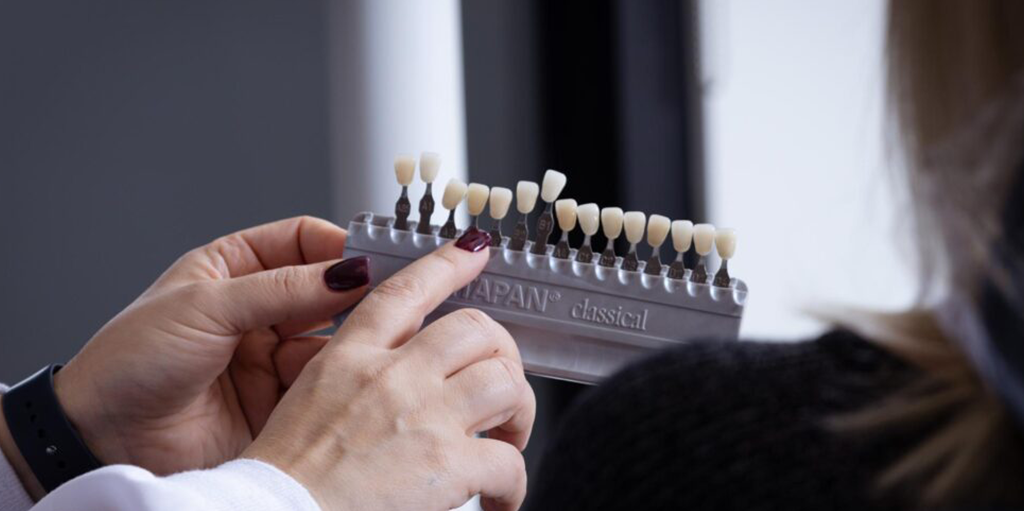
- Tooth-colored materials matched to the shade of the surrounding teeth
- A direct adhesive bond to enamel and dentin rather than a mechanical wedge
- Conservative preparation that preserves healthy tooth structure
- Personalized material choice based on a patient’s sensitivities and goals
Because they blend in and strengthen the tooth from within, biocompatible fillings are often viewed as both a cosmetic upgrade and a health-conscious decision. They sit at the heart of holistic and biological dentistry, an approach that weighs how dental treatment interacts with overall well-being rather than treating the mouth in isolation. Patients who want the underlying philosophy can read Aria Dental Care’s overview of why biocompatible dentistry is better.
Why Metal-Free Dental Restorations Are Gaining Ground
For decades, dental amalgam was the default choice for filling cavities because it was inexpensive, durable, and easy to place. Yet the rising demand for metal-free dental restorations reflects a genuine shift in how patients think about their care. People want treatment that looks natural, preserves their teeth, and fits a more health-conscious lifestyle. Several forces are behind this movement.
Aesthetics That Match the Natural Smile
Metal fillings are dark and obvious, especially in a tooth that shows when a person smiles or laughs. Tooth-colored fillings solve that problem outright. Composite resin and ceramic restorations are shaded to match adjacent teeth, so the repair effectively disappears. For many patients, this is the first and most visible reason to choose a metal-free filling.
A More Conservative Approach to the Tooth
Amalgam does not bond to the tooth. It relies on a mechanical hold, so the dentist must remove more healthy structure to create an undercut that keeps the filling seated. Composite resin fillings and other biocompatible dental materials bond directly to the tooth. That adhesive approach lets the dentist preserve more natural enamel and dentin, which supports the long-term strength of the tooth.
Concerns About Mercury in Amalgam
Dental amalgam is roughly half mercury by weight, a fact that has understandably unsettled many patients. The U.S. Food and Drug Administration reviewed the evidence and, in 2020, issued updated recommendations advising that certain groups who may be more sensitive to mercury exposure consider alternatives to amalgam where appropriate. Those groups include pregnant women, women planning pregnancy, nursing mothers, young children, and people with certain neurological or kidney conditions. Patients can read the agency’s position directly through the FDA guidance on dental amalgam fillings.
The nuance matters here. The FDA has not concluded that amalgam is unsafe for the general population, and existing fillings do not automatically need to be removed. For patients who prefer to avoid mercury entirely, however, biocompatible fillings offer a clear, mercury-free path.
Interest in BPA-Free and Non-Toxic Materials
Some early composite materials contained compounds derived from bisphenol A, better known as BPA. As awareness of endocrine-disrupting chemicals has spread, many patients now request BPA-free fillings specifically. Modern biocompatible dental materials have advanced considerably, and a holistic practice can select restorative products formulated to meet those preferences. Aria Dental Care has explored this trend in depth in its look at the growing demand for mercury-free and BPA-free dental fillings.
Whole-Body Health Awareness
The connection between oral health and overall health is now widely recognized, and patients increasingly view dental decisions through that lens. National health authorities such as the National Institute of Dental and Craniofacial Research continue to study how the mouth relates to the rest of the body. Metal-free dental restorations fit naturally into a wellness-oriented mindset, which is exactly why they have become central to holistic and biological dentistry.
Types of Biocompatible Fillings and Metal-Free Materials
There is no single biocompatible filling. Instead there is a family of metal-free materials, each with its own strengths. The right choice depends on the size and location of the cavity, the chewing forces the tooth handles, a patient’s aesthetic goals, and any known sensitivities. Below are the most common options.
Composite Resin Fillings
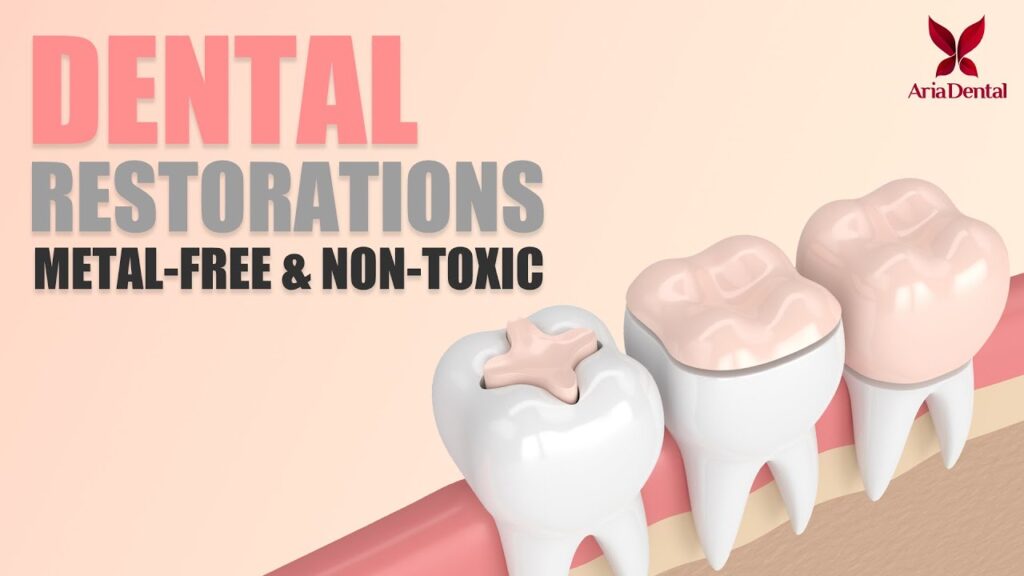
Composite resin is the most widely used biocompatible filling material and the everyday workhorse of metal-free dentistry. It combines a plastic resin base with finely ground glass or ceramic particles that give it strength and a natural appearance.
Key advantages of composite resin fillings include:
- A precise color match to the natural tooth
- Direct bonding that reinforces the remaining tooth structure
- Same-visit placement, since the material is shaped and hardened in the mouth
- Repairability, because composite can often be adjusted without replacing the entire restoration
The dentist places composite in thin layers, curing each one with a specialized light before adding the next. This layering allows careful shaping and produces a durable, tooth-colored result. Composite resin fillings work well for small to moderate cavities in both front and back teeth.
Porcelain and Ceramic Fillings (Inlays and Onlays)
When a cavity is too large for a simple composite filling but the tooth does not yet need a full crown, porcelain and ceramic inlays and onlays offer an excellent middle ground. An inlay fits within the grooves of a tooth, while an onlay extends over one or more of the chewing cusps.
Ceramic and porcelain fillings are valued for:
- Exceptional durability under strong chewing forces on back teeth
- A natural, translucent appearance that mimics real enamel
- Excellent stain resistance over time
- Strong biocompatibility, since ceramic is well tolerated by most patients
These restorations are crafted to fit the tooth precisely and then bonded into place. Many patients consider them the premium metal-free option for larger restorations because they pair strength with lifelike beauty.
Glass Ionomer Fillings
Glass ionomer is a tooth-colored material made from glass powder and an organic acid. This mercury-free, metal-free option is often chosen for specific situations rather than as a first pick for large, load-bearing cavities.
Glass ionomer fillings are typically used for:
- Small cavities that are not under heavy chewing pressure
- Restorations near the gumline or on root surfaces
- Certain pediatric applications, since the material releases fluoride over time
- Temporary or transitional restorations in some cases
While glass ionomer is generally not as strong or as polished-looking as composite or ceramic, its gentle nature and fluoride release make it a useful part of the biocompatible toolkit.
Zirconia and Advanced Ceramic Options
For larger reconstructions, crowns, and implant restorations, zirconia and other advanced ceramics come into play. These are not fillings in the traditional sense, but they belong to the same family of metal-free dental restorations. Zirconia is exceptionally strong and highly biocompatible, which is why it has become a favored material in holistic practices for patients who want to avoid metal in crowns, bridges, and implants.
How Biocompatibility Testing and Material Selection Work
A question holistic patients ask often is how a dentist decides which biocompatible material is right for a particular person. For most patients, well-established metal-free materials are both safe and effective. For those with known allergies, chemical sensitivities, or autoimmune conditions, some holistic and biological practices offer biocompatibility testing to help guide material selection.
Biocompatibility testing generally involves analyzing a blood sample to assess how a patient’s immune system may respond to the components found in various dental materials. The result is a report suggesting which materials a patient is more likely to tolerate well and which may be worth avoiding.
This deserves an honest frame. Biocompatibility testing is a tool for informing material choice based on individual sensitivity, offered as part of a personalized, preference-driven approach to care. It is not a diagnostic test for systemic disease, and results are used to guide decisions rather than to make medical predictions. Patients curious about testing can discuss whether it suits their situation during a consultation.
The Benefits of Choosing Biocompatible Fillings
Patients who select metal-free restorations tend to value a blend of health, appearance, and lasting function. The main benefits of biocompatible fillings include the following.
- A natural appearance. Tooth-colored materials blend in so well that most people cannot tell a repair was made.
- Mercury-free peace of mind. For patients who prefer to avoid mercury, these restorations remove the concern entirely.
- Conservation of natural tooth structure. Bonding technology lets the dentist preserve more of the healthy tooth.
- A strong, supportive bond. Because the material adheres to the tooth, it can reinforce the remaining structure rather than simply plugging a gap.
- Reduced sensitivity for many patients. Metal restorations conduct temperature, which can contribute to hot and cold sensitivity, while biocompatible materials tend to insulate the tooth more comfortably.
- Options for metal-sensitive patients. Those who react to metals have hypoallergenic, metal-free alternatives.
- Alignment with a holistic philosophy. These restorations suit the whole-body approach to health that many patients actively seek.
No dental material lasts forever, and every restoration has a realistic lifespan shaped by its size, location, and the care it receives. Even so, for patients who prioritize both aesthetics and a health-conscious material, biocompatible fillings satisfy a remarkable number of goals at once.
What to Expect During the Procedure
Understanding the process removes much of the anxiety. Placing a biocompatible filling is a comfortable, routine procedure, and at a holistic practice it is carried out with extra attention to safety and to the patient’s overall experience. The typical steps are outlined below.
Consultation and Examination
Every restoration begins with a careful evaluation. The dentist examines the tooth, reviews imaging, and discusses the patient’s goals, sensitivities, and preferences. This is also the moment to weigh material options and, when relevant, whether biocompatibility testing would help.
Gentle Preparation of the Tooth
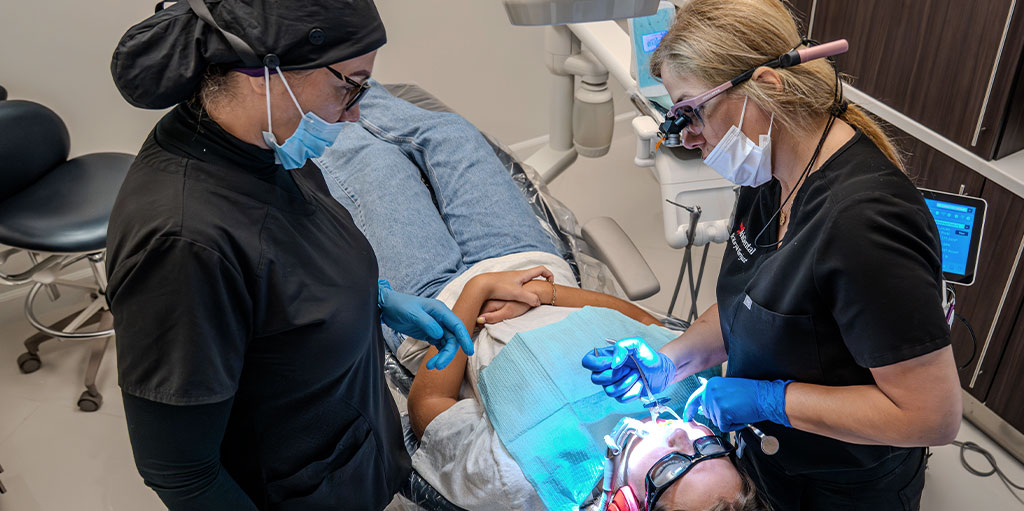
After the area is numbed for comfort, the dentist removes the decayed or damaged portion of the tooth. With biocompatible fillings, the emphasis falls on conservative preparation, keeping as much healthy enamel and dentin intact as possible.
Placement of the Restoration
For a composite resin filling, the material is applied in layers, hardened with a curing light, then shaped and polished to match the natural contours of the tooth. For a ceramic inlay or onlay, the tooth is prepared and the custom restoration is bonded into place. The dentist checks the bite carefully so the finished filling feels natural.
Safe Removal of Old Amalgam, When Needed
Some patients arrive specifically to replace existing mercury fillings with biocompatible alternatives. Here, careful removal technique matters a great deal, because disturbing an old amalgam filling can release mercury vapor. Practices that follow structured mercury-safe protocols use measures such as rubber dam isolation, high-volume suction and filtration, supplemental air, and protective barriers to reduce exposure during removal. Dr. Horiyat follows recognized safe-removal protocols so patients can replace old fillings with confidence. To learn more, patients can review the practice’s Safe Amalgam Removal Technique (SMART) protocol and its dedicated metal-free fillings and inlays service.
Caring for Your Metal-Free Restorations
Biocompatible fillings are low-maintenance, but a few habits help them last as long as possible.
- Brush twice daily with a toothpaste suited to your care plan, and clean between the teeth every day.
- Avoid using teeth as tools to open packaging or crack hard items, which can chip any restoration.
- Address grinding and clenching. Patients who grind may benefit from a nightguard that protects both natural teeth and restorations.
- Keep regular checkups. Routine visits let the dentist catch small issues early and confirm that fillings remain in good shape. General guidance on caring for fillings is available through the ADA’s patient resource, MouthHealthy.
- Limit staining habits where possible. Ceramic resists stains well, but surrounding natural teeth and some composite surfaces can discolor over time from coffee, tea, and tobacco.
With consistent home care and regular professional cleanings, tooth-colored fillings can serve reliably for many years.
Who Is a Good Candidate for Biocompatible Fillings?
Most people who need a filling are candidates for a metal-free option. Biocompatible fillings suit patients who:
- Want restorations that blend in with a natural smile
- Prefer to avoid mercury and metal in their dental work
- Have known metal allergies or chemical sensitivities
- Are replacing old amalgam fillings and want a mercury-free alternative
- Follow a holistic or wellness-focused approach to health
- Value conservative, tooth-preserving dentistry
The surest way to know whether a specific tooth suits composite, ceramic, or another material is a professional evaluation. The size of the cavity, the bite forces on the tooth, and a patient’s individual health picture all shape the recommendation.
The Aria Dental Care Approach to Metal-Free Dentistry
Choosing biocompatible fillings ultimately comes down to trust, both in the materials and in the dentist placing them. At Aria Dental Care in Mission Viejo, holistic and biological dentistry is not an add-on service. It is the foundation of the entire practice.
Dr. Maryam Horiyat, DDS, AIAOMT, CIABDM, is an accredited member of leading holistic, biological, and oral-medicine associations. Her career rests on the principle that dental care should support the whole person, which is why she places heavy emphasis on metal-free, mercury-safe treatment and on selecting the safest, most biocompatible materials available for each patient. Her approach pairs advanced technology with conservative techniques, so patients receive results that are healthy, functional, and beautiful.
The practice serves Mission Viejo, Laguna Niguel, Rancho Santa Margarita, San Clemente, Ladera Ranch, Irvine, Newport Beach, and the greater Orange County community. For anyone exploring biocompatible fillings, whether for a new cavity or to replace older amalgam restorations, a consultation is the natural first step. It is a chance to ask questions, understand the options, and build a personalized plan grounded in both clinical excellence and genuine respect for overall health.
Take the Next Step Toward a Healthier Smile
Biocompatible fillings bring together everything patients tend to want from modern dentistry: a natural appearance, a metal-free and mercury-free composition, and a conservative approach that protects the natural tooth. As metal-free dental restorations continue to become the preferred standard for health-conscious patients, understanding the options makes it far easier to choose with confidence.
For anyone in Orange County considering biocompatible fillings, whether for a new cavity or to replace older amalgam restorations, Aria Dental Care offers a holistic, patient-centered path forward. To learn which metal-free option is right for your smile, schedule a consultation with Dr. Maryam Horiyat at Aria Dental Care in Mission Viejo by calling (949) 364-9600 or visiting ariadentalcare.com.