







Breathing is the one thing the body never stops doing, yet the way a person breathes rarely comes up during a routine dental visit. Airway dentistry changes that conversation entirely. Instead of treating teeth as isolated structures, this branch of holistic care looks at how the mouth, jaws, tongue, and upper airway work together to support healthy breathing around the clock. At Aria Dental Care in Mission Viejo, airway dentistry sits at the heart of a whole-body philosophy, because the shape of the mouth and the openness of the airway influence sleep quality, energy, mood, and long-term wellness far beyond the smile.
This guide explains what airway-focused dentistry is, why the airway matters so much to overall health, the warning signs worth watching for in children and adults, and how a holistic dental team evaluates and supports better breathing. The goal is simple: to help patients understand the mouth-body connection and make informed decisions about their care.
What Is Airway Dentistry?
Airway dentistry is a patient-centered discipline that examines how oral and craniofacial structures affect the flow of air through the nose, mouth, and throat. Where traditional dentistry concentrates on cavities, gums, and restorations, airway-focused dentistry adds a wider lens that includes jaw development, tongue posture, nasal breathing, and sleep-disordered breathing. The premise is that a healthy airway is foundational to a healthy body.
Practitioners in this field consider the mouth part of a connected system. A narrow palate, a low resting tongue position, chronic mouth breathing, or a recessed lower jaw can all reduce the space available for air to move freely. Over time, these patterns may contribute to snoring, restless sleep, daytime fatigue, and other quality-of-life concerns. Airway dentistry aims to recognize these patterns early and support the structures that keep breathing effortless.
At Aria Dental Care, airway dentistry aligns naturally with the practice’s broader commitment to holistic and biological dentistry, which treats the causes of dental concerns rather than only the symptoms. Airway-centered care fits that mission because breathing touches nearly every system in the body.
How Airway-Focused Care Differs From Traditional Dentistry
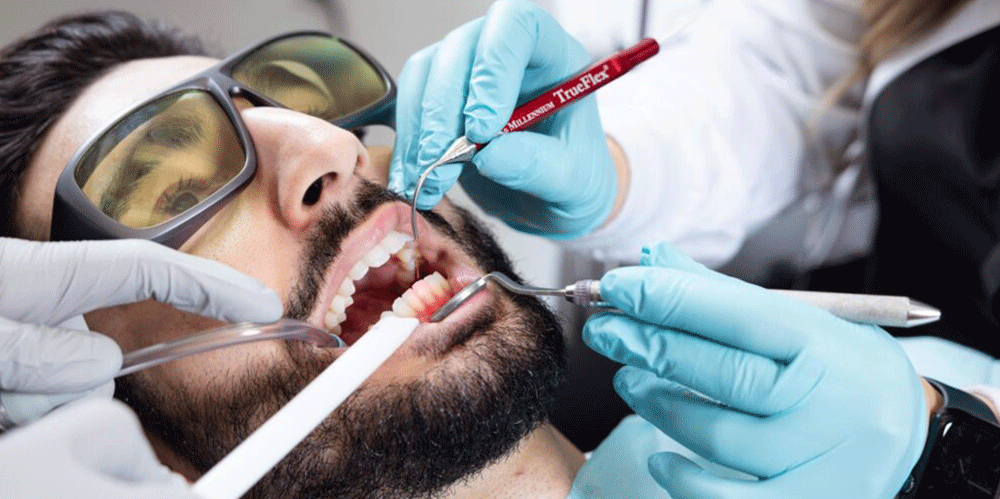
The difference is one of scope and philosophy. A conventional exam checks for decay, gum health, and the condition of existing dental work. An airway evaluation adds a series of questions and observations that a standard checkup often skips. An airway-minded dentist may ask about sleep quality, snoring, morning headaches, teeth grinding, and daytime alertness, then pair those answers with a close look at the palate, tongue, tonsils, jaw alignment, and bite.
Key distinctions of airway-focused dentistry include:
- A systemic viewpoint. Oral structures are evaluated for how they affect breathing and sleep, not only chewing and appearance.
- Early screening. Growth and development patterns in children are watched closely, since early habits shape the airway for life.
- Collaborative care. Airway concerns often involve physicians, sleep specialists, and myofunctional therapists working alongside the dentist.
- Prevention over reaction. The emphasis falls on identifying airway risk factors before they become entrenched problems.
This broader approach reflects the philosophy that guides every service at Aria Dental Care, from orthodontics to TMJ and orofacial pain care.
The Mouth-Body Connection: Why Your Airway Matters
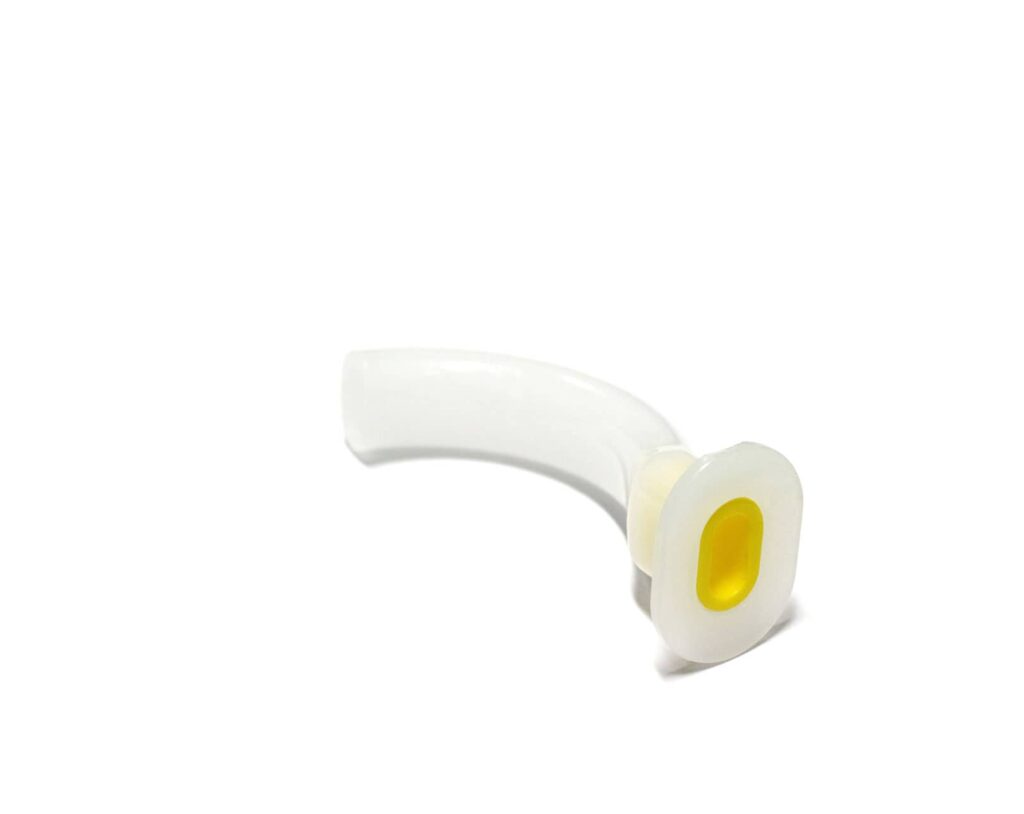
The airway is the passageway that carries oxygen from the outside world into the lungs and, ultimately, into every cell. When that passage is open and unobstructed, breathing stays quiet, steady, and restorative, especially during sleep. When it narrows, the body has to work harder to draw each breath, and the effects can ripple outward into general health.
Holistic dentistry recognizes that the mouth is not separate from the rest of the body. The tongue, jaws, and palate form the roof and floor of the airway’s upper section, so their size and position have a direct effect on how easily air moves. This is why airway dentistry treats breathing as a shared responsibility between dental and medical care.
The Role of the Oral Airway in Breathing
Nasal breathing is the body’s preferred method for good reason. Air drawn through the nose is filtered, warmed, humidified, and dosed with nitric oxide, which supports circulation and oxygen delivery. Chronic mouth breathing bypasses these benefits and can dry the tissues, alter facial growth in children, and change the resting posture of the tongue.
When the tongue rests low in the mouth instead of gently against the palate, the upper jaw may not receive the light, natural pressure that encourages a broad, well-formed arch. A narrow arch, in turn, leaves less room for the tongue and can crowd the airway. Airway dentistry pays careful attention to these relationships because tongue posture and nasal breathing are among the most modifiable influences on airway health.
Sleep-Disordered Breathing and Whole-Body Health
Sleep-disordered breathing is a spectrum that ranges from occasional snoring to obstructive sleep apnea, a condition in which the airway repeatedly narrows or collapses during sleep. According to the National Heart, Lung, and Blood Institute, sleep apnea can affect people of all ages and is associated with daytime sleepiness and other health concerns when left unaddressed. The condition is diagnosed by a physician, typically through a sleep study, and airway dentistry works within that medical framework rather than replacing it.
You can learn more about the condition directly from the National Heart, Lung, and Blood Institute and from the Centers for Disease Control and Prevention, both of which publish accessible, evidence-based resources on sleep health.
Research has explored associations between untreated sleep-disordered breathing and cardiovascular strain, blood sugar regulation, mood, and concentration. Because these connections are still being studied and vary from person to person, a holistic dental team frames airway care as one supportive piece of a larger wellness picture, always in coordination with the patient’s physician. That measured, collaborative stance is central to how Aria Dental Care approaches sleep apnea and snoring concerns.
Signs Your Airway May Need Attention
Airway issues often hide in plain sight, dismissed as ordinary snoring or restless nights. Recognizing the signs is the first step toward a fuller conversation with a dentist or physician. The symptoms differ somewhat between children and adults, so it helps to look at each group separately.
Airway Warning Signs in Children
Children are still growing, which makes early recognition especially valuable. The way a child breathes and rests the tongue can influence how the face and jaws develop. Parents and caregivers may want to watch for:
- Habitual mouth breathing, day or night
- Snoring or noisy, labored breathing during sleep
- Restless sleep, frequent waking, or bedwetting beyond the typical age
- Daytime tiredness, irritability, or difficulty focusing
- Enlarged tonsils or adenoids noted by a physician
- A narrow palate, crowded teeth, or an open bite
- Dark circles under the eyes or a persistently open-mouth posture
Because a child’s airway and facial structure are still forming, early screening can open the door to gentle, growth-guiding options. Aria Dental Care offers holistic pediatric dentistry that considers these developmental patterns as part of routine care.
Airway Warning Signs in Adults
In adults, airway concerns frequently show up as sleep and daytime symptoms that accumulate slowly. Common signs include:
- Loud, chronic snoring
- Waking unrefreshed despite a full night in bed
- Morning headaches or a dry mouth on waking
- Daytime drowsiness, brain fog, or trouble concentrating
- Teeth grinding or clenching, often linked to disrupted sleep
- A history of jaw tension or TMJ discomfort
- Frequent nighttime waking or gasping reported by a partner
Teeth grinding deserves special mention because the body sometimes clenches the jaw in an effort to stabilize the airway during sleep. This is one reason airway dentistry looks closely at bruxism and bite, and why Aria Dental Care evaluates concerns such as occlusal bite correction and nightguards for bruxism within an airway-aware framework. Any of these signs is worth discussing with both a dentist and a physician.
How Airway-Focused Dentistry Works
Airway dentistry follows a thoughtful, step-by-step process that begins with listening and observing, then moves toward supportive, individualized care. The aim is never to diagnose a medical condition in the dental chair, but to screen, educate, and collaborate so that patients receive the right care from the right professionals.
Comprehensive Airway Evaluation
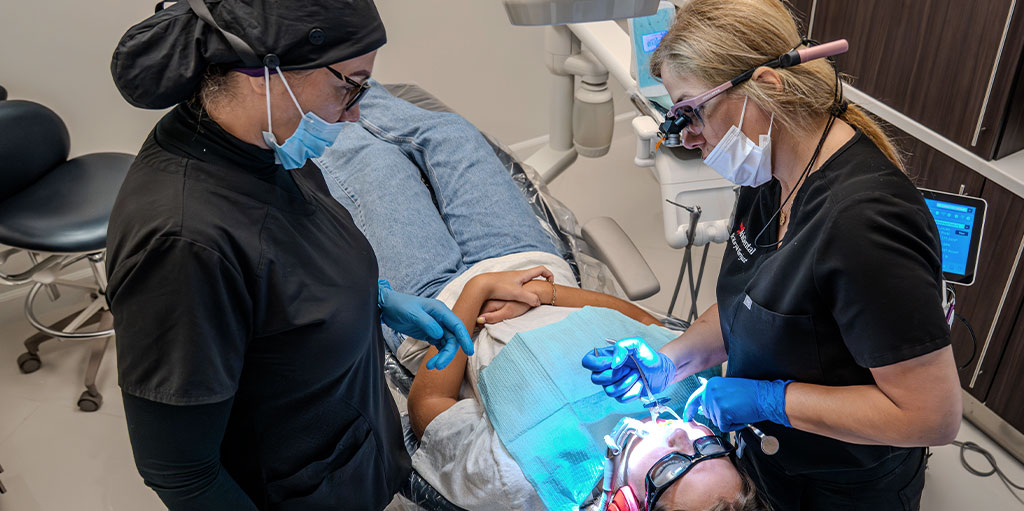
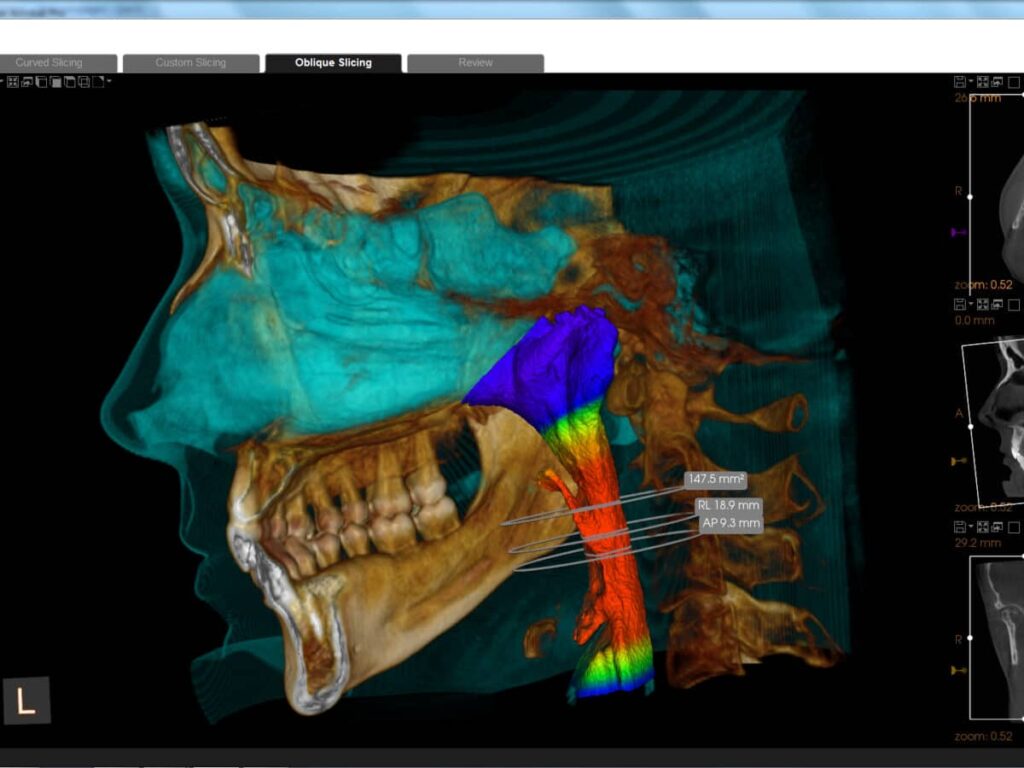
The process starts with a thorough evaluation that blends conversation with clinical observation. A holistic dentist reviews sleep and health history, then examines the palate, tongue posture, jaw position, bite, tonsils, and nasal breathing. Advanced imaging can add valuable detail. A three-dimensional cone beam CT scan, for example, lets the dental team view the airway and surrounding structures in ways a standard flat film cannot. Aria Dental Care’s investment in modern dental technology supports this kind of careful, comprehensive assessment.
When the evaluation suggests possible sleep-disordered breathing, the dentist refers the patient to a physician or sleep specialist for medical diagnosis. This teamwork is a defining feature of responsible airway dentistry.
Oral Appliance Therapy
For patients who have received a medical diagnosis and are candidates for it, oral appliance therapy is a widely used, dentist-provided option. A custom-fitted oral appliance is worn during sleep and is designed to support the position of the jaw and tongue so the airway stays more open. The American Academy of Dental Sleep Medicine describes oral appliance therapy as an option commonly used for snoring and for certain cases of obstructive sleep apnea, often for patients who prefer an alternative to other therapies or cannot tolerate them.
Because appliance selection depends on an individual’s diagnosis and anatomy, the choice is made collaboratively between the patient, the dentist, and the treating physician. You can read more from the American Academy of Dental Sleep Medicine about how dentists fit into sleep care.
Palatal Expansion and Growth Guidance
In children, and in some adults, expanding a narrow upper jaw can create more room for the tongue and support nasal breathing. Growth guidance and expansion are best considered early, while the bones are still developing and respond well to gentle, gradual widening. These approaches are always tailored to the individual and coordinated with orthodontic planning.
Some manufacturers market specialized appliances, such as the DNA and mRNA appliance systems, with claims about supporting airway development. Patients should understand that manufacturer claims vary in the strength of independent evidence behind them, and that the DNA appliance carries FDA clearance for obstructive sleep apnea specifically. A holistic dentist can explain what any appliance is designed to do, what the current evidence supports, and how it fits an individual situation, so patients can decide with clear information.
Myofunctional Therapy
Myofunctional therapy is a program of targeted exercises for the tongue, lips, and facial muscles. The goal is to retrain resting posture, encourage nasal breathing, and support proper swallowing patterns. Think of it as physical therapy for the mouth and airway. When paired with dental care, these exercises can reinforce healthier habits and complement other supportive measures. Speech-language professionals and trained therapists often deliver this care, and organizations such as the American Speech-Language-Hearing Association recognize the role of orofacial muscle function in oral health.
Together, evaluation, collaboration, appliance options, growth guidance, and myofunctional support form a toolkit that airway dentistry draws from selectively, matching each patient’s needs rather than applying a single fix to everyone.
The Whole-Body Benefits of Airway-Focused Dentistry
The value of airway dentistry lies in how breathing connects to overall wellness. When the airway is supported and breathing improves, patients frequently report benefits that reach well beyond the mouth. While individual results vary and depend on proper medical care, the potential upsides that draw people to airway-focused dentistry include:
- More restful sleep. Quieter, less interrupted breathing can translate into deeper, more restorative sleep.
- Better daytime energy. Improved sleep quality often supports sharper focus and steadier energy.
- Reduced snoring. Many patients and their partners notice quieter nights.
- Support for jaw comfort. Addressing bite and airway together can ease some grinding and clenching patterns.
- Healthier growth in children. Early attention to breathing and jaw development supports well-formed arches and facial structure.
- A whole-body outlook. Airway care reinforces the idea that oral health and general health are deeply intertwined.
These outcomes echo the mission behind holistic dentistry: to work with the body rather than against it and to consider the person as a whole. That whole-body philosophy is what sets airway dentistry apart from a symptom-by-symptom approach.
Airway Dentistry for Children: The Case for Early Intervention
Few areas of airway dentistry are as impactful as early care for children. The face, jaws, and airway do most of their growing in childhood, which means habits and structures established early can shape breathing for a lifetime. A child who breathes through the mouth, rests the tongue low, or has a narrow palate may be on a developmental path that a watchful dentist can help redirect.
Early screening does not mean rushing into treatment. Often it means education, monitoring, and gentle guidance. A holistic dentist can help parents understand tongue posture, encourage nasal breathing, and recognize when a referral to a physician, ear-nose-throat specialist, or myofunctional therapist makes sense. When growth guidance is appropriate, acting during the developmental window tends to be gentler and more effective than waiting until growth is complete.
Parents who notice snoring, mouth breathing, restless sleep, or crowding in a child’s smile can raise these observations at a dental visit. Framing airway health as part of routine pediatric care allows small patterns to be addressed before they become larger concerns, which is exactly the preventive, whole-body approach that guides care at Aria Dental Care.
Why Choose Aria Dental Care for Airway Dentistry
Choosing where to explore airway concerns comes down to experience, philosophy, and trust. Aria Dental Care approaches airway dentistry as a natural extension of its holistic, biological, and integrative mission, treating the mouth as part of a connected, whole-body system.
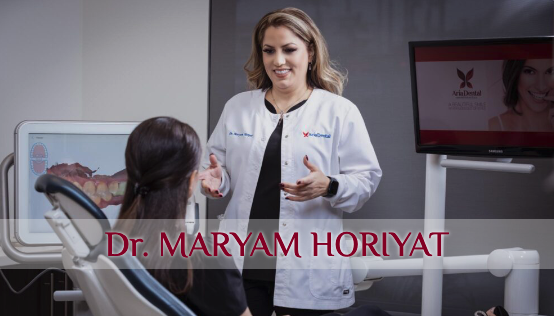
The practice is led by Dr. Maryam Horiyat, DDS, AIAOMT, CIABDM, a UCLA and UCSF trained dentist and an accredited member of leading holistic and biological dental organizations, including the International Academy of Oral Medicine and Toxicology. Her practice philosophy centers on addressing root causes, minimizing invasiveness, and educating patients so they can participate fully in their own care. That emphasis on understanding, rather than quick fixes, is well suited to airway dentistry, where thoughtful evaluation and collaboration matter enormously.
What patients can expect from an airway-aware visit at Aria Dental Care:
- A comprehensive, unhurried evaluation that includes airway and sleep-related questions
- Advanced imaging and technology to assess oral and craniofacial structures
- Clear, honest education about what the findings mean and what the evidence supports
- Coordination with physicians and specialists when a medical diagnosis is needed
- A holistic, biocompatible approach consistent with the practice’s whole-body values
Located at 27652 Crown Valley Pkwy in Mission Viejo, the practice serves patients throughout Orange County who are looking for care that honors the connection between breathing, sleep, and overall wellness. Patients interested in learning whether airway dentistry fits their needs can book a consultation or reach the team through the contact page.
The Bottom Line
Airway dentistry reframes oral health around something everyone shares: the need to breathe well, day and night. By looking at how the mouth, tongue, jaws, and palate shape the airway, this holistic approach connects the smile to sleep, energy, and long-term wellness. For families and adults across Orange County, airway-focused care offers a thoughtful, prevention-minded path that treats the body as an interconnected whole. To explore whether airway dentistry is right for your family, the team at Aria Dental Care is ready to help you take the first step toward healthier breathing and whole-body wellness.