





A beautifully straight smile has the power to transform not just your appearance, but your confidence, your oral health, and even your quality of life. If you’ve been thinking about orthodontic treatment but dread the idea of a mouth full of traditional metal braces, you’re in excellent company, and you have more options than ever before. Clear braces types have revolutionized orthodontics over the past two decades, offering patients a discreet, effective, and increasingly comfortable path to straighter teeth.
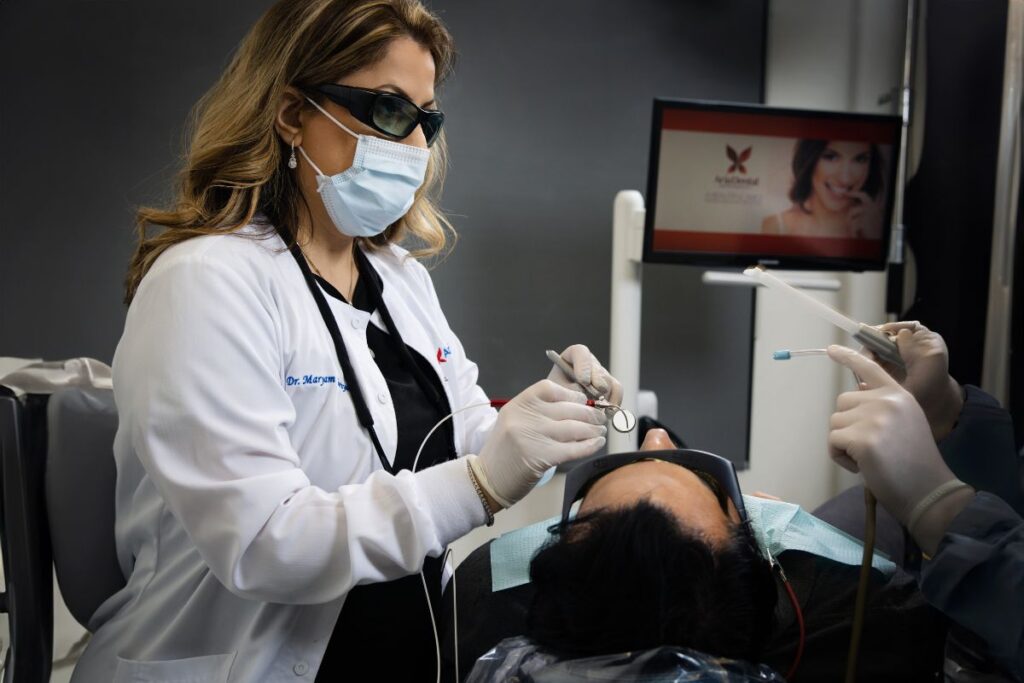
At Aria Dental Care, Dr. Maryam Horiyat, DDS, AIAOMT, CIABDM, combines advanced orthodontic techniques with a holistic and biological approach to patient care, which means every treatment recommendation is made with your whole-body health in mind, not just the aesthetics of your smile. In this comprehensive guide, we’ll walk you through all the major clear braces types available today, their unique benefits, how to clean and maintain them properly, and how to decide which option is right for you.
What Are Clear Braces? Understanding Your Orthodontic Options
The term “clear braces” is used broadly to describe any orthodontic appliance that is significantly less visible than traditional stainless steel braces. This category encompasses several distinct technologies, each with its own mechanism of action, aesthetic profile, ideal use cases, and maintenance requirements. Understanding the difference between clear braces types is the first step toward making an informed decision about your orthodontic journey.
The primary clear braces types available at leading holistic dental practices like Aria Dental Care include:
- Clear ceramic braces (tooth-colored brackets and wires)
- Clear aligner therapy (such as Invisalign and comparable systems)
- Lingual braces (placed on the inner surfaces of the teeth)
- Self-ligating clear braces (bracket-based systems without elastic ties)
Each of these systems has distinct advantages and limitations, and the right choice depends on the complexity of your orthodontic needs, your lifestyle preferences, your budget, and, at Aria Dental Care, your overall health profile. Let’s explore each type in detail.
Clear Braces Types Explained: A Detailed Comparison
1. Ceramic Clear Braces: The Classic Discreet Option
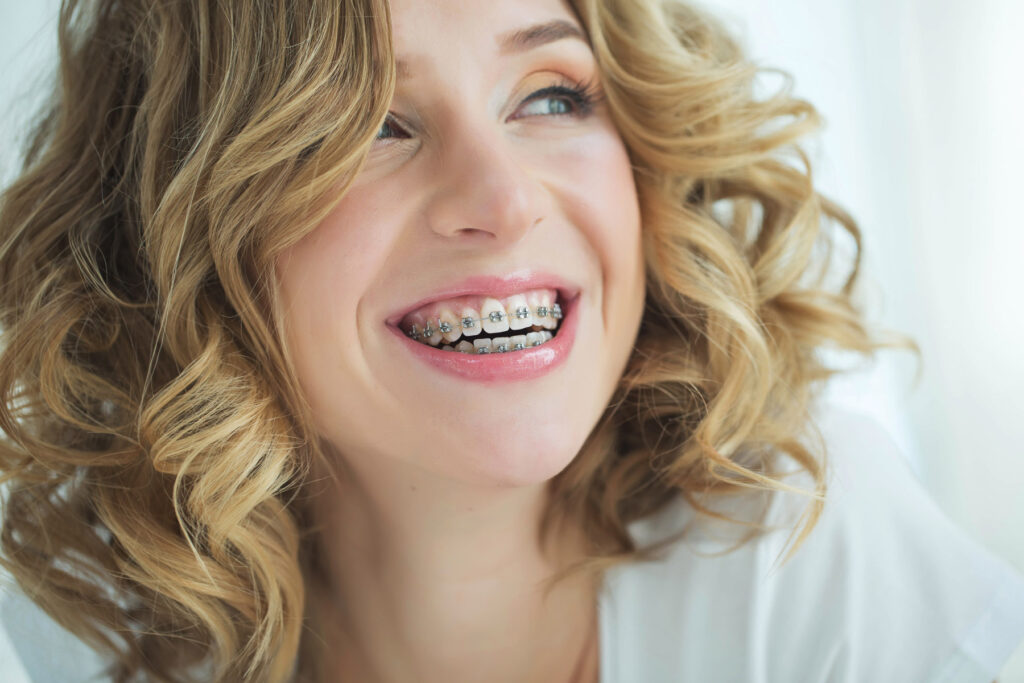
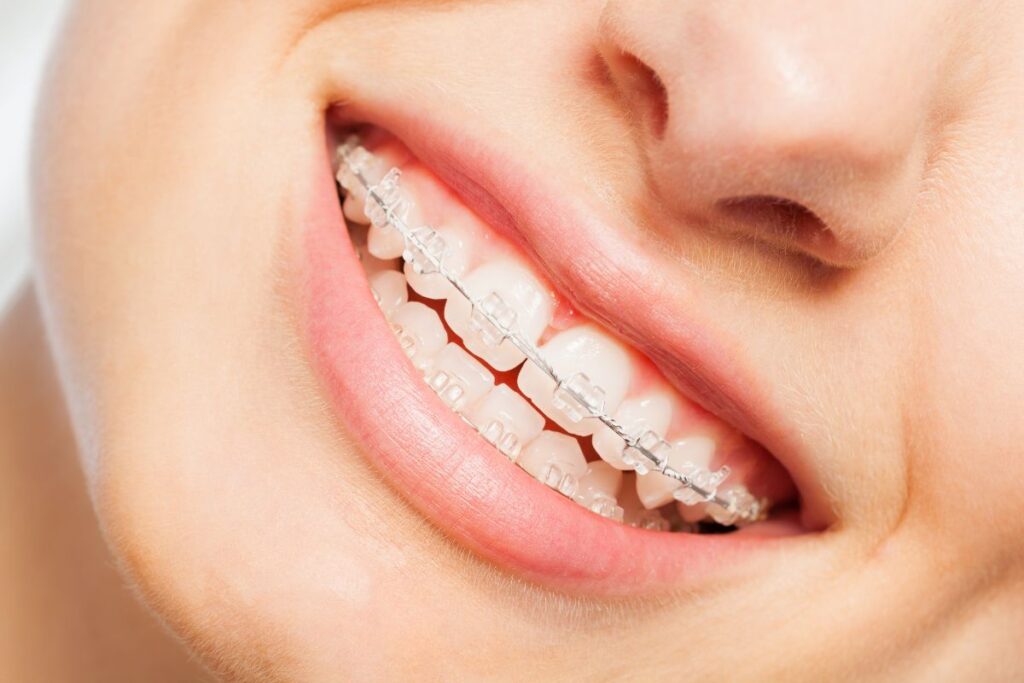
Ceramic braces function in the same way as traditional metal braces, brackets bonded to the front surfaces of the teeth are connected by an archwire that gradually guides teeth into the desired position, but the brackets are made from tooth-colored or clear ceramic material, making them far less conspicuous.
Key characteristics of ceramic clear braces:
- Aesthetics: The ceramic brackets closely match the natural shade of tooth enamel, blending in much better than metal. Many ceramic systems also use tooth-colored or white archwires for even greater discretion.
- Effectiveness: Ceramic braces are highly effective for a wide range of orthodontic corrections, including moderate to complex crowding, spacing, and bite issues.
- Durability: Modern ceramic brackets are strong and resistant to fracture under normal chewing forces, though they are slightly more fragile than metal brackets.
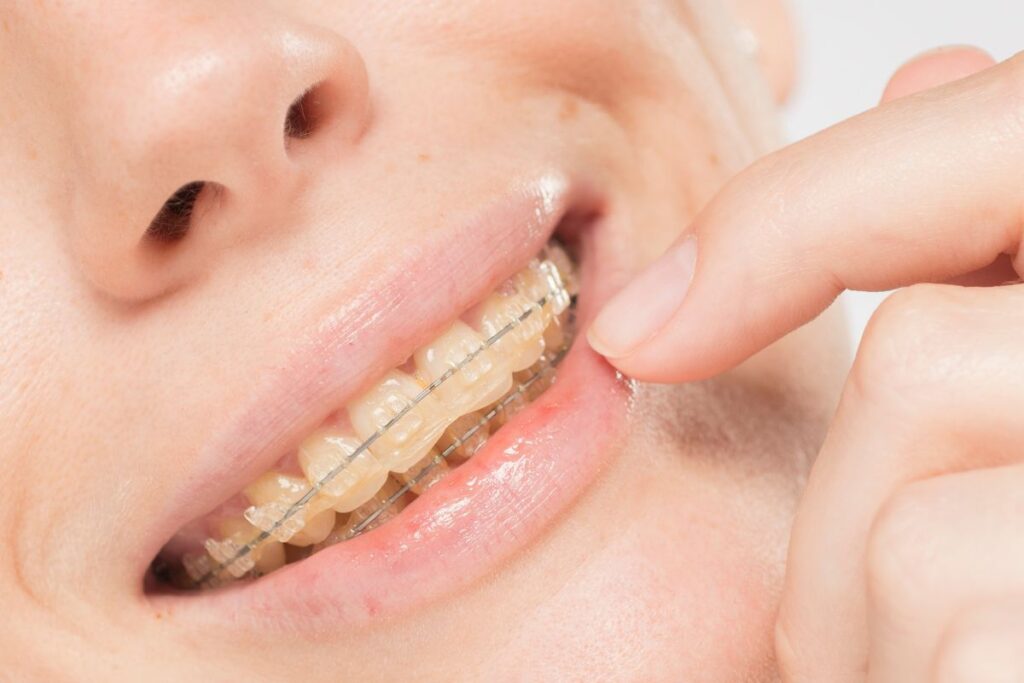
- Staining: This is the most commonly cited drawback. The elastic ties (ligatures) used with some ceramic systems can absorb stains from coffee, tea, red wine, and certain foods. Stain-resistant or self-ligating ceramic options address this issue.
- Treatment Duration: Similar to metal braces, typically 18 months to 3 years depending on case complexity.
- Ideal For: Patients who need comprehensive orthodontic correction and want a fixed (non-removable) appliance with improved aesthetics.
2. Clear Aligner Therapy: The Modern Revolution in Discreet Orthodontics
Clear aligner therapy, most famously represented by Invisalign, though many comparable systems now exist, represents a fundamentally different approach to orthodontics. Rather than brackets and wires, clear aligners use a series of custom-fabricated, removable plastic trays that fit snugly over the teeth and apply gentle, controlled forces to guide them into position over time.
Key characteristics of clear aligner therapy:
- Aesthetics: Nearly invisible when worn, most people won’t notice them at all in normal social or professional interactions.
- Removability: Aligners are removed for eating, drinking (anything other than plain water), brushing, and flossing, a significant lifestyle advantage over fixed appliances.
- Comfort: The smooth plastic edges of aligners are generally gentler on the soft tissues of the cheeks and lips than metal or ceramic brackets and wires.
- Compliance-Dependent: Aligners must be worn 20–22 hours per day for optimal results. Patients who remove them too frequently will experience slower progress or treatment failure.
- Scope of Treatment: Earlier generations of clear aligners were limited to mild-to-moderate cases, but modern systems can address a much wider range of orthodontic complexities, including significant crowding, spacing, and some bite corrections.
- Ideal For: Adults and older teens who prioritize discretion and convenience and are committed to the compliance demands of removable aligner therapy.
3. Lingual Braces: The Truly Hidden Fixed Option
Lingual braces use the same bracket-and-wire mechanism as traditional or ceramic braces, but with one critical difference: the brackets are bonded to the inner (lingual) surfaces of the teeth, facing the tongue rather than the lips and cheeks. From the outside, lingual braces are completely invisible, no one can see them unless they look inside your mouth.
Key characteristics of lingual braces:
- Complete Exterior Invisibility: The most discreet fixed orthodontic option available.
- Adjustment Period: Because brackets rest against the tongue, patients may experience temporary speech changes (a mild lisp) and tongue irritation during the initial adjustment period, typically resolving within a few weeks.
- Technical Complexity: Lingual braces require a highly skilled orthodontist for precise placement and adjustment. Treatment is typically more complex and time-intensive than labial (front-surface) braces.
- Cost: Generally more expensive than ceramic braces or aligners due to the technical demands of placement and the customized nature of the brackets.
- Ideal For: Patients, particularly professionals, performers, or public speakers, for whom any visible orthodontic appliance is unacceptable.
4. Self-Ligating Clear Braces: Less Friction, Faster Results
Self-ligating braces use a specialized bracket with a built-in sliding mechanism to hold the archwire, eliminating the need for the elastic ties (ligatures) used in conventional braces. When made from clear or tooth-colored ceramic material, self-ligating braces combine the aesthetic advantage of ceramic braces with the mechanical benefits of reduced friction.
Key characteristics of self-ligating clear braces:
- Reduced Friction: The absence of elastic ties means the wire moves more freely through the bracket, potentially allowing for more efficient tooth movement.
- Fewer Appointments: Some self-ligating systems require fewer adjustment visits than conventional braces.
- Easier Cleaning: No elastic ties mean fewer places for food and plaque to accumulate compared to conventional brackets.
- No Staining from Ligatures: Since there are no elastic ties to stain, this option is significantly easier to keep looking clean.
- Ideal For: Patients who want the reliability of fixed braces with improved aesthetics, comfort, and hygiene convenience.
The Key Benefits of Clear Braces: Why So Many Patients Choose Them
Regardless of which clear braces type you ultimately choose, they all share a set of compelling advantages over traditional metal braces that explain their rapidly growing popularity among adults and teenagers alike.
Superior Aesthetics and Confidence During Treatment
The most obvious and immediately appreciated benefit of clear braces is their low visual profile. For many adults, the prospect of wearing conspicuous metal braces at work, at social events, or in professional settings is a significant barrier to seeking orthodontic care. Clear braces types remove that barrier entirely. Many patients report that colleagues, friends, and even close family members don’t notice they’re undergoing orthodontic treatment at all, particularly with aligner therapy or lingual braces.
Improved Oral Hygiene During Treatment
One of the most clinically important advantages of clear aligner therapy in particular is the ability to remove the appliance for brushing and flossing. With conventional braces, brackets and wires create a complex obstacle course for oral hygiene tools, making it challenging to clean effectively around all surfaces of the teeth. This can lead to white spot lesions (areas of early enamel demineralization), cavities, and gum inflammation during treatment. Clear aligners eliminate this concern entirely, you simply remove your trays, brush and floss normally, and replace them.
From a holistic dentistry standpoint, this is a highly significant advantage. At Aria Dental Care, we view oral health as deeply interconnected with systemic health, gum disease in particular has been linked to cardiovascular disease, diabetes, and other systemic conditions in numerous research studies. Any orthodontic approach that supports rather than compromises gum health during treatment aligns with our philosophy.
Enhanced Comfort Compared to Metal Braces
Traditional metal braces are notorious for causing irritation to the inside of the cheeks and lips, particularly in the early weeks of treatment and after adjustments. The sharp edges of metal brackets and protruding wire ends can create painful sores and ulcers on the soft tissues. Clear ceramic braces have smoother surfaces that are gentler on the soft tissue, while clear aligners, with their smooth, rounded plastic edges, are generally the most comfortable orthodontic option available.
No Dietary Restrictions (With Aligners)
Patients wearing traditional or ceramic fixed braces must avoid a long list of foods that could damage brackets, bend wires, or become stuck, including hard, crunchy, chewy, and sticky foods. Clear aligner therapy completely eliminates these restrictions. Because aligners are removed for meals and snacks, patients can eat whatever they like without risk to the appliance. This is a meaningful quality-of-life advantage, particularly for patients who enjoy a varied, active diet.
Predictable, Technology-Driven Treatment Planning
Modern clear aligner systems use sophisticated 3D digital scanning and treatment simulation software to map out every stage of tooth movement before treatment even begins. At Aria Dental Care, we use advanced intraoral scanning technology to create precise digital impressions of your teeth, no messy putty required, and treatment planning software that allows Dr. Horiyat to visualize and refine your projected results in detail. Many patients appreciate being able to see a preview of their expected outcome before committing to treatment.
Clear Braces and Biocompatibility: The Holistic Dentistry Perspective
At Aria Dental Care, no treatment recommendation, including clear braces, is made without considering biocompatibility. This is a cornerstone of biological and holistic dentistry: the materials placed in or near the body should be as non-reactive and health-supportive as possible.
From a biocompatibility standpoint, clear braces types compare favorably to traditional metal braces in several important ways:
- Metal-Free Options: Ceramic braces and clear aligners avoid the nickel, chromium, and other metals present in stainless steel brackets, which can be a concern for patients with metal sensitivities or allergies.
- BPA Concerns with Aligners: Some patients ask about BPA (bisphenol-A) in clear aligner plastics. It’s worth noting that reputable aligner systems use BPA-free medical-grade thermoplastics. At Aria Dental Care, we only recommend aligner systems that have been rigorously tested for biocompatibility and safety.
- Ceramic Material Safety: High-quality dental ceramic is inert and biocompatible, making ceramic braces an excellent choice for health-conscious patients.
- Reduced Soft Tissue Trauma: Less mechanical irritation means less chronic inflammation in the oral soft tissues during treatment, an important consideration from a systemic health perspective.
Dr. Horiyat discusses biocompatibility considerations openly with every orthodontic patient. If you have specific concerns about the materials used in your orthodontic treatment, whether due to known allergies, sensitivities, or a general preference for the most health-conscious options, please raise them during your consultation. We will always work to find the most appropriate solution for your individual health profile.
How to Clean Clear Braces: Essential Hygiene Guide for Every Type
Proper cleaning and maintenance of your clear braces is not just about keeping them looking good, it’s fundamentally about protecting your oral health throughout treatment. The hygiene requirements vary significantly between clear braces types, so let’s go through each one in detail.
How to Clean Ceramic Clear Braces
Cleaning ceramic braces requires diligence because the brackets and wires create multiple surfaces where food particles and plaque can accumulate. Here is a step-by-step oral hygiene routine for ceramic braces:
1. Brush After Every Meal: Use a soft-bristled toothbrush at a 45-degree angle to clean around each bracket. Brush the top, bottom, and face of each bracket thoroughly. An electric toothbrush can be particularly effective.
2. Use Interdental Brushes: Small interdental (proxy) brushes are invaluable for cleaning beneath the archwire and between brackets where a regular toothbrush cannot reach.
3. Floss Daily with a Floss Threader or Orthodontic Flosser: Threading floss beneath the archwire can be time-consuming, but it’s essential for cleaning between teeth and at the gumline. Orthodontic flossers or water flossers (oral irrigators) significantly simplify this process.
4. Rinse with Fluoride Mouthwash: A daily fluoride rinse helps strengthen enamel and reduce the risk of white spot lesions around brackets, one of the most common and frustrating complications of bracket-based braces.
5. Avoid Staining Foods and Beverages: Coffee, tea, red wine, tomato sauce, turmeric, and other deeply pigmented foods can stain the elastic ties on conventional ceramic braces. If you have self-ligating ceramic braces (no elastic ties), this concern is significantly reduced. In all cases, rinsing your mouth with water after consuming staining foods helps minimize discoloration.
6. Avoid Whitening Toothpastes During Treatment: Whitening products whiten the exposed enamel but not the areas covered by brackets, which can result in uneven coloration when braces are removed.
How to Clean Clear Aligners
Clear aligners are significantly easier to keep clean than fixed braces, but they still require consistent daily care to prevent bacterial buildup, odor, and discoloration that can compromise both their appearance and your oral health.
7. Rinse Every Time You Remove Them: Each time you take your aligners out, rinse them immediately under lukewarm water (never hot water, which can warp the plastic). This removes fresh saliva and reduces bacterial accumulation.
8. Brush Your Teeth Before Reinserting: Always brush and floss your teeth before putting your aligners back in, especially after meals. Placing aligners over unclean teeth traps food particles and bacteria against the tooth surfaces for hours.
9. Clean Aligners Twice Daily: Gently brush your aligners with a soft toothbrush and a small amount of clear, unscented dish soap or a dedicated aligner cleaning solution. Avoid colored or strongly flavored toothpastes, which can scratch the plastic or leave residue that makes aligners more visible.
10. Use Aligner Cleaning Crystals or Retainer Brite: Soaking aligners for 15–20 minutes in aligner cleaning solution (such as the official system-brand crystals or a retainer cleaning tablet) once daily provides a deeper clean and helps eliminate bacteria and odor.
11. Never Leave Aligners Exposed to Air When Not In Use: When not wearing your aligners, store them in their protective case rather than leaving them on a napkin or in the open air, where they can dry out, warp, attract bacteria, or get accidentally discarded.
12. Only Drink Water While Wearing Aligners: Drinking anything other than plain water with aligners in place can cause staining and creates a warm, acidic environment between the aligner and your teeth that accelerates cavity formation.
How to Clean Lingual Braces
Lingual braces present unique cleaning challenges because the brackets are positioned on the inner surfaces of the teeth, making them difficult to access with standard oral hygiene tools. However, with the right technique and tools, effective cleaning is absolutely achievable:
- Use a Compact or Sulcus Toothbrush: A small-headed toothbrush or a dedicated orthodontic sulcus brush can access the lingual surfaces more effectively than a standard brush.
- Water Flosser (Oral Irrigator): A water flosser is particularly valuable for lingual braces, as it can flush out food and bacteria from around brackets on the tongue-side of the teeth where manual tools struggle to reach.
- Floss Threaders or Super Floss: Threading floss beneath the archwire from the lingual side requires patience but is essential for cleaning between teeth.
- Mirror-Assisted Brushing: Using a small hand mirror to visualize the lingual surfaces while brushing helps ensure complete cleaning coverage.
- More Frequent Dental Cleanings: Patients with lingual braces are typically advised to schedule professional cleanings every 3–4 months rather than the standard 6 months to ensure comprehensive removal of plaque and tartar in hard-to-reach areas.
How to Choose the Right Clear Braces Type for Your Smile and Lifestyle
With so many clear braces types to choose from, how do you decide which is right for you? The answer depends on a combination of clinical, personal, and financial factors. Here’s a practical framework to guide your thinking:
Consider the Complexity of Your Orthodontic Needs
For mild to moderate crowding, spacing, and some bite issues, clear aligner therapy is often highly effective. For more complex cases, significant bite corrections, severe crowding, rotations, or vertical tooth movement, ceramic braces, self-ligating braces, or lingual braces may deliver more reliable and predictable results. A comprehensive orthodontic examination with Dr. Horiyat will clarify what level of complexity your case involves and which systems are clinically appropriate.
Assess Your Lifestyle and Compliance Capacity
Clear aligner therapy offers unmatched lifestyle flexibility but demands genuine commitment to wearing the trays 20–22 hours per day. If you know that you’ll frequently forget to replace your aligners after meals, or that you’ll be tempted to remove them for extended periods, a fixed appliance like ceramic braces may actually produce better results for you, because it works passively without requiring your daily cooperation. Be honest with yourself about your compliance tendencies when having this conversation with Dr. Horiyat.
Think About Your Professional and Social Environment
If you work in a highly public-facing professional role, presenting to clients, performing, broadcasting, or public speaking, the near-total invisibility of lingual braces or clear aligners may be particularly important to you. If you work in a less appearance-critical environment or are primarily concerned with effectiveness and value, ceramic or self-ligating ceramic braces offer an excellent balance.
Budget and Insurance Considerations
Clear braces types vary in cost. Ceramic braces and self-ligating ceramic systems are typically moderately priced above traditional metal braces. Clear aligner therapy (Invisalign) tends to be comparable in cost to ceramic braces for comprehensive cases. Lingual braces are generally the most expensive option due to their technical complexity. Many dental insurance plans that include orthodontic benefits will cover a portion of treatment regardless of the appliance type chosen. At Aria Dental Care, our team will work with you to maximize your insurance benefits and discuss flexible payment options.
Frequently Asked Questions About Clear Braces Types, Benefits & Cleaning
Q1: Which type of clear braces is the most effective?
The most effective clear braces type depends entirely on the nature and complexity of your specific orthodontic case. No single type is universally “best”, each excels in different clinical scenarios. For mild to moderate crowding or spacing with motivated, compliant patients, clear aligner therapy can achieve results comparable to fixed appliances with excellent aesthetics and comfort. For more complex orthodontic cases involving significant bite corrections, severe rotations, or intrusion/extrusion of teeth, ceramic fixed braces or lingual braces may be more reliably effective because they give the orthodontist greater biomechanical control over tooth movement. The most important step is a comprehensive examination with an experienced provider like Dr. Horiyat at Aria Dental Care, who can assess your unique anatomy and recommend the system most likely to achieve your desired outcome efficiently and safely.
Q2: Do clear ceramic braces stain easily, and how can I prevent it?
The staining potential of ceramic braces depends largely on whether they use elastic ligature ties (conventional ceramic braces) or a self-ligating mechanism. Conventional ceramic braces with elastic ties are susceptible to staining from darkly pigmented foods and beverages such as coffee, tea, red wine, curry, and tomato-based sauces. The ceramic brackets themselves are actually quite stain-resistant, but the elastic ties can become discolored relatively quickly. To minimize staining, avoid or limit consumption of deeply pigmented foods and drinks, rinse your mouth with water immediately after consuming them, maintain excellent brushing habits after every meal, and avoid smoking. At Aria Dental Care, we offer self-ligating ceramic braces that eliminate elastic ties entirely, and with them, the primary staining concern. Ask Dr. Horiyat about self-ligating options if staining is a major concern for you.
Q3: How long does treatment with clear braces take?
Treatment duration with clear braces varies significantly based on the type of system used, the complexity of the orthodontic correction needed, and patient-specific factors including age and compliance. As a general guide: clear aligner therapy for mild to moderate cases typically takes 6 to 18 months. Comprehensive aligner treatment for more complex cases may take 18 to 24 months. Ceramic fixed braces typically take 18 months to 3 years, comparable to traditional metal braces. Lingual braces treatment timelines are similar to those for labial fixed braces. It’s important to note that with aligner therapy, treatment duration is heavily influenced by compliance, patients who consistently wear their aligners for the recommended 20–22 hours per day tend to complete treatment on schedule, while those who wear them less frequently experience delays. Dr. Horiyat will provide a personalized treatment timeline estimate at your consultation based on your specific case.
Q4: Can adults get clear braces, or are they only for teenagers?
Absolutely, clear braces are suitable for adults of any age, and in fact, adults make up a significant and growing proportion of orthodontic patients. The American Association of Orthodontists reports that one in four orthodontic patients today is an adult. Clear braces types are particularly popular among adults precisely because of their discreet appearance, which makes it possible to undergo orthodontic treatment without it being obvious in professional or social settings. The biological principles of tooth movement apply at any age, though it’s worth noting that treatment may progress slightly more slowly in adults than in growing teenagers due to differences in bone density and metabolism. There is no upper age limit for orthodontic treatment, patients in their 40s, 50s, 60s, and beyond successfully achieve beautiful, healthy smile transformations with clear braces at Aria Dental Care every year.
Q5: What happens after clear braces treatment? Do I need a retainer?
Yes, retainer wear after orthodontic treatment is essential, regardless of which clear braces type you used. Once your braces or aligners have moved your teeth into their new positions, a retention phase is required to stabilize those results as the bone and soft tissues surrounding the teeth adapt and solidify around the new tooth positions. Without retention, teeth have a natural tendency to drift back toward their original positions, a process known as orthodontic relapse. At the end of your active treatment phase, Dr. Horiyat will provide custom-fitted retainers, which may be removable clear retainers (similar in appearance to aligners) or fixed retainers (thin wires bonded to the backs of the front teeth). Most patients are instructed to wear removable retainers full-time initially and then transition to nighttime-only wear. Fixed retainers provide passive, 24-hour retention with no compliance requirements. The specifics of your retention protocol will be discussed as your treatment nears completion.
Conclusion: The Right Clear Braces Are Waiting for You at Aria Dental Care
Clear braces types have transformed orthodontic care, making it possible for patients of all ages to achieve straighter, healthier smiles without sacrificing aesthetics, comfort, or oral hygiene during treatment. Whether you’re drawn to the near-total invisibility of clear aligners, the proven reliability of ceramic braces, the hidden nature of lingual braces, or the friction-reducing advantages of self-ligating systems, there has never been a better time to explore your options.
At Aria Dental Care, Dr. Maryam Horiyat brings together advanced orthodontic training, state-of-the-art digital technology, and a deeply holistic, patient-centered philosophy to guide each person toward the clear braces solution that fits their unique smile, health, and lifestyle. We believe that every patient deserves not just straight teeth, but genuinely healthy teeth, and our approach to clear braces reflects that belief at every step.
Ready to take the first step toward the smile you’ve always wanted? We’d love to meet you.Schedule your clear braces consultation at Aria Dental.