

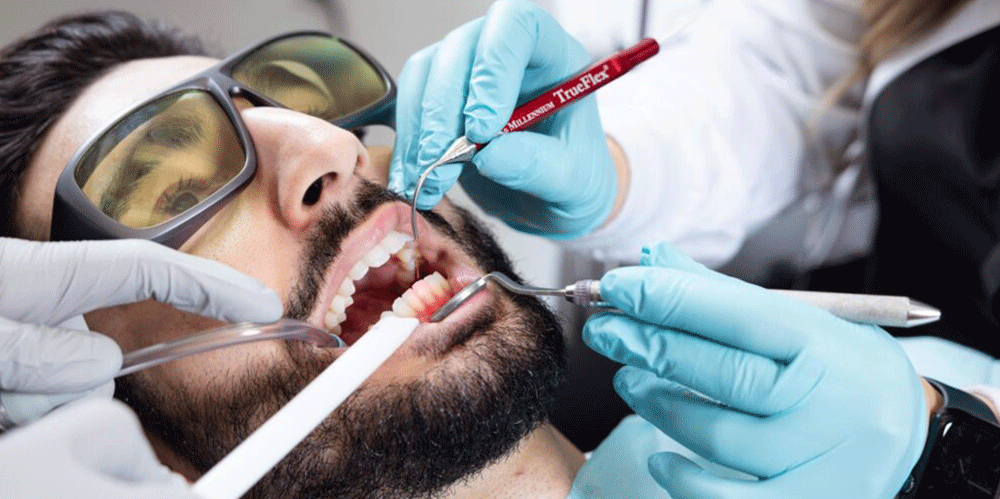
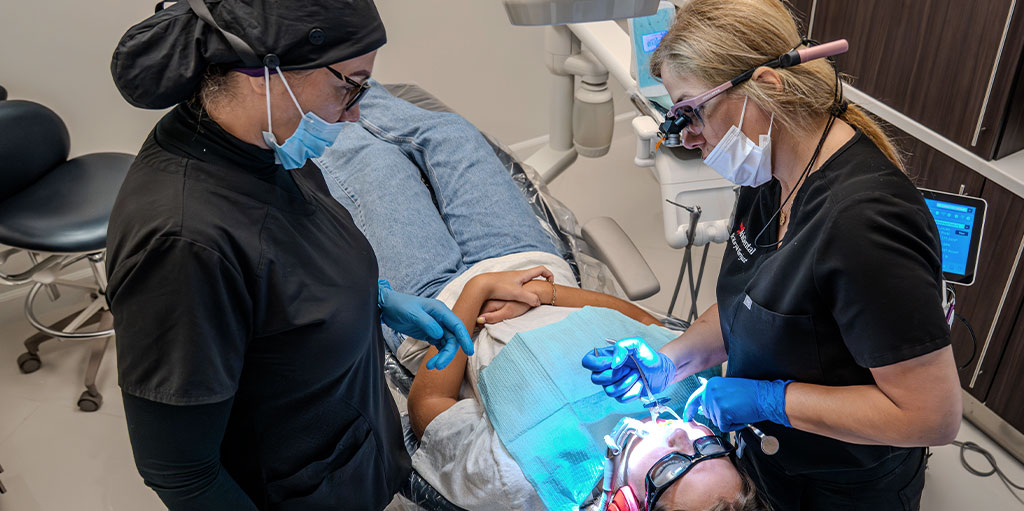


If you or your child has been told that braces, an expander, or aligners are on the horizon, your first question is probably a simple one: what exactly is going on inside my mouth, and how long will it be there? An orthodontic appliance is any device, fixed or removable, that guides teeth and jaws into better position and better function. That single category covers everything from a tiny space maintainer in a six year old to a set of nearly invisible aligners worn by a 45 year old executive.
At Aria Dental Care in Mission Viejo, we look at orthodontics through a biological and airway-focused lens. The goal is never just straight front teeth. It is a stable bite, a well-developed dental arch, an open airway, healthy gums, and materials that your body tolerates well. This guide walks through the most common orthodontic appliances by age group, explains what each one actually does, and helps you ask better questions at your next consultation.
What Is an Orthodontic Appliance?
An orthodontic appliance is a dental device that applies gentle, controlled force to teeth or to the bones that support them. Teeth are not cemented into the jaw. They sit in bone within a ligament that responds to pressure. When a corrective dental device applies light sustained force, bone dissolves slightly on one side of the root and rebuilds on the other. That biological process, called bone remodeling, is what allows teeth to move safely over months rather than snapping into place.
Every teeth straightening device works on that same principle. What changes is how the force is delivered, how much of it there is, and which structures are being influenced.
Fixed vs. Removable Orthodontic Appliances
The first fork in the road is whether the device stays in the mouth or comes out.
- Fixed orthodontic appliances are bonded or cemented in place and only your dentist or orthodontist can remove them. Braces, palatal expanders, space maintainers, and bonded retainers all fall here. The advantage is compliance. The device works 24 hours a day whether or not anyone remembers it. The tradeoff is hygiene, since brushing and flossing around brackets and wires takes real effort.
- Removable orthodontic appliances are taken out for eating, brushing, and sometimes sports. Clear aligners, Hawley retainers, night-time expanders, and many functional or myofunctional trainers are removable. The advantage is comfort and cleaning. The tradeoff is that results depend entirely on wear time.
Active vs. Passive Appliances
A second useful distinction is what the device is trying to accomplish.
- Active appliances create movement. Braces, aligners, expanders, and functional jaw devices all actively change position.
- Passive appliances hold position. Retainers and space maintainers do not move anything. They preserve what has already been achieved or protect space for a tooth that has not erupted yet.
Most treatment plans use both. An active phase moves teeth into place, and a passive phase keeps them there. Skipping the passive phase is the single most common reason people end up needing orthodontic work twice.
How Force Turns Into Results
The amount of force matters more than most patients realize. Too little and nothing moves. Too much and the tooth root can resorb, the ligament can become inflamed, and gum recession can follow. This is why an orthodontic appliance should always be adjusted by a trained clinician on a planned schedule, and why mail-order aligner systems without in-person supervision worry many of us in the profession. The American Dental Association has published guidance urging direct clinical oversight for any tooth movement, and that position reflects what we see clinically.
Read more: What Is Adult Orthodontics
Why Timing Matters: Orthodontic Treatment by Age
The same crowded smile can be treated very differently at age eight, age fourteen, and age forty. The reason is growth.
Children, Roughly Ages 6 to 11
This is the interceptive or Phase I window. The jaws are still growing, the palate is not yet fused, and baby teeth are giving way to permanent ones. A dental orthodontic device used during this window can influence how the bones develop rather than just how the teeth sit on them. The American Association of Orthodontists recommends a first orthodontic evaluation by age seven, not because most seven year olds need braces, but because a few of them need something time-sensitive.
Early signs worth an evaluation include mouth breathing, snoring, thumb sucking past age four, a crossbite, a narrow high palate, crowding of newly erupted permanent teeth, or a habit of chewing on only one side.
Teens, Roughly Ages 12 to 18
By the teen years most permanent teeth have arrived and the growth spurt is either underway or recently finished. This is the classic comprehensive treatment window. The bone remodels quickly, patients heal fast, and jaw growth can still be nudged with a functional orthodontic appliance in the right cases. Compliance is the main variable, which is why appliance selection for teens often comes down to lifestyle as much as biomechanics.
Adults, Any Age
Adults can absolutely move teeth. Bone remodeling continues for life. What changes is speed, the absence of growth to work with, and the presence of complicating factors: existing crowns and bridges, gum disease history, bone loss, worn enamel, TMJ symptoms, and previous extractions. Adult orthodontic treatment tends to be more interdisciplinary. We often coordinate the tooth movement with restorative work, periodontal therapy, and airway evaluation so that everything lands in the right place at the end.
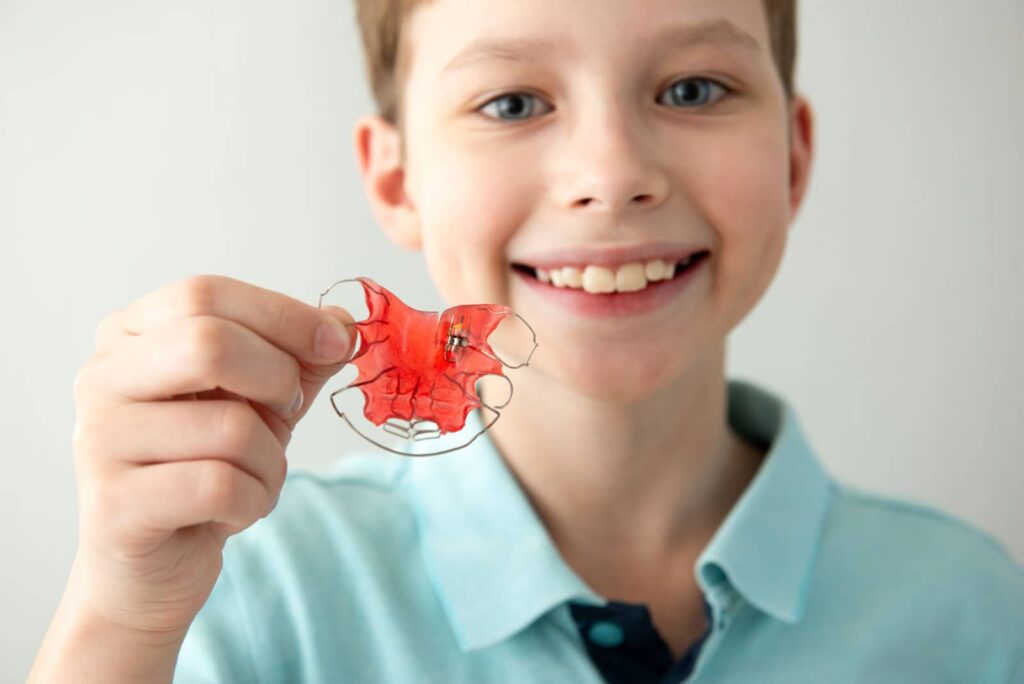
Common Orthodontic Appliances for Children
Pediatric orthodontics is less about perfect alignment and more about creating the conditions for a good result later. Here are the devices we see most often.
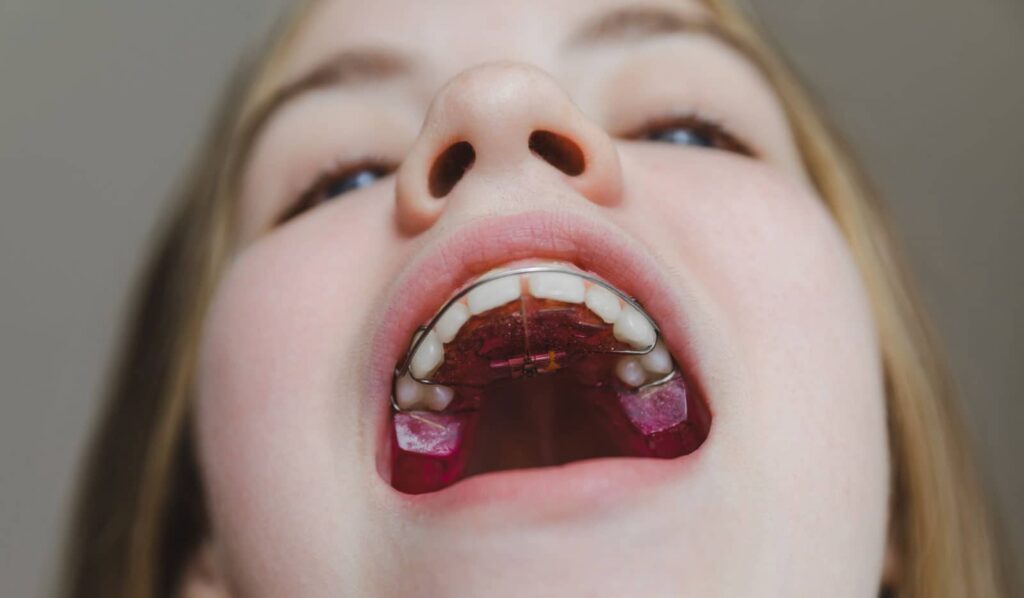
Palatal Expander
A palatal expander is a fixed appliance cemented to the upper back teeth with a small screw in the middle. Turning the screw a fraction of a millimeter at a time gradually widens the upper jaw at the midpalatal suture, which has not yet fused in younger children.
Expanders are used for:
- Posterior crossbite, where upper teeth bite inside the lower teeth
- A narrow, high, vaulted palate
- Severe crowding where widening creates room instead of extracting teeth
- Impacted canines that need space to erupt
- Airway considerations, since a wider upper arch means a wider nasal floor
There is meaningful published evidence that rapid maxillary expansion increases nasal cavity volume in growing children. We should be clear that expansion is not a treatment for obstructive sleep apnea on its own, and any suspected sleep-disordered breathing needs evaluation and diagnosis by a physician or sleep specialist. What expansion can do is remove one structural contributor in the right patient.
Children typically wear an expander for several months of active turning followed by several months of passive retention while new bone fills in.
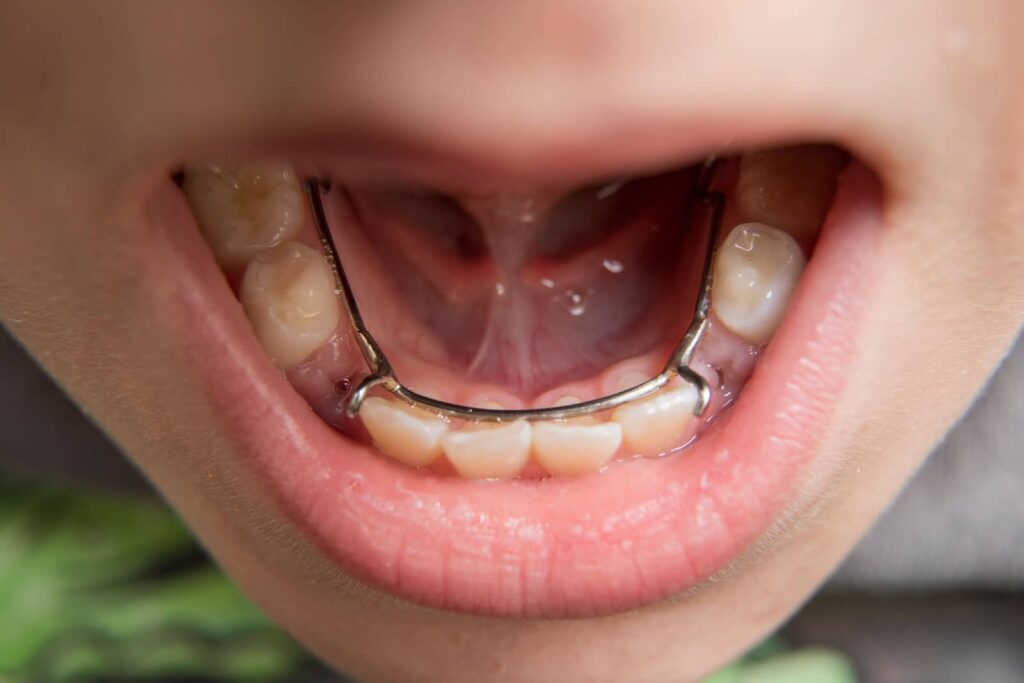
Space Maintainer
When a baby molar is lost early to decay or trauma, neighboring teeth drift into the gap. The permanent tooth underneath then has nowhere to go. A space maintainer is a small band and loop, or a lingual arch, cemented in place to hold that space open until the successor erupts.
It is one of the least glamorous and most valuable orthodontic appliances we place. A space maintainer that costs a few hundred dollars can prevent years of comprehensive treatment later.
Habit Appliances
Thumb sucking and tongue thrusting past the age of about four can push upper front teeth forward and create an open bite. A tongue crib or habit rake is a fixed device with a small barrier behind the upper front teeth. It does not hurt. It simply interrupts the pleasurable sensation that reinforces the habit.
We prefer to try behavioral approaches and myofunctional therapy first, since a habit appliance addresses the mechanics without addressing the underlying oral posture. When it is needed, though, it usually works within a few months.
Myofunctional Trainers and Pre-Orthodontic Appliances
These are soft, removable orthodontic appliances made of medical-grade silicone or polyurethane, worn a few hours during the day and overnight. Rather than pushing individual teeth, they train tongue position, lip seal, and nasal breathing while gently guiding erupting teeth.
They are best suited to cooperative children with mild to moderate issues and a mouth-breathing pattern. They are not a substitute for comprehensive treatment in significant skeletal discrepancies, and we say so directly at the consultation rather than after a year of wear.
Partial Braces (Phase I)
Sometimes only the six upper front teeth need brackets, for example to close a large midline gap, upright a rotated incisor, or resolve an anterior crossbite that would otherwise damage enamel. Partial braces are worn for six to twelve months, removed, and followed by a rest period until all permanent teeth arrive.
Phase I is not universally necessary. A responsible practice will tell you when waiting is the better plan.
Common Orthodontic Appliances for Teens
The teen years are where most comprehensive orthodontics happens. The selection here is genuinely wide.
Traditional Metal Braces
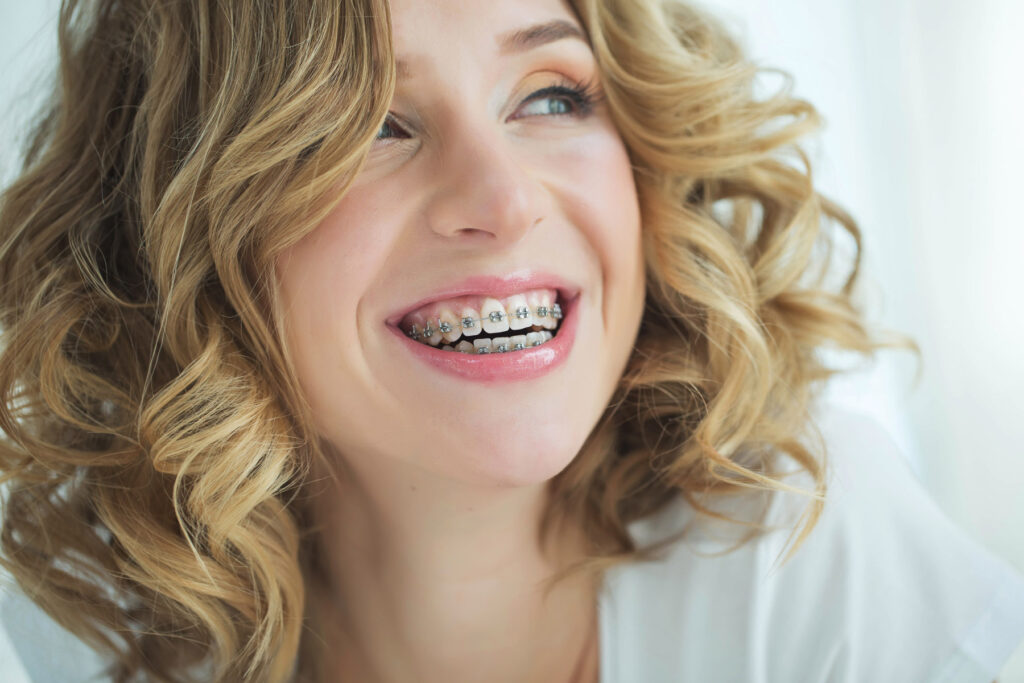
Stainless steel brackets bonded to each tooth, connected by an archwire held with elastic ties or small metal clips. This remains the most versatile teeth alignment device available. Metal braces can handle severe rotations, significant vertical movement, and complex bite correction that other systems struggle with.
Modern brackets are far smaller than the ones your parents wore, and heat-activated nickel titanium archwires apply gentler continuous force than the older stainless wires did.
The honest downsides: visibility, food restrictions, and the hygiene demands of brushing around brackets. Decalcification, the chalky white squares sometimes visible after braces come off, is entirely preventable with good technique and is something we monitor at every adjustment.
Clear Ceramic Braces
Ceramic braces work identically to metal ones but use tooth-colored or translucent brackets. Aesthetically they are a large upgrade, especially for teens who play in performing arts or simply do not want a mouth full of metal in every photograph for two years.
Points worth knowing:
- Ceramic brackets are larger and slightly more brittle than metal
- Treatment can run marginally longer due to increased friction
- The brackets do not stain, but clear elastic ties can pick up color from curry, coffee, and berries between visits
- They are typically placed on upper teeth with metal on lower teeth in many practices, though full ceramic is available
For patients who want to minimize metal exposure, ceramic brackets are an appealing option, and they pair well with a biocompatible approach to material selection.
Self-Ligating Braces
Instead of elastic ties, self-ligating brackets use a built-in sliding door to hold the archwire. Advocates cite reduced friction, fewer appointments, and easier cleaning without elastic modules to trap plaque. The published comparative research is more mixed than the marketing suggests, with several systematic reviews finding no dramatic difference in total treatment time. They are a legitimate and well-made system, but we describe them as a refinement rather than a revolution.
Clear Aligners
Clear aligners are a series of custom thermoplastic trays, each worn about one to two weeks, that move teeth in small increments. They have become a mainstream orthodontic appliance for teens, and modern versions include compliance indicators that fade with wear so parents and clinicians can verify use.
Aligners work well for:
- Mild to moderate crowding and spacing
- Relapse after previous orthodontics
- Patients who want a removable option for sports or wind instruments
- Anyone motivated by easier brushing and flossing
They are less predictable for large vertical movements, significant rotations of round teeth like premolars and canines, and major skeletal correction. Attachments, small tooth-colored bumps bonded to the enamel, extend what aligners can do considerably.
The single deciding factor for teens is wear time. Aligners must be worn 20 to 22 hours per day. A teen who removes them through a long lunch, an after-school snack, and an evening at a friend’s house will not track to plan. There is no shame in choosing fixed braces for a busy or forgetful teenager. It is often the kinder choice.
Functional Appliances for Jaw Growth
When a teen has a significantly retruded lower jaw, a functional orthodontic appliance can encourage forward positioning during the growth spurt. Common versions include the Herbst appliance, the Twin Block, the MARA, and various spring-based fixed correctors.
These devices hold the lower jaw forward during function so that growth is expressed in a more favorable direction. Timing is critical. Used at peak growth they can be very effective. Used after growth has finished they mostly tip teeth rather than change bones, and in adults the equivalent correction usually requires surgery.
Headgear and Extraoral Appliances
Headgear is used far less frequently than it was decades ago, but it has not disappeared. It anchors against the head or neck to restrain upper jaw growth or hold molars back. Modern alternatives such as temporary anchorage devices have replaced it in many cases. When headgear is prescribed today, it is usually worn only at night.
Elastics, Bite Turbos, and Auxiliaries
Not every component is a headline device. Interarch elastics, the small rubber bands hooked between upper and lower braces, do much of the heavy lifting in bite correction. Bite turbos are small bonded ramps that prevent a deep bite from knocking brackets off. Springs open space for a crowded tooth. These auxiliaries turn a generic bracket system into a customized correction.
Orthodontic Appliances for Adults
Roughly one in four orthodontic patients today is an adult, and that share keeps growing. Adults come to us for aesthetics, but also for crowding that has worsened with age, bite collapse after tooth loss, gum problems driven by traumatic occlusion, jaw joint discomfort, and preparation for implants or veneers.
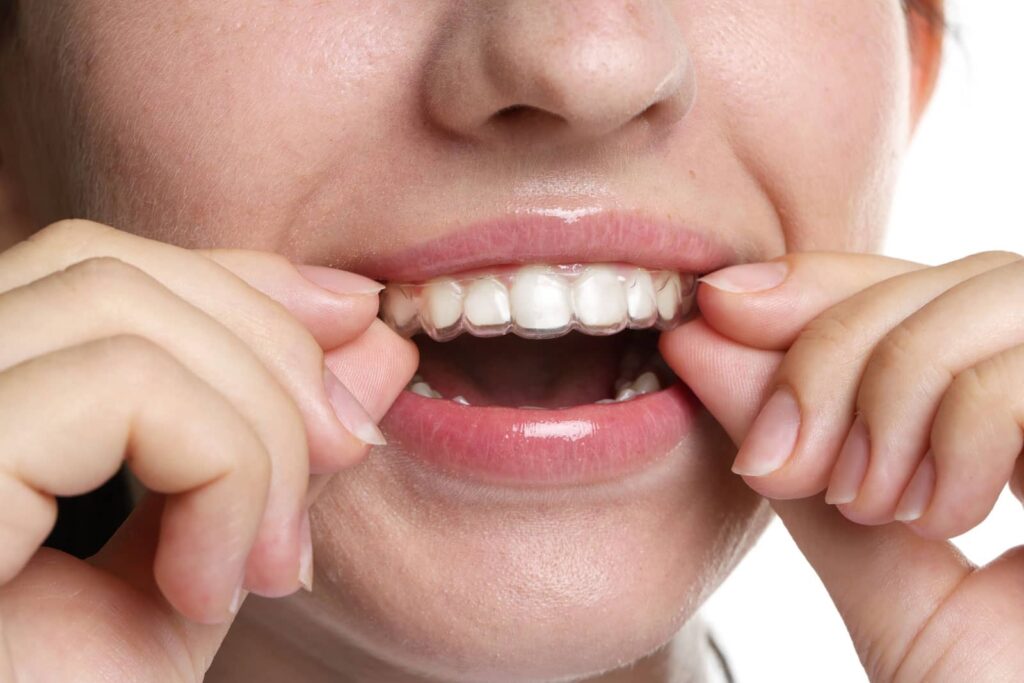
Clear Aligners for Adults
For adults, aligners are frequently the appliance of choice. Compliance is rarely an issue with a motivated adult, and the aesthetic and professional advantages are obvious. They are also easier on the gums, which matters because adults are far more likely than teens to have a periodontal history.
Adults should know that mild interproximal reduction, a very conservative polishing of enamel between teeth, is often part of an aligner plan to create space. It is safe when done properly and in measured amounts, and you should always be told about it in advance.
Lingual Braces
Lingual braces bond to the tongue side of the teeth and are essentially invisible from the front. They are fully customized in most systems and can accomplish comprehensive correction.
The adaptation period is real. Speech changes for a few weeks and the tongue needs time to adjust. For adults in highly visible professional roles who need more correction than aligners can deliver, they remain an excellent option.
Ceramic Braces for Adults
The same tooth-colored system described for teens works well for adults who want fixed treatment with a lower visual profile and are not concerned enough about visibility to justify lingual placement.
Temporary Anchorage Devices
A TAD is a small titanium mini-screw placed into bone, usually between roots or in the palate, that gives the appliance something immovable to push against. Placement takes minutes under local anesthetic and removal is straightforward.
TADs allow movements that were once impossible without surgery, such as intruding overerupted molars, closing old extraction spaces, or correcting a gummy smile. Because they are titanium, patients focused on metal-free care should discuss material sensitivity with us beforehand. In most cases they are in place only a few months.
Orthodontics Combined with Restorative Work
Adult treatment frequently exists to serve a bigger plan. Uprighting a tilted molar before placing an implant, creating symmetric space before veneers, or leveling a collapsed bite before full-mouth rehabilitation are all cases where the orthodontic appliance is a setup step rather than the finish line. Sequencing matters enormously here, and this is where an integrated practice has a real advantage over separate offices that never speak to each other.
Airway-Focused and Oral Appliance Therapy
Some adults arrive with a narrow arch, scalloped tongue, worn front teeth, and a long history of poor sleep. Arch development appliances and mandibular advancement devices are used in this space, and manufacturers of certain expansion systems make claims about bone remodeling in adults that are not universally accepted by the wider scientific community. We describe those systems as part of our practice philosophy and as manufacturer positioning, not as established consensus.
Two things we always insist on: obstructive sleep apnea must be diagnosed by a physician through a validated sleep study, and any oral appliance therapy for a diagnosed breathing disorder should be coordinated with that physician. Dental appliances are one tool in a medical picture, not a replacement for medical care. The National Institute of Dental and Craniofacial Research is a reliable, non-commercial starting point for patients who want to read further about oral health research.
Retainers: The Appliance Everyone Underestimates
Teeth have memory. The periodontal ligament fibers stretched during treatment want to recoil, and the jaw continues to change subtly for decades. Without retention, relapse is not a risk. It is the default.
Fixed Bonded Retainers
A thin wire bonded behind the lower front teeth, and sometimes the upper. It works without any effort from the patient, which is its greatest strength. It requires threading floss or using a floss threader daily, and it needs periodic checks because a debonded pad can allow a single tooth to shift unnoticed.
Removable Retainers
- Hawley retainers use an acrylic body and a visible front wire. They are adjustable, durable, and long-lasting.
- Clear vacuum-formed retainers look like a thin aligner and are nearly invisible. They are more comfortable and less durable, typically needing replacement every few years.
Most people transition from full-time wear for several months to nightly wear indefinitely. When patients ask how long they need a retainer, the honest answer is: for as long as you want your teeth to stay where they are.
A Biological Perspective on Appliance Materials
Because Aria Dental Care is a biological and holistic practice, material selection is part of every orthodontic conversation, not an afterthought.
Points we consider:
- Nickel sensitivity. Nickel is among the more common contact allergens, and many conventional brackets and archwires contain it. Patients with a known nickel allergy can be treated with nickel-free titanium or ceramic components.
- BPA and monomer content. Some clear aligner and retainer plastics have been studied for trace release of bisphenol A and related compounds. Reported levels in the literature are generally well below regulatory thresholds, but for patients who prefer to minimize any exposure, alternative materials and fixed options exist.
- Latex. Standard elastics contain latex. Latex-free versions are readily available and we use them by default when there is any history of sensitivity.
- Metal-free preferences. Ceramic brackets, coated archwires, and aligner systems allow us to build largely metal-free plans for patients who want that, with an honest discussion of any biomechanical tradeoffs.
- Preventive care during treatment. Fixed appliances make plaque control harder. We use ozone therapy, laser-assisted hygiene, remineralizing protocols, and more frequent cleanings to protect enamel and gum tissue during treatment.
None of this changes the physics of tooth movement. It changes what your body is exposed to for the eighteen to thirty months the appliance is in place, which for many of our patients is exactly the point.
How to Care for Your Orthodontic Appliance
Good habits protect both your results and your enamel.
With fixed braces:
- Brush after every meal, angling bristles above and below the bracket
- Use an interdental brush to clean under the archwire
- Add a water flosser, which makes a measurable difference around brackets
- Avoid hard, sticky, and chewy foods such as ice, caramel, hard bread crusts, and whole raw carrots
- Cut raw fruits and vegetables into pieces rather than biting into them
- Use orthodontic wax on any bracket that irritates the cheek and call if a wire is poking
With removable appliances and aligners:
- Wear them the prescribed number of hours, and be honest with your clinician if you are not
- Rinse and brush them with cool water and a soft brush, never hot water, which warps plastic
- Never wrap them in a napkin at a restaurant, which is how most retainers are lost
- Keep the case with you
- Do not use toothpaste on clear plastic, as abrasives cloud the surface
For everyone: keep your regular hygiene visits during orthodontic treatment. Do not postpone cleanings until the braces come off.
Choosing the Right Appliance: Questions to Ask
Before committing to any plan, ask your provider:
- What specifically are we correcting, and what happens if we do nothing?
- Why this appliance rather than the alternatives?
- What is the realistic treatment time, and what would extend it?
- Which teeth, if any, need to be removed, and is there a non-extraction alternative?
- What materials will be in my mouth, and can they be modified for sensitivities?
- What is the retention plan after active treatment?
- Who handles emergencies, and how quickly?
- What is included in the quoted fee, including retainers and refinements?
A good practice welcomes these questions. If a treatment coordinator is pushing you to sign the same day, that is worth noticing.
The Bottom Line
There is no single best orthodontic appliance. There is only the right one for a particular mouth, a particular age, a particular set of goals, and a particular tolerance for visibility, compliance, and materials. A palatal expander in an eight year old, ceramic braces in a fifteen year old, and clear aligners with mini-screw anchorage in a fifty year old can all be exactly the correct choice.
What matters most is the diagnosis behind the device. Straight teeth over a narrow arch, a compromised airway, or an unstable bite is not a successful outcome. It is a temporary one.
At Aria Dental Care in Mission Viejo, Dr. Maryam Horiyat and our team approach orthodontics the way we approach everything else: biologically, comprehensively, and with attention to how your bite, airway, gums, and materials all interact. We will tell you honestly when treatment is needed, when waiting is smarter, and which appliance genuinely fits your situation.
Ready to find out which orthodontic appliance is right for you or your child? Schedule your consultation with Aria Dental Care and get a clear, no-pressure explanation of your options.