

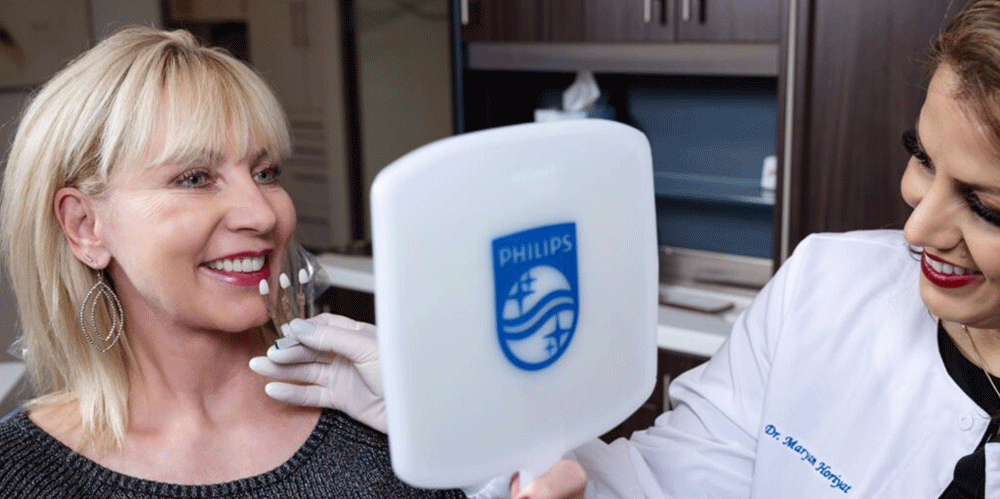
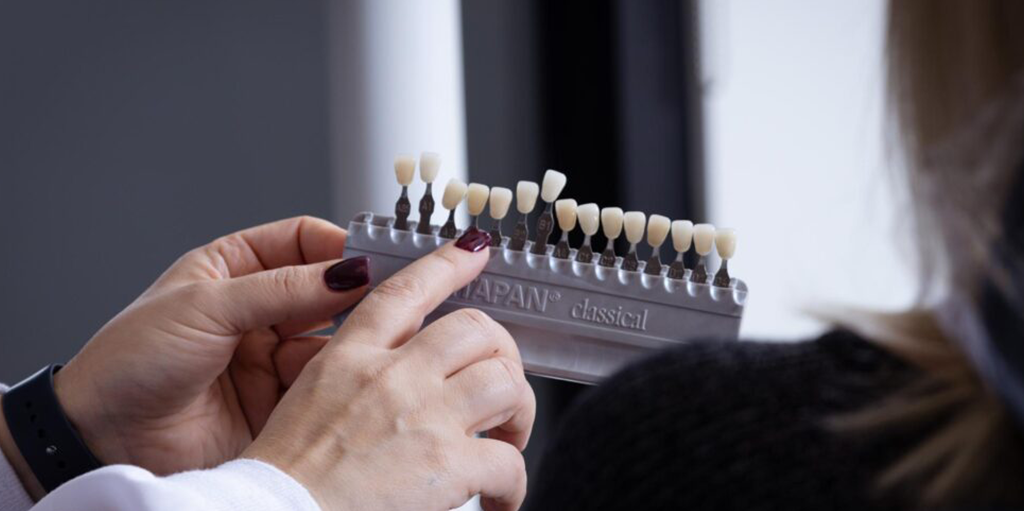
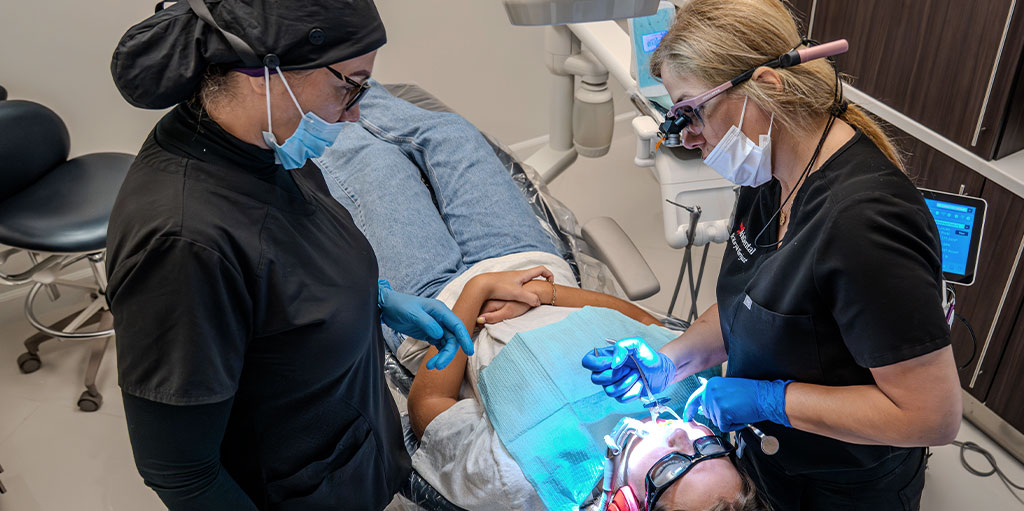




You invested in a beautiful smile. Now you are standing in your kitchen at 6 a.m., holding a cup of coffee, wondering whether you are about to undo thousands of dollars of cosmetic dentistry with one sip.
It is one of the most common questions we hear at Aria Dental Care in Mission Viejo, and it deserves a real answer instead of a marketing slogan. So let us settle it: do porcelain veneers stain? The short version is that high quality porcelain itself is remarkably stain resistant, far more resistant than your natural enamel. But the full answer is more nuanced, because a veneer is not just porcelain. It is porcelain, plus a bonding cement, plus a margin where the restoration meets your tooth, plus the living tooth underneath, plus your gums, your saliva, your habits, and your home care routine.
Discoloration in a veneered smile is real. It just usually does not come from where patients assume it does. This guide walks you through the science, the honest risk factors, and the daily choices that determine whether your smile still looks fresh in year ten.
Do Porcelain Veneers Stain? The Straight Answer
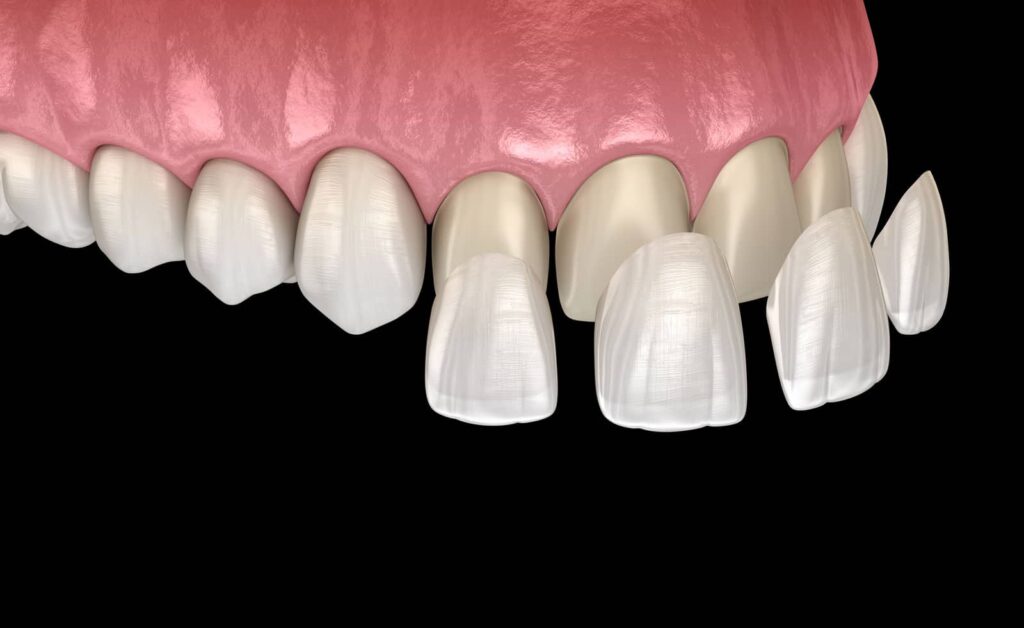
Dental porcelain is a ceramic. During fabrication it is fired at high temperature and finished with a glaze, which creates a surface that is essentially non-porous. Natural tooth enamel, by contrast, has microscopic porosity and a protein rich layer called the pellicle that pigment molecules love to cling to. That difference in surface structure is the entire reason people ask whether porcelain veneers stain in the first place, and it is the reason the answer leans strongly in your favor.
Here is how we explain it to patients:
- Intrinsic staining of the ceramic itself is extremely unlikely. Pigments from coffee, tea, or red wine cannot penetrate a properly glazed ceramic surface the way they penetrate enamel or dentin.
- Extrinsic surface film can still accumulate. Plaque, tartar, and biofilm build up on porcelain just as they do on natural teeth, and that film holds pigment. This looks like staining but it is deposit, and it responds to professional cleaning.
- The weak points are the edges and the adhesive, not the shell. When patients tell us their veneers look discolored, we most often find margin staining, cement breakdown, gum recession, or darkening of the underlying tooth.
- Damaged glaze changes everything. A veneer that has been scrubbed with abrasive whitening pastes, sandblasted by aggressive hygiene instruments, or eroded by acid can develop microscopic roughness. Rough porcelain does pick up color.
So when someone asks can porcelain veneers stain, the accurate answer is that the porcelain resists staining beautifully, while the system around the porcelain has vulnerabilities that good design and good maintenance can control.
What Porcelain Veneers Are Actually Made Of
Understanding veneer material helps explain why some smiles hold their color for fifteen years while others look dull in five. According to the American Dental Association, veneers are thin, custom made shells of tooth colored material bonded to the front surface of teeth, and porcelain versions are known for strength, longevity, and a natural appearance. You can read the ADA overview at MouthHealthy.
Feldspathic Porcelain
This is the traditional layered ceramic, hand built by a master ceramist. It offers exceptional translucency and lifelike optics. It is thinner and more artistic, though slightly less fracture resistant than pressed materials. Well glazed feldspathic porcelain is highly color stable.
Lithium Disilicate and Pressed Ceramics
Pressed lithium disilicate has become the workhorse of modern cosmetic dentistry. It is denser, stronger, and can be made in very thin sections for minimal preparation cases. Its dense structure makes it exceptionally resistant to porcelain veneer discoloration.
Zirconia
Zirconia is the strongest option and is often chosen for patients who grind or clench. It is opaque by nature, so it requires skilled layering to look natural on front teeth. Zirconia is essentially impervious to pigment.
Why This Matters for Staining
The common thread is glaze and density. A dense, properly fired, properly glazed ceramic does not absorb color. What varies between labs and clinicians is the quality of that firing and finishing, the precision of the margin, and the shade stability of the cement chosen. This is why two patients can ask the same question, do veneers stain over time, and get two completely different real world answers depending on who made and placed their restorations.
The Real Causes of Veneer Discoloration
If the ceramic does not absorb pigment, why do some veneered smiles look dingy after a few years? These are the culprits we identify in our Orange County practice.
1. Bonding Cement Breakdown at the Margins
Veneers are bonded with a resin cement. Resin is a composite material, and composites are porous compared to ceramic. Over years, the thin line of cement at the edge of the veneer can absorb pigment, oxidize, and darken. The result is a faint dark outline at the gumline that reads to the eye as a stained veneer, even though the porcelain is pristine.
This is the single most common form of veneer staining we see. It is also why the technique used on placement day matters so much. Excess cement that is not fully removed and polished creates a rough ledge that collects plaque and pigment for the rest of the restoration’s life.
2. Microleakage and Marginal Gaps
If a veneer does not fit precisely, or if the bond degrades, a microscopic gap can open between porcelain and tooth. Fluids, bacteria, and pigment seep in. This is not just cosmetic. Microleakage can lead to decay under the restoration, which is why we monitor margins carefully at every hygiene visit.
3. Darkening of the Natural Tooth Underneath
Porcelain veneers are thin and often somewhat translucent, which is precisely what makes them look real. Translucency also means the color of the tooth beneath shows through. If that tooth darkens with age, from trauma, or after root canal therapy, the veneer will appear to have changed color even though it has not. The stain is coming from behind, not from the surface.
4. Gum Recession
As gums recede, they expose the junction between the veneer and the root surface. Root dentin is naturally darker and far more porous than enamel or porcelain. A visible band of yellowed root at the gumline is one of the most noticeable causes of an aged looking smile. This is a periodontal issue disguised as a cosmetic one.
5. Loss of Surface Glaze
Abrasive whitening toothpastes, charcoal powders, baking soda scrubs, and overly aggressive polishing can wear away the glazed layer. Once the surface becomes microscopically rough, it behaves more like enamel and begins to hold pigment. This is preventable and it is one of the most important things patients can control.
6. Acid Erosion
Frequent exposure to acidic drinks, chronic acid reflux, or acidic whitening products can etch ceramic surfaces over time. Etched porcelain loses its shine and picks up color. Patients with reflux need a comprehensive plan, not just a cosmetic one.
7. Tobacco
Tar and nicotine deposit heavily on every surface in the mouth. Even on stain resistant porcelain veneers, tobacco residue builds a stubborn film, and it dramatically increases risk of gum disease and recession. The Centers for Disease Control and Prevention documents how smoking weakens the immune response and impairs gum healing, which you can review here.
Porcelain vs Composite: A Very Different Staining Story
When patients ask do porcelain veneers stain, they are frequently comparing them, consciously or not, to composite bonding.
Composite resin veneers are made of a plastic based filling material. They are more affordable, can often be completed in one visit, and typically require less enamel removal. They are also porous. Composite absorbs pigment from coffee, tea, curry, berries, and tobacco, and it tends to yellow and lose luster within a few years. Polishing helps temporarily. Eventually the material needs replacement or resurfacing.
| Factor | Porcelain Veneers | Composite Veneers |
| Stain resistance | Very high | Moderate to low |
| Typical lifespan | 10 to 20 years | 4 to 8 years |
| Surface | Glazed, non-porous ceramic | Porous resin |
| Response to whitening | Does not lighten | Does not lighten |
| Repairability | Usually replaced | Often repolished or patched |
| Cost | Higher initially | Lower initially |
If long term color stability is your priority, porcelain is the clear winner. That is not a sales pitch. It is a materials science reality.
Foods and Drinks: What Actually Threatens Your Veneers
Patients often expect a long list of forbidden foods. The honest guidance is more reasonable than that. You do not need to give up coffee. You do need to understand where the risk actually sits, which is at the margins, on the natural teeth alongside your veneers, and in the biofilm layer.
Higher Pigment Items to Consume Mindfully
- Coffee and espresso
- Black tea, including iced tea
- Red wine
- Cola and dark sodas
- Soy sauce, balsamic vinegar, and dark marinades
- Curry, turmeric, and tomato based sauces
- Blueberries, blackberries, pomegranate, and beet juice
- Colored sports drinks and popsicles
Higher Acid Items That Threaten the Glaze
- Lemon water sipped throughout the day
- Sparkling water consumed constantly
- Kombucha and vinegar drinks
- Citrus juices
- Wine, which is both acidic and pigmented
The pattern that damages a veneered smile is not the occasional glass of wine. It is the all day sip. Nursing an iced coffee from nine to five keeps pigment and acid in contact with your margins for hours. Drinking the same coffee in fifteen minutes, then rinsing with water, is a completely different exposure profile.
Practical Habits That Help
- Drink water immediately after pigmented or acidic beverages
- Use a straw for iced coffee, tea, and colored drinks
- Do not brush for at least thirty minutes after acidic exposure, since softened surfaces are easier to abrade
- Finish pigmented drinks in a defined window rather than sipping continuously
- Chew xylitol gum to stimulate saliva, which is your natural buffering system
How to Keep Porcelain Veneers White for the Long Term
Long lasting color comes down to protecting the glaze and controlling biofilm. Here is the protocol we give patients at Aria Dental Care.
Choose Non-Abrasive Products
Look for a low RDA, meaning relative dentin abrasivity, toothpaste. Avoid charcoal pastes, baking soda scrubs, smoker’s toothpastes, and anything marketed as heavy duty stain removal. These products are engineered to abrade, and abrasion is exactly what turns a glossy veneer into a pigment magnet. Hydroxyapatite based and gentle non-abrasive formulas are excellent choices for a veneered smile and align with our biocompatible philosophy.
Use a Soft or Electric Brush Correctly
A soft bristle manual brush or an electric brush with a pressure sensor works well. Technique beats force every time. Scrubbing harder does not clean better, it simply wears surfaces and irritates gums, which contributes to recession.
Clean Between Your Teeth Daily
Margins live between and around teeth. Floss, water flossers, and interdental brushes are what keep those margins free of the plaque that both stains and inflames. Gum health is veneer health.
Protect Against Grinding
If you clench or grind, a custom nightguard is not optional. Bruxism chips edges, wears glaze, and stresses bonds. A properly fitted guard is one of the highest return investments you can make in the lifespan of your cosmetic work.
Keep Professional Hygiene Visits
Professional cleanings remove the film that home care misses. Just as importantly, we ask that your hygienist knows you have veneers. Certain ultrasonic settings and coarse prophy pastes can damage ceramic surfaces. At our office we use veneer appropriate polishing protocols and gentler instrumentation on restored teeth. Regular preventive care is also the foundation of oral health generally, as the National Institute of Dental and Craniofacial Research outlines in its oral health data and research.
Whiten Your Natural Teeth Before, Not After
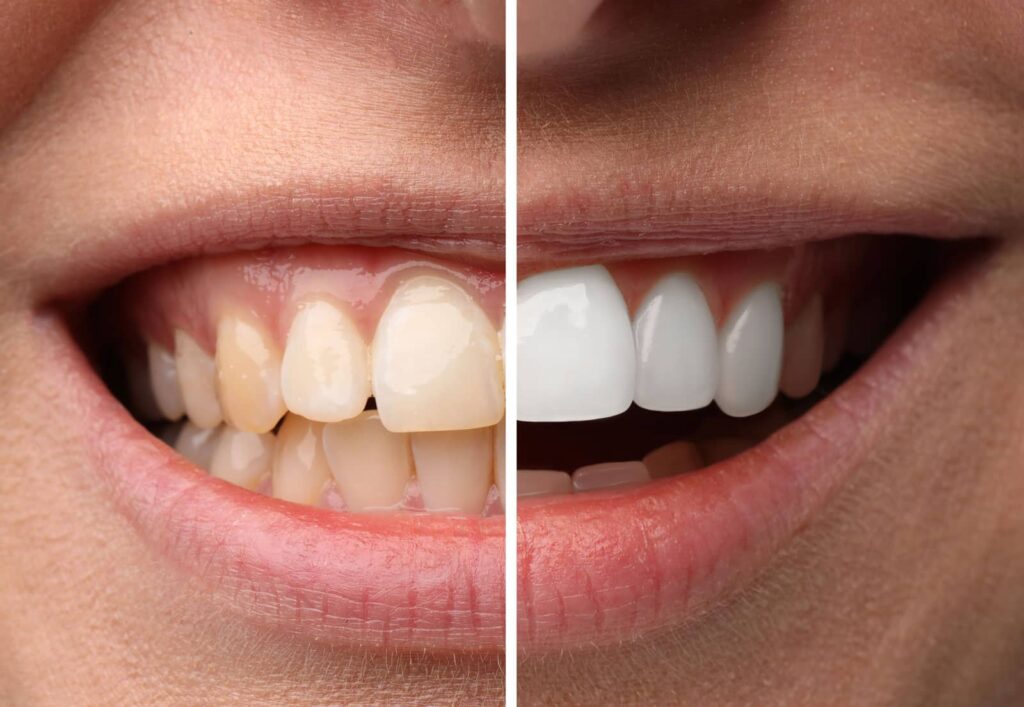
This is a scheduling detail that saves enormous frustration. Porcelain does not respond to bleaching agents. Your natural teeth do. If you plan to whiten, do it before your veneers are fabricated so your ceramist can match the final shade to your brightened natural teeth. Whitening afterward will lighten everything except your veneers, and the mismatch is obvious.
Can Stained Veneers Be Fixed?
Yes, in most cases. The treatment depends entirely on the cause, which is why an accurate diagnosis comes first.
Professional Polishing and Cleaning
If the discoloration is surface film or tartar, a gentle professional cleaning with ceramic safe polishing paste restores brightness. Many patients who believe their veneers are permanently stained simply need proper deposit removal.
Air Polishing and Ozone Therapy
For biofilm heavy cases we use fine particle air polishing and, where appropriate, ozone therapy as part of our biological approach to reduce bacterial load around margins without harsh chemistry.
Margin Repair
If the cement line has darkened but the veneer is otherwise intact and well sealed, a conservative refinishing of the margin can sometimes remove the discolored resin layer and restore a clean edge.
Replacement
When the bond has failed, the margin leaks, the glaze is significantly eroded, or the underlying tooth has darkened, replacement is the definitive solution. Modern replacement veneers are typically thinner, better fitting, and more color stable than restorations placed a decade or more ago.
Treating the Underlying Tooth
If a non-vital tooth beneath a veneer has darkened, internal bleaching of that tooth, or a redesigned restoration with an opaquing layer, addresses the true source rather than masking it.
The Biological and Holistic Difference at Aria Dental Care
Cosmetic dentistry and biological dentistry are not separate disciplines in our practice. They are the same commitment expressed two ways: we want your smile to look beautiful and we want the materials in your mouth to be compatible with your body.
Our approach to veneers reflects that philosophy:
- 100 percent metal free and mercury free. We use no amalgam and no metal substructures. Every restoration is ceramic.
- Biocompatible material selection. We are mindful of resin chemistry and BPA content in the cements and bonding systems we choose.
- Minimally invasive preparation. Preserving enamel preserves bond strength, and strong bonds resist microleakage, which is one of the primary drivers of margin staining.
- Laser and ozone assisted protocols. These support clean, healthy tissue at the gumline where veneer margins live.
- Digital design and precision fit. Better margins mean less cement exposure, less plaque retention, and less discoloration risk over time.
- Airway and bite aware planning. Cosmetic work that ignores how you bite and breathe does not last. We assess function before we design esthetics.
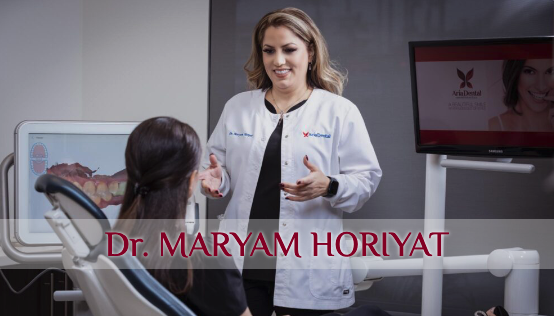
Dr. Maryam Horiyat is accredited by the International Academy of Oral Medicine and Toxicology and certified by the International Academy of Biological Dentistry and Medicine, and Aria Dental Care is recognized as Orange County’s number one holistic, biologic, and cosmetic dental office. Our promise is simple. We put your health above everything else, and we build smiles designed to age gracefully.
Warning Signs You Should Not Ignore
Book an evaluation if you notice any of the following:
- A dark line appearing at the gumline of one or more veneers
- A single veneer that looks noticeably different in color from its neighbors
- Rough or chalky texture when you run your tongue across the surface
- New sensitivity to hot or cold around a veneered tooth
- Gums that bleed, look puffy, or have visibly receded
- A veneer that feels loose or clicks when you bite
Most of these are far easier and less expensive to address early. A darkened margin caught at year six is a very different conversation than decay discovered at year nine.
Realistic Expectations for the Life of Your Smile
Well made, well maintained porcelain veneers commonly serve patients for ten to twenty years or longer. Over that span, some change is normal. Gums shift. Adjacent natural teeth darken slightly with age. Bonding cement ages. None of that means your veneers failed.
The patients whose smiles look best at the fifteen year mark share the same habits. They use gentle products. They clean between their teeth. They wear their nightguards. They keep their hygiene appointments. They rinse after coffee. They do not smoke. None of it is dramatic, and all of it compounds.
Ready to Protect or Restore Your Smile?
If you are considering veneers and want them designed to stay beautiful for decades, or if you have existing veneers that no longer look the way they did on placement day, we would be glad to evaluate them.
At Aria Dental Care in Mission Viejo, Dr. Maryam Horiyat combines advanced cosmetic artistry with a truly biological, biocompatible, metal free philosophy. We serve patients throughout Orange County, including Laguna Niguel, Rancho Santa Margarita, Ladera Ranch, and San Clemente.
Schedule your consultation with Aria Dental Care and let us build you a smile that ages as well as it looks.