


When patients consider orthodontic solutions, one of the most common questions we encounter at Aria Dental is: “How long does Invisalign treatment take?” This comprehensive guide provides an evidence‑based, clinically grounded answer. We will explore the nuances of Invisalign therapy, including what is Invisalign treatment, what is invisalign treatment and how does it work, the stages of the invisalign treatment process, expected durations, clinical variables, and measurable outcomes observed in Invisalign before and after cases.
Introduction to Invisalign: What Is Invisalign Treatment?
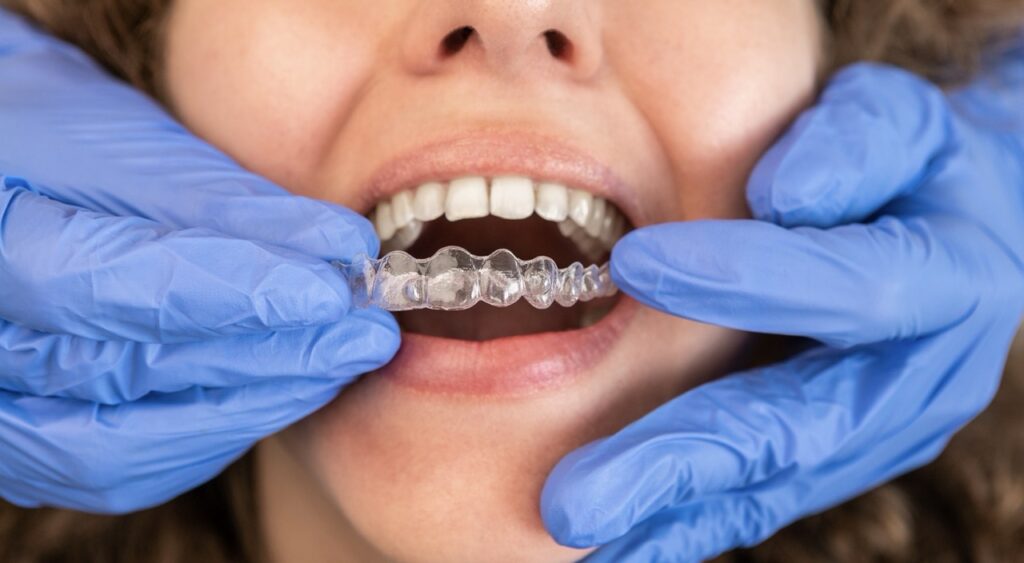
Invisalign is a brand of clear aligner therapy that represents a paradigm shift in orthodontics. Unlike fixed metal braces, Invisalign uses a series of custom‑fabricated, thermoplastic trays designed to apply controlled biomechanical forces to teeth, guiding them toward predetermined positions.
Definition and Clinical Context
Clinically, what is invisalign treatment can be defined as a non‑bracket, removable orthodontic modality intended to correct malocclusion and tooth misalignment. These aligners are fabricated based on three‑dimensional digital models, making the treatment highly individualized for each patient’s occlusal parameters.
According to the American Dental Association (ADA), clear aligner therapy is an established orthodontic intervention with documented efficacy for mild to moderate dental alignment issues.
What Is Invisalign Treatment and How Does It Work?
To fully understand the typical treatment duration, it is essential to appreciate what is invisalign treatment and how does it work on both a mechanical and biological level.
Biomechanics of Tooth Movement
The invisalign treatment process leverages the biological principle of bone remodeling. Teeth are encased in alveolar bone and are suspended by periodontal ligament fibers. When light, continuous forces are applied, as with Invisalign aligners, osteoclasts resorb bone on the pressure side, while osteoblasts deposit bone on the tension side. This coordinated response allows controlled, gradual movement of teeth.
Digital Workflow
The process begins with intraoral scanning or conventional impressions. Using advanced software, clinicians map the final desired tooth positions and generate a series of incremental movements. Each aligner is programmed to move specific teeth by small, clinically acceptable distances.
Sequential Aligner Wear
Typically, aligners are worn in a prescribed sequence, with each tray worn for 20–22 hours per day. Wear time is crucial; insufficient compliance slows the invisalign treatment process and extends overall duration.
Typical Invisalign Treatment Time: What to Expect
The length of Invisalign treatment is highly individualized and depends on several clinical factors, including the severity of misalignment, the patient’s age, biological response, treatment objectives, and most importantly, compliance with wearing the aligners as prescribed.
While outcomes vary, the following treatment durations are commonly observed in practice:
- Mild misalignment: 6–9 months
- Moderate malocclusion: 12–18 months
- Complex cases (involving rotations or extractions): 18–24+ months
These timeframes are based on current clinical research and professional orthodontic consensus. It’s important to understand that even though clear aligners may show early visible changes, full correction and bite alignment require time, patience, and strict adherence to the aligner wear schedule. At Aria Dental, we evaluate each patient’s condition to create a customized plan that aligns with their specific orthodontic goals while aiming for efficiency and long-term stability in results.
Evidence‑Based Insights into Treatment Duration
A comprehensive review in the Journal of the American Dental Association (JADA) demonstrates that clear aligners achieve similar outcomes to traditional braces in many moderate cases, with treatment spans that vary according to biomechanical complexity.
It is important to note that while Invisalign can be efficient for many patients, treatment duration should always be individualized through clinical evaluation rather than relying solely on average timelines.
Understanding the Invisalign Treatment Process
The invisalign treatment process can be delineated into key phases, each with clinical milestones:
1. Diagnostic Assessment and Treatment Planning
This foundational phase includes:
- Complete oral examination
- Intraoral scanning or impressions
- Occlusal analysis
- Radiographs and cephalometric evaluation (as indicated)
- Digital treatment simulation
A detailed plan is developed identifying target tooth movements, estimated sequence, and projected duration.
2. Fabrication of Aligners
Once the treatment plan is finalized, a series of clear aligners are manufactured. Each aligner represents a step in the overall tooth‑movement progression.
3. Active Aligner Wear Phase
Patients typically change aligners every 7–14 days, depending on the treatment prescription. Clinical check‑ins occur periodically to monitor progress and verify that planned movements are tracking appropriately.
4. Refinement Phase (If Needed)
Refinements involve additional aligners to address residual discrepancies. This is common in cases requiring rotations or vertical adjustments.
5. Retention Phase
Once optimal alignment is achieved, retention is essential to prevent relapse. Retainers may be clear plastic devices or bonded lingual retainers.
Key Factors That Influence Invisalign Treatment Duration
Understanding these variables can help patients anticipate their journey and set realistic expectations.
1. Compliance and Wear Time
Compliance is the most significant modifiable factor in treatment duration. Aligners must be worn consistently for orthodontic forces to be effective. Failure to meet recommended wear times can prolong the overall course.
2. Severity of Malocclusion
Cases involving significant crowding, spacing, or bite discrepancies (Class II or III) often require longer treatment. The biomechanical complexity dictates incremental tooth movements that cannot be accelerated arbitrarily without compromising periodontal health.
3. Age and Biological Response
Younger patients often exhibit more robust biological responses to orthodontic force due to active bone turnover, potentially reducing treatment time.
Invisalign Before and After: Interpreting Clinical Outcomes
A powerful illustration of Invisalign effectiveness is seen in Invisalign before and after imagery. Clinically, measurable outcomes include:
- Correction of dental arch alignment
- Elimination of spacing or crowding
- Improved intercuspation and occlusal function
- Enhanced incisal guidance and esthetics
These changes are typically documented via clinical photography, digital scans, and radiographs before and after treatment.
Clinical Note: While aesthetic improvements are visible comparatively early, full occlusal refinement and tissue adaptation continue through retention. Hence the importance of following post‑treatment protocols.
Comparing Invisalign to Conventional Braces
Traditionally, orthodontic therapy relied on fixed wires and brackets. Its effectiveness is well documented, but several contrasts are noteworthy when comparing timelines.
Predictability and Efficiency
Invisalign: Digital setup enables precise staging of movements.Braces: Mechanical adjustments occur chairside without preplanned staging.
Both modalities can achieve satisfactory outcomes, but Invisalign often offers improved patient comfort and hygiene.
Duration Trends
Orthodontic literature indicates similar overall treatment times for mild to moderate cases, with braces sometimes favored for severe skeletal discrepancies.
Clinical Guidelines for Efficient Treatment Progress
To optimize outcomes and minimize total duration, consider the following clinician‑backed recommendations:
Maintain High Wear Compliance
Patients should aim for 20–22 hours of daily wear. Any reduction in wear time correlates directly with slower biomechanical response.
Attend Scheduled Adjustments
Regular orthodontic evaluations ensure that movements are occurring as planned, minimizing deviation from the expected timeline.
Follow Oral Health Protocols
Healthy periodontal tissues respond more predictably to orthodontic forces. Good oral hygiene and periodontal maintenance contribute to treatment efficiency.
Managing Patient Expectations
Orthodontic treatment is an investment in long‑term dental health. To support patients, clinicians should provide:
- Realistic timelines tailored to individual assessment
- Education on milestones and potential refinements
- Protocols for retention and long‑term stability
Understanding that minor esthetic changes often appear early, while functional refinement continues throughout the active and retention phases, empowers patients to adhere to treatment protocols.
Conclusion: Understanding Your Invisalign Journey
At Aria Dental, we believe in empowering our patients with evidence‑based guidance on orthodontic care. The timeline of invisalign treatment reflects a combination of biological, mechanical, and compliance‑dependent variables. Typical treatment spans between 6 and 24 months, with many patients achieving significant improvements in 12–18 months when aligner wear guidelines are followed rigorously.
The invisalign treatment process is a highly individualized and digitally optimized orthodontic modality that delivers both functional and esthetic improvements. Patients interested in how Invisalign can address their alignment needs, and how long their personal journey may take, are encouraged to consult with our clinical team for individualized assessment.
Your smile is worth the science behind it, and at Aria Dental, we guide you through every step of your orthodontic transformation.