





Is root canal treatment safe? Or should you avoid it and explore healthier alternatives?
The safety of root canal treatment has become increasingly controversial. More patients are questioning conventional endodontic therapy and seeking biological or holistic dental options. With over 15 million root canal procedures performed every year in the United States, it’s important to understand whether this treatment is necessary—or safe—for everyone.
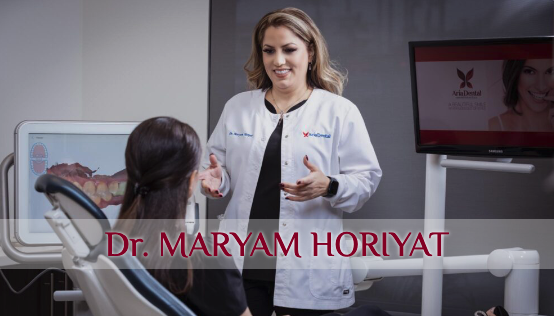
At Aria Dental, Dr. Maryam Horiyat provides holistic and biological dental care supported by expert dentists, board-certified periodontists, and anesthesiologists. In this comprehensive guide, we will explore root canal treatment, its risks and benefits, and how holistic dentistry compares to conventional dentistry
What Is Root Canal Treatment?
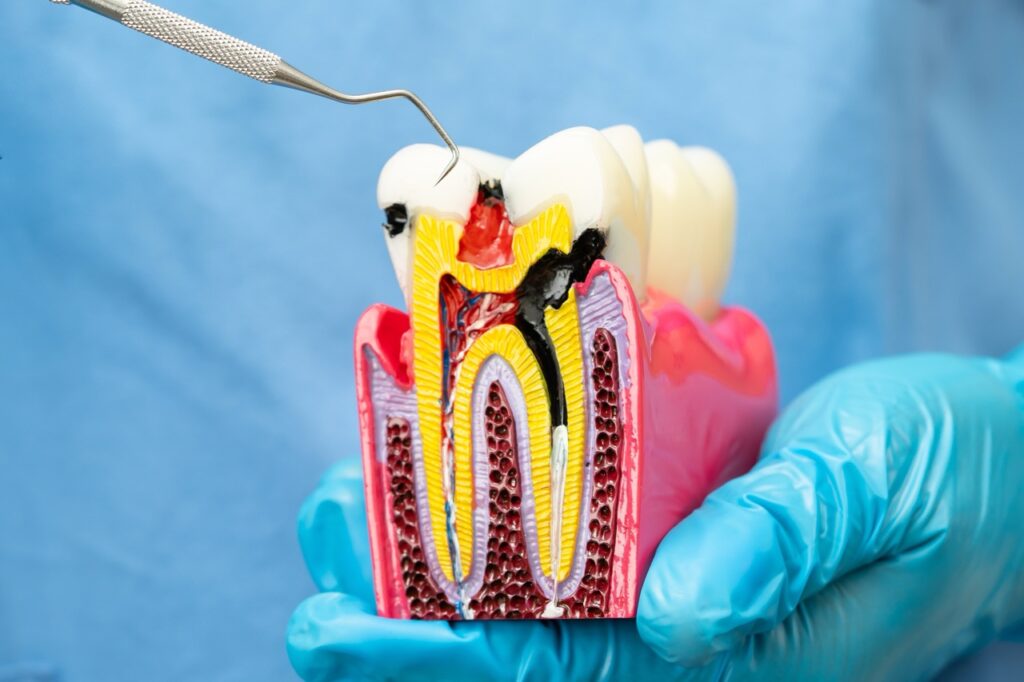
Root canal treatment is a dental procedure designed to address infection or inflammation inside a tooth. Many people are unaware that a tooth is a living structure, functioning much like other organs in the body. It is made up of four essential tissues: enamel, dentin, cementum, and pulp. Enamel is the hard outer protective layer, dentin lies beneath it, cementum covers the root surface, and the pulp is the soft inner core.
The pulp plays a critical role in maintaining tooth vitality. It contains blood vessels, nerves, and connective tissue that nourish the tooth and keep it responsive to temperature and pressure. This inner tissue is also connected to the body’s bloodstream and lymphatic system. When a deep cavity, crack, fracture, or traumatic injury affects the pulp, inflammation or infection can develop. This condition is known as pulpitis and may require intervention to prevent further complications.
Understanding the Stages of Pulpitis
Reversible Pulpitis
Reversible pulpitis is the earliest stage of pulp inflammation. It usually develops when the tooth pulp becomes irritated due to deep decay, a cracked tooth, trauma, or repeated dental procedures. Patients often notice short, sharp sensitivity to cold, sweets, or pressure. The discomfort typically goes away once the trigger is removed.
At this stage, the pulp is still alive and capable of healing. If the underlying cause, such as a cavity or defective filling, is treated promptly, the inflammation can subside naturally. The tooth can remain vital, and root canal treatment is not necessary.
Irreversible Pulpitis
If the inflammation progresses and is not treated early, it may become irreversible. Pain can become spontaneous, more intense, and linger even after removing hot or cold stimuli. This indicates that the pulp tissue has been permanently damaged.
Because the pulp cannot heal at this point, treatment usually involves removing the inflamed tissue through root canal therapy to prevent further complications.
Necrotic (Dead) Tooth and Abscess
When irreversible pulpitis remains untreated, the pulp tissue eventually dies, creating a necrotic tooth. Bacteria can then spread through the root canal system and into the surrounding bone.
This may lead to an abscess, which can cause swelling, discomfort, or sometimes remain completely silent for years.
What Happens During a Root Canal Procedure?
Root canal treatment, also known as endodontic therapy, is designed to remove infected or inflamed pulp tissue from inside a tooth while preserving its outer structure. The procedure typically involves the following steps:
- Creating a small access opening in the crown of the tooth
- Removing the infected or damaged pulp tissue, including nerves and blood vessels
- Cleaning and disinfecting the main root canals using specialized instruments
- Shaping the canals to prepare them for filling
- Filling the canals with a biocompatible material
- Sealing the tooth to help prevent reinfection
Conventional root canal treatment focuses primarily on cleaning the main canals. However, teeth have a complex microscopic structure that includes tiny accessory or lateral canals. These small spaces may not always be fully disinfected. After the procedure, the tooth no longer has a blood supply or lymphatic drainage, meaning it becomes non-vital while remaining in place to maintain chewing function and structure.
Why Is Root Canal Treatment Controversial?
The controversy centers on whether leaving a dead tooth in the body is biologically safe.
Unlike other branches of medicine, dentistry may leave a non-vital organ inside the body. Holistic and biological dentists question whether chronic low-grade infections in treated teeth may affect systemic health.
Some research, including studies by Dr. Weston A. Price and Dr. Hal Huggins, suggested potential links between root canal-treated teeth and systemic inflammation. While mainstream dentistry disputes these findings, patient concerns continue to rise.
Six Key Differences: Conventional vs. Holistic Root Canal Diagnosis
1. Overdiagnosis Concerns
Many patients seeking a second opinion at Aria Dental were previously told they needed a root canal. In some cases, pain was due to reversible inflammation rather than infection. Once the underlying issue was addressed, symptoms resolved without endodontic treatment.
2. Immediate Recommendation for Vital Teeth
Conventional dentists may recommend root canal treatment when they see a deep cavity near the pulp or sensitivity to hot and cold. Holistic dentists may attempt ozone therapy or laser therapy to preserve vitality before recommending pulp removal.
3. Limited Discussion of Alternatives
Even when infection is visible on X-rays, conventional dentistry often focuses on root canal therapy. Biological dentistry may discuss:
- Holistic tooth extraction
- Ozone disinfection
- Laser-assisted therapy
- PRF and PRP therapy
- Exosome treatments
- Metal-free Zirconia implants or ceramic implants
4. Lack of Holistic Extraction Awareness
Few conventional providers are trained in holistic extraction techniques that aim to thoroughly disinfect and preserve surrounding bone tissue.
5. Dismissal of Patient Concerns
Some patients report that their request for natural alternatives to root canal treatment was dismissed. Biological dentistry emphasizes informed consent and patient choice.
6. Meridian and Systemic Health Considerations
Holistic dentists recognize the meridian connection between teeth and body organs. They consider whether chronic dental infections could compromise immune function or contribute to systemic inflammation.
Can Root Canal-Treated Teeth Cause Health Problems?
Does everyone develop systemic disease from a root canal? Most likely, no.
However, the concern is that certain individuals may have immune systems that do not tolerate chronic inflammation from a non-vital tooth. Silent infection may not appear painful for years but could trigger inflammatory responses.
Bacteria and toxins from untreated micro-channels in dentin may theoretically enter the bloodstream, potentially affecting organs such as the heart, joints, brain, kidneys, and glands.
More research is needed, but the uncertainty is what fuels debate around root canal safety.
How Do We Detect Hidden Dental Infection?
Cone-beam CT (CBCT) imaging enables dentists to identify hidden dental infections, chronic inflammation, or jawbone abscesses with greater precision than traditional two-dimensional X-rays. This advanced 3D technology improves diagnostic accuracy and helps monitor root canal–treated teeth. However, even with detailed imaging, it is not always possible to determine how an individual’s immune system may react to a non-vital or infected tooth.
Root Canal Treatment vs. Tooth Extraction: A Biological View
When pulp damage becomes irreversible or the tooth becomes necrotic, two main treatment paths are typically considered:
- Root canal treatment – Removal of infected pulp tissue while preserving the outer tooth structure
- Tooth extraction – Complete removal of the tooth to eliminate infection entirely
From a biological dentistry perspective, extraction may be recommended in cases of advanced infection, chronic inflammation, or when systemic health concerns are present.
Holistic extraction protocols often include additional steps to promote proper healing and reduce long-term risks:
- Thorough cleaning and debridement of the socket
- Ozone therapy to disinfect surrounding bone
- Laser-assisted disinfection
- PRF (platelet-rich fibrin) or PRP (platelet-rich plasma) therapy
- Exosome therapy for enhanced tissue regeneration
For tooth replacement, biological dentists may recommend:
- Metal-free Zirconia implants
- Ceramic dental implants
Some holistic providers avoid titanium implants due to concerns about metal ion release and long-term biocompatibility.
Is Root Canal Treatment Safe for Everyone?
There is no universal answer to whether root canal treatment is safe for everyone. For many patients, root canal therapy successfully relieves pain and prevents abscess formation. However, holistic dentistry asks a broader question: is preserving a non-vital tooth always the healthiest long-term option?
Each case should be evaluated individually, considering:
- Immune system strength
- Levels of systemic inflammation
- Presence of chronic illness
- Overall dental health condition
- Individual healing capacity and medical history
A personalized assessment ensures the safest and most appropriate treatment decision.
When Should You Get a Second Opinion?
If you have been told you need root canal treatment, seeking a second opinion can provide clarity and ensure you explore all available options. You may especially want another evaluation if:
- The tooth is still vital and not confirmed necrotic
- Your pain is mild, occasional, or triggered only by temperature
- Diagnostic findings are inconclusive
- You prefer holistic or biological treatment alternatives
- You have autoimmune disease or chronic inflammatory conditions
- You want to explore conservative therapies before pulp removal
A certified biological dentist affiliated with IAOMT, IABDM, or holistic dental organizations can discuss conservative options before proceeding.
Final Thoughts: Making an Informed Decision
So, is root canal treatment safe?
The answer depends on your individual health, diagnosis, and philosophy of care. While conventional dentistry views root canal therapy as a predictable and effective procedure, biological dentistry evaluates the broader impact on systemic health.
At Aria Dental, we believe patients deserve full transparency, second opinions, and access to both conventional and holistic treatment options.If you have been advised to undergo root canal treatment and would like to explore alternatives, schedule a consultation to discuss what is safest and healthiest for you.