





If your dentist has recently used the phrase full mouth reconstruction, or if you’ve been living with multiple dental problems and wondering whether there’s a comprehensive solution that could address all of them at once, this guide is written specifically for you.
Full mouth reconstruction is one of the most misunderstood concepts in modern dentistry. Some patients assume it’s an extreme measure reserved for the most severe cases. Others confuse it with a cosmetic smile makeover. Many simply don’t know it exists, quietly managing a patchwork of dental problems when a coordinated, comprehensive treatment plan could transform not just their smile, but their ability to eat comfortably, speak clearly, and live without daily oral pain.
At Aria Dental Care, we believe every patient deserves a clear, honest explanation of what full mouth reconstruction actually is, whether they genuinely need it, what it involves, and how the process works. That’s exactly what this guide delivers.
What Is a Full Mouth Reconstruction?
A full mouth reconstruction, also called full mouth rehabilitation, complete mouth restoration, or full mouth rehab, is a comprehensive, highly individualized dental treatment plan that restores the health, function, structure, and aesthetics of an entire mouth. It involves the coordinated use of multiple restorative, surgical, and periodontal procedures to rebuild or rehabilitate most or all of the teeth in both arches, either simultaneously or in carefully planned phases.
This is not a single procedure. It is a treatment strategy, a master plan that integrates everything your mouth needs into one cohesive, sequenced program. The procedures involved vary significantly from patient to patient, because no two mouths present the same combination of problems. One patient’s full mouth reconstruction might center on dental implants and bone grafting. Another’s might prioritize treating advanced periodontal disease, then restoring worn dentition with crowns and veneers. A third might require orthodontics to realign a collapsed bite before any restorations can be placed.
What all full mouth reconstructions share is their primary goal: to restore proper function, the ability to bite, chew, and speak effectively, while also creating a healthy, stable, and aesthetically pleasing result that can last for decades.
Full Mouth Reconstruction Is a Medical Necessity, Not an Elective Choice
This distinction is worth emphasizing from the outset. Unlike cosmetic dental treatments that improve the appearance of an already-functional smile, full mouth reconstruction is driven by clinical need. It is recommended when the cumulative extent of dental damage, disease, or structural failure makes piecemeal individual treatments either inadequate or clinically illogical, when the problems are so interconnected that treating one in isolation without addressing the others will lead to predictable failure.
According to the American College of Prosthodontists, approximately 178 million Americans are missing at least one tooth, and 35 million are missing all of their teeth in one or both jaws. Many of these patients, along with millions who have severe decay, advanced periodontal disease, or significant bite collapse, are candidates for some form of full mouth restorative dentistry.
Key Insight from Aria Dental Care: Think of full mouth reconstruction the way you would think of a structural renovation of a building. When the foundation is compromised, the plumbing has failed, and multiple walls are damaged, you don’t patch each problem individually and hope for the best, you develop a comprehensive renovation plan. Full mouth rehabilitation is exactly that philosophy applied to your oral health.
Full Mouth Reconstruction vs. Smile Makeover: Understanding the Key Difference
The confusion between these two terms is completely understandable, both involve multiple dental procedures, both can dramatically transform the appearance of a smile, and many of the individual procedures overlap. But the distinction between them is clinically meaningful and practically important.
Full Mouth Reconstruction: Needs-Based, Medically Necessary
Full mouth reconstruction is prescribed by a dental provider because the health, function, and structural integrity of the mouth requires it. The driver is clinical necessity. The goal is to restore what has been lost or damaged, to bring the mouth back to a state of health and proper function. Aesthetic improvement is often an outcome, but it is a secondary benefit of treating the underlying medical condition, not the primary objective.
Smile Makeover: Wants-Based, Elective and Cosmetic
A smile makeover is an elective cosmetic treatment performed on a mouth that is already fundamentally healthy, the teeth and gums are sound, but the patient wants to improve how the smile looks. Whitening, veneers, Invisalign for minor alignment issues, gum contouring, these are the tools of a smile makeover. No structural repair is required because no structural failure has occurred.
The simplest summary: a smile makeover is something you choose; a full mouth reconstruction is something you need.
It is also worth noting that many patients begin with full mouth reconstruction and, once function and health have been restored, choose to add cosmetic finishing touches as the final stage of their treatment. At Aria Dental Care, we frequently integrate aesthetic enhancements into the final phase of reconstruction, because there is no reason a medically necessary treatment can’t also produce a beautiful result.
A Practical Test: Which Do You Need?
Ask yourself these questions:
- Are you experiencing pain when chewing, biting, or speaking?
- Do you have multiple missing or severely damaged teeth?
- Have you been told you have significant bone loss in your jaw?
- Do you have advanced periodontal disease that has not responded to non-surgical treatment?
- Has your bite changed noticeably, do your teeth no longer meet comfortably?
- Are you avoiding certain foods because chewing has become difficult or painful?
- Do you have teeth that are severely worn down, cracked, or broken?
If you answered yes to several of these questions, full mouth reconstruction is likely what you need, not a smile makeover. A comprehensive evaluation at Aria Dental Care will give you a definitive, personalized answer.
Who Needs a Full Mouth Reconstruction? The Clinical Candidates
Full mouth reconstruction is the appropriate treatment path when dental problems are extensive, interconnected, and affecting oral function at a whole-mouth level. The most common conditions that lead patients to need a complete mouth reconstruction include:
Multiple Missing Teeth
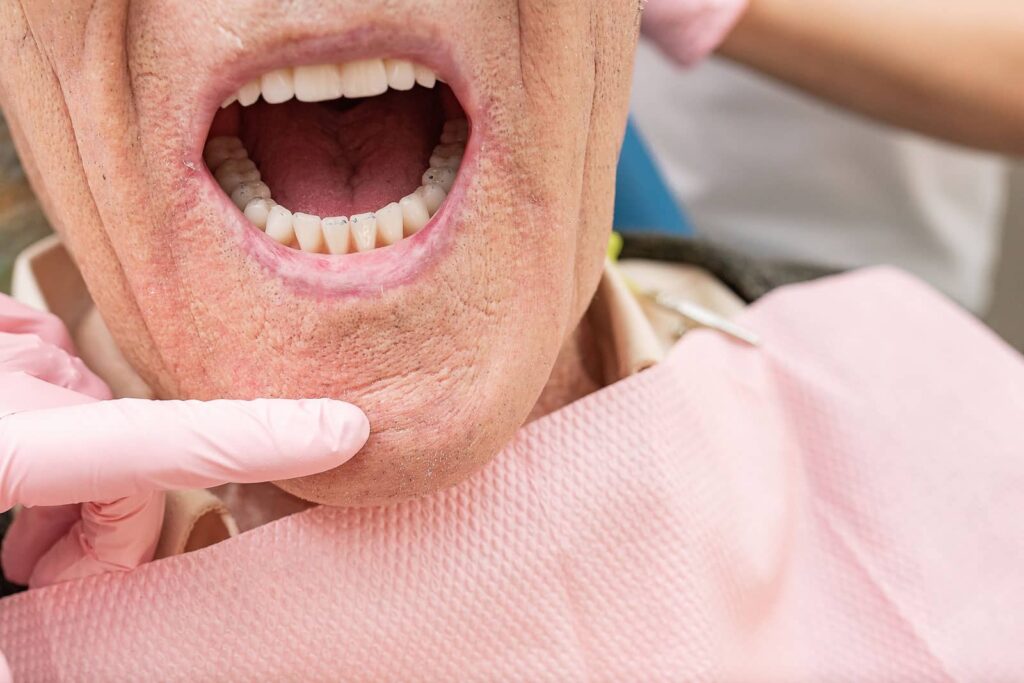
When several teeth are missing, particularly if they are distributed across both arches, the consequences are far-reaching and progressive. Adjacent teeth drift and tip into the gaps. Opposing teeth super-erupt into the space. The jawbone begins to resorb in areas without tooth roots to stimulate it. The bite collapses. Chewing efficiency drops dramatically. These are not isolated problems that can be solved one tooth at a time without a coordinated whole-mouth plan.
The National Institute of Dental and Craniofacial Research (NIDCR) reports that tooth loss is one of the most prevalent health conditions in the United States, particularly among adults over 65. The systemic consequences of significant tooth loss, including nutritional compromise from reduced chewing function, altered speech, and the psychosocial impact on quality of life, make comprehensive treatment genuinely important for overall health, not just dental health.
Severe Tooth Decay Affecting Multiple Teeth
When decay has progressed to the point that multiple teeth are structurally compromised, with large portions of tooth structure lost, failing large restorations, or roots that are fractured or infected, individual treatments performed in sequence often create a cycle of recurring dental emergencies. Full mouth reconstruction allows all compromised teeth to be evaluated and treated within one coordinated plan, stopping the exhausting pattern of one-tooth-at-a-time emergency management.
Advanced Periodontal Disease With Bone Loss
Severe periodontitis that has resulted in significant bone loss around multiple teeth creates a situation where restorative work simply cannot succeed without first establishing a healthy periodontal foundation. Placing crowns on teeth with insufficient bone support, active infection, or mobile roots is clinically counterproductive. Full mouth reconstruction in these cases must begin with comprehensive periodontal therapy, and may include bone grafting, to create the stable biological environment on which all subsequent restorations will depend.
Severe Tooth Wear From Bruxism or Acid Erosion
Teeth that have been ground down by chronic bruxism (teeth grinding) or eroded by prolonged acid exposure, from conditions like GERD (gastroesophageal reflux disease), frequent consumption of acidic foods and drinks, or eating disorders, lose significant vertical dimension over time. As the teeth become shorter, the entire bite collapses, altering the jaw relationship, creating strain on the temporomandibular joints (TMJ), and making the remaining tooth structure increasingly vulnerable to fracture.
Rebuilding severe generalized tooth wear requires full mouth reconstruction, you cannot restore the correct vertical dimension of occlusion by treating just one or two teeth. Every tooth in both arches must be re-established at the correct height to create a balanced, stable, and sustainable bite.
Traumatic Injury to the Mouth
Accidents, sports injuries, or falls that result in multiple fractured, avulsed (knocked-out), or severely damaged teeth create the need for comprehensive restorative treatment that addresses the entire affected zone. Traumatic oral injuries often involve simultaneous damage to soft tissue, bone, and multiple teeth, a clinical scenario that demands a coordinated full-mouth treatment strategy rather than isolated, sequential repairs.
TMJ Disorder Linked to Bite Collapse
Temporomandibular joint (TMJ) disorder, characterized by jaw pain, clicking or popping, limited jaw opening, facial muscle pain, and chronic headaches, is frequently rooted in a dysfunctional bite relationship. When the way the teeth meet forces the jaw into an unnatural position, the muscles and joints bear the cumulative burden. In these cases, full mouth reconstruction involves first establishing an ideal, balanced bite relationship, then building the dentition to support and maintain that position permanently.
Congenital Conditions Affecting Tooth Development
Certain developmental conditions, including ectodermal dysplasia, dentinogenesis imperfecta, amelogenesis imperfecta, and hypodontia, affect the number, shape, or structural integrity of teeth from birth or early childhood. These patients may require comprehensive full mouth rehabilitation to establish functional dentition, often involving a combination of implants, prosthetics, and restorative work that is planned to evolve as the patient grows and matures.
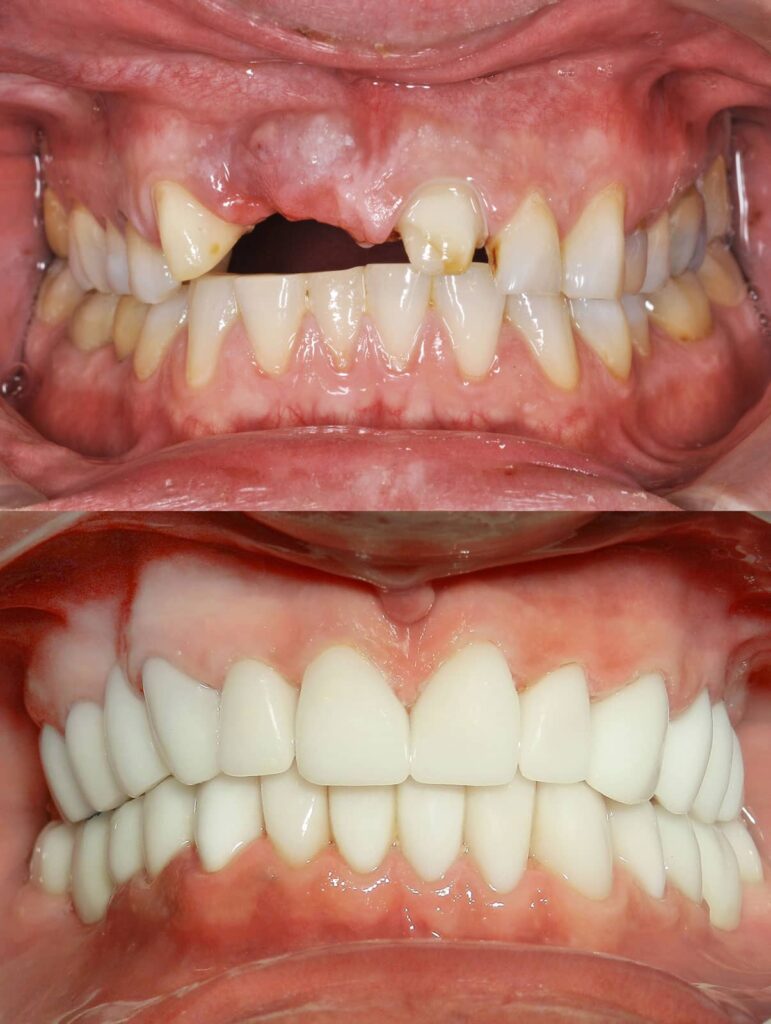
Procedures Involved in a Complete Mouth Restoration
The specific procedures in any individual’s full mouth reconstruction plan depend entirely on their clinical presentation. There is no universal protocol. However, the following are the most commonly included treatment categories:
Foundation: Periodontal and Bone Health
Before any restorative work can be placed with predictable long-term success, the periodontal environment must be healthy and stable. Attempting to restore teeth on a compromised biological foundation is one of the most common reasons restorations fail prematurely.
- Scaling and root planing (deep cleaning), to eliminate active periodontal infection and remove subgingival calculus deposits that mechanical home care cannot address
- Periodontal surgery, osseous surgery, soft tissue grafts, or pocket elimination procedures for cases where non-surgical therapy alone is insufficient
- Bone grafting, to rebuild alveolar bone lost to periodontal disease or tooth extraction, creating adequate bone volume to support dental implants and maintain facial structure
- Gum grafting, to restore and protect gum tissue around teeth or implant sites where recession has compromised both tissue health and aesthetics
Tooth Replacement
- Dental implants, titanium posts surgically placed in the jawbone to serve as artificial tooth roots; the gold standard for replacing missing teeth due to their durability, function, and bone-preserving properties. Individual implants support single crowns; multiple implants can support bridges or implant-retained dentures
- All-on-4 or All-on-6 implants, full-arch implant solutions that support a complete fixed bridge on just four or six strategically placed implants; ideal for patients who have lost or need to lose all teeth in an arch and want a fixed, non-removable restoration
- Implant-supported dentures, removable or fixed dentures that attach to implants for superior stability and retention compared to conventional dentures
- Dental bridges, fixed prosthetics that replace one or more missing teeth by anchoring to adjacent natural teeth or implants; a viable option where implant placement is not feasible or preferred
- Full or partial dentures, removable prosthetic options for replacing entire arches or sections of missing teeth
Tooth Restoration
- Dental crowns, custom-fabricated porcelain or zirconia restorations that cap and fully protect severely damaged, decayed, or root canal-treated teeth; crowns restore full tooth morphology and provide long-term structural protection
- Porcelain veneers, thin ceramic shells bonded to the front surface of teeth to restore shape, correct wear, and improve aesthetics in the visible zone
- Inlays and onlays, precision-fit restorations that repair significant tooth structure loss within or across the cusps while conserving more natural tooth structure than a full crown
- Composite or ceramic fillings, for smaller areas of decay as part of the comprehensive treatment plan
- Root canal therapy, endodontic treatment to save and retain teeth with infected or necrotic pulp tissue that would otherwise require extraction
Bite and Alignment Correction
- Orthodontics (braces or clear aligners such as Invisalign), used to move teeth into optimal positions before restorations are placed, close unwanted spaces, or align the arches for a more predictable restorative outcome
- Occlusal equilibration, careful reshaping of tooth surfaces to create an even, balanced bite relationship across the entire dentition
- Occlusal splint therapy, custom night guards or bite splints used to decompress the TMJ, relax the jaw musculature, and establish a reproducible, comfortable jaw position before permanent restorations are fabricated
- Orthognathic surgery, in cases of severe jaw misalignment, surgical repositioning of one or both jaws may be necessary to achieve proper occlusal function that cannot be achieved through dentistry alone
Aesthetic Finishing
Once functional health and structural integrity have been fully established, cosmetic procedures are incorporated to achieve the patient’s aesthetic goals:
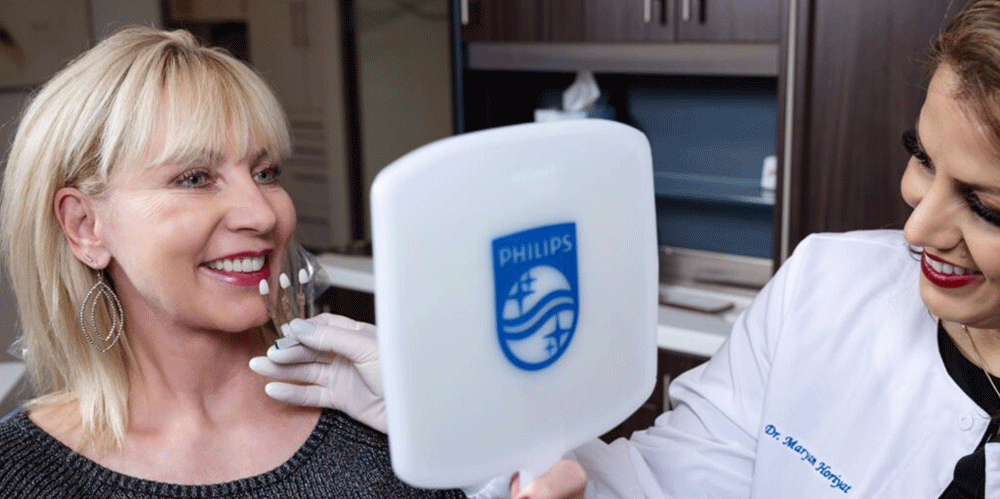
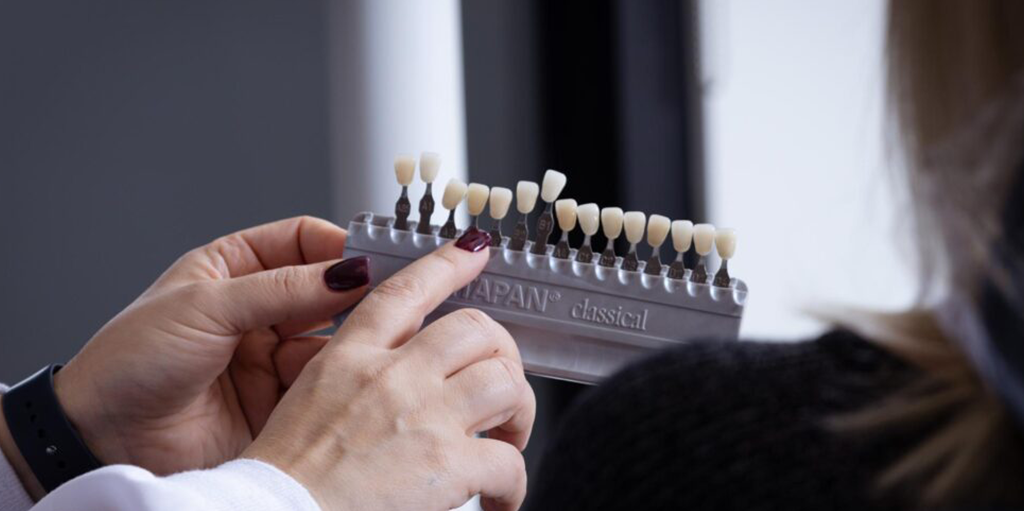
- Careful tooth shade selection for all-ceramic restorations to ensure a natural, harmonious color result
- Gum contouring to achieve an even, aesthetically proportional gumline
- Digital smile design, using advanced imaging technology to preview the anticipated aesthetic result before final restorations are fabricated
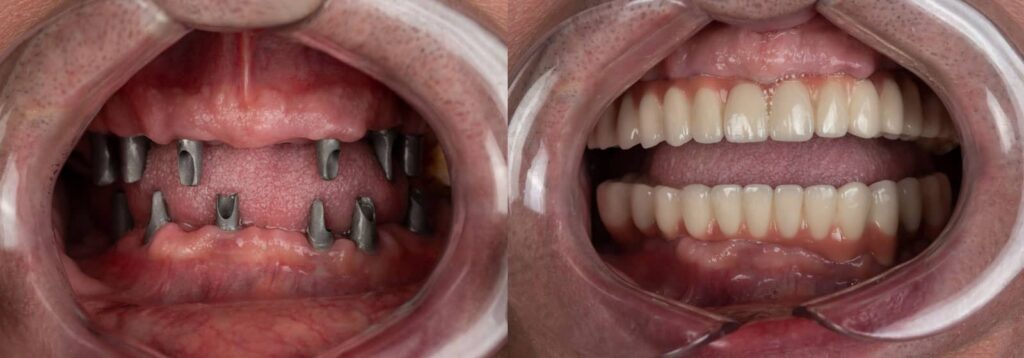
The Full Mouth Reconstruction Process: Phase by Phase
A well-planned full mouth reconstruction is executed in a logical, systematic sequence that builds from the foundation upward. Skipping phases or performing procedures out of sequence undermines the clinical integrity of the entire plan.
Phase 1: Comprehensive Diagnosis and Treatment Planning
The reconstruction begins with the most thorough dental examination most patients have ever experienced:
- Full-mouth digital X-rays and CBCT (cone beam CT scan), to evaluate bone density, root condition, nerve position, and sinus anatomy in three dimensions
- Comprehensive periodontal charting, probing depths, bleeding scores, and bone loss assessment at every tooth
- Bite analysis and occlusal evaluation, study models, bite registration, and analysis of how the teeth meet throughout all jaw movements
- TMJ assessment, evaluation of joint health, muscle function, and jaw range of motion
- Digital photographs and smile analysis, documenting the current clinical state and planning the aesthetic goals collaboratively with the patient
- Medical history review, identifying systemic conditions such as diabetes, cardiovascular disease, or osteoporosis that affect treatment planning, healing, and long-term outcomes
This diagnostic phase produces a detailed, written treatment plan that sequences every proposed procedure, provides complete transparency about the treatment timeline, and establishes shared goals between the patient and the Aria Dental Care team, before any irreversible treatment begins.
Phase 2: Establishing a Healthy Foundation
All active disease is addressed before any permanent restorations are placed:
- Periodontal therapy to eliminate active infection and create a stable, healthy tissue environment
- Bone grafting at sites planned for future implant placement
- Extractions of teeth that cannot be predictably saved
- Treatment of active decay in teeth that will be retained
- Root canal therapy where indicated to preserve strategically important teeth
Phase 3: Structural Rebuilding
With a healthy foundation confirmed:
- Dental implants are placed and allowed to integrate (osseointegration typically takes 3–6 months)
- Bite correction through orthodontics or occlusal splint therapy where applicable
- Any remaining bone or gum grafting procedures not completed in Phase 2
Phase 4: Final Restoration
- Crowns, bridges, veneers, and implant crowns are custom fabricated and precisely placed
- Dentures or implant-supported prosthetics are delivered and adjusted
- The bite is carefully refined and balanced across the entire reconstructed dentition
Phase 5: Long-Term Maintenance and Protection
Full mouth reconstruction is not complete at the delivery of final restorations, it requires a lifelong commitment to professional maintenance:
- Professional cleanings every 3–4 months initially, transitioning to twice-yearly once stability is confirmed
- Regular bite checks and occlusal monitoring to identify any shifts early
- Night guard use to protect restorations from the forces of bruxism
- Meticulous home oral hygiene protocols to protect the periodontal foundation
How Long Does Full Mouth Reconstruction Take?
The timeline for full mouth reconstruction varies considerably based on the scope, complexity, and number of procedures involved. A broad framework:
| Treatment Complexity | Approximate Timeline |
| Moderate, crowns, bridges, limited implants | 6–12 months |
| Significant, multiple implants, orthodontics, periodontal surgery | 12–24 months |
| Extensive, full-arch implants, complex bone reconstruction | 18–36 months |
The longest phase in most cases is the osseointegration period after implant placement, the 3–6 months during which the titanium implant fuses with the jawbone. This biological process cannot be safely abbreviated without risking implant failure.
Importantly, patients are provided with provisional (temporary) restorations throughout treatment, so they are never without functional and aesthetically acceptable teeth during the reconstruction process.
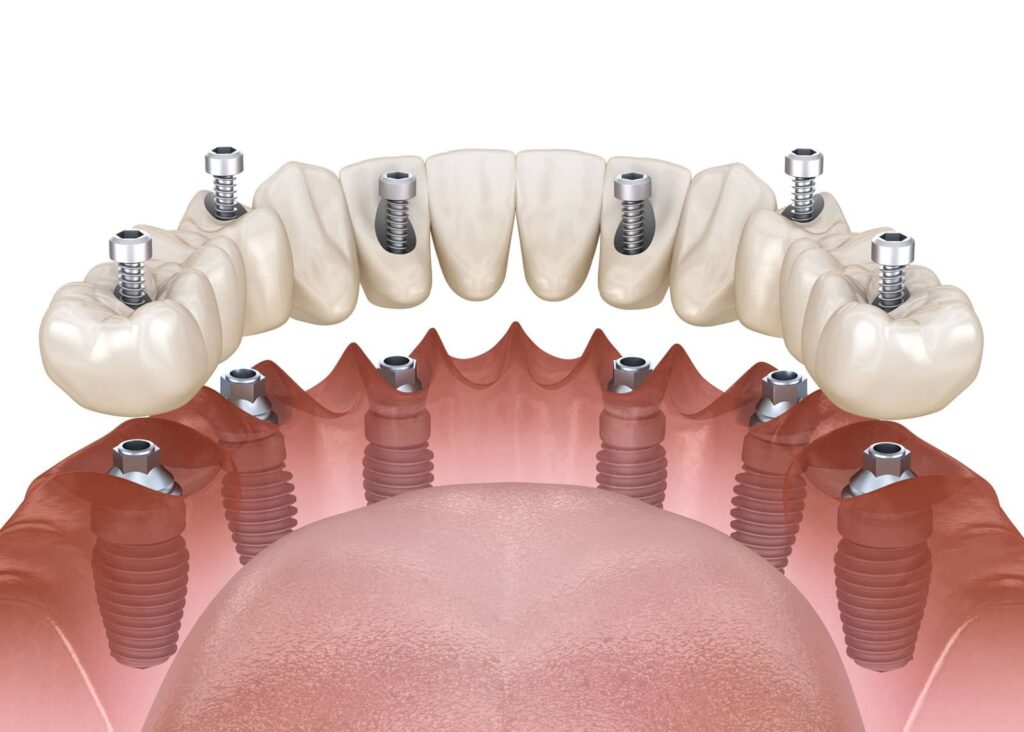
Understanding the Investment in Full Mouth Reconstruction
Full mouth reconstruction is a significant investment, in both time and resources, and we believe patients deserve a transparent, honest discussion about this from the very beginning.
Because every full mouth reconstruction is entirely individualized, the overall scope of treatment varies considerably from one patient to the next. A case requiring several crowns and a bridge looks very different from one involving full-arch implants, bone grafting, and orthodontic treatment. The nature and number of procedures needed, the materials selected, and the specialists involved all shape the overall scope of treatment.
What Determines the Scope of Your Reconstruction?
- Number of teeth that need to be restored or replaced: the greater the extent of the damage or tooth loss, the more comprehensive the treatment plan
- Whether implants are involved: implant-based solutions require more surgical phases and integration time than crown-and-bridge solutions
- Need for foundational procedures: bone grafting, periodontal surgery, and extractions add clinical phases before restorations can be placed
- Whether orthodontics is required: if bite alignment must be corrected before restorations can be accurately fabricated and placed
- Materials selected: high-quality ceramic and zirconia materials produce superior aesthetic and functional outcomes compared to older materials
- Complexity of bite rehabilitation: cases involving significant TMJ involvement or vertical dimension rebuilding require more planning and provisional phases
Our Commitment to Financial Transparency
At Aria Dental Care, we provide every patient with a detailed, itemized treatment plan, with a clear explanation of every recommended procedure, why it is clinically indicated, and what the expected outcome is, before any treatment begins. We do not believe in vague estimates or financial surprises.
We also work closely with you to explore phased treatment options where clinically appropriate, so that comprehensive care can be made as financially manageable as possible without compromising clinical outcomes.
Full Mouth Reconstruction and Insurance Coverage
Because full mouth reconstruction is medically necessary, addressing documented disease, structural failure, and functional compromise, many components of a treatment plan may be eligible for coverage under dental insurance. Coverage varies significantly by plan and insurer, but the following principles generally apply:
- Periodontal treatment is typically covered as a major service under comprehensive dental plans
- Dental crowns and bridges are generally covered as major restorative services, subject to plan frequency limitations
- Root canal therapy is commonly covered under endodontic benefits
- Dental implants are increasingly included in dental plans, though coverage levels vary widely by insurer and plan design
- Bone grafting and oral surgery may qualify for coverage under both dental and medical insurance, depending on the clinical indication and documentation
- Orthodontics may have separate lifetime maximum benefits under plans that include orthodontic coverage
At Aria Dental Care, our patient care coordinators work proactively with your dental and medical insurance providers to understand your benefits thoroughly, identify every available coverage source, and provide clear, written out-of-pocket projections before you commit to treatment. We also work with healthcare financing partners to offer flexible payment options for any portion not covered by insurance.
Aria Dental Care Commitment: We will never recommend procedures that are not clinically indicated, and we will always present the full range of appropriate treatment options, including phased approaches, so you can make fully informed decisions about your care.
What to Expect During Recovery and Afterward
Recovery from full mouth reconstruction is not a single event, it evolves progressively with each phase of treatment.
During Treatment Phases
- After surgical procedures (implant placement, bone grafting, extractions): Moderate discomfort managed with prescribed pain medication for several days; soft diet initially; gradual return to normal activity within a week
- Provisional restorations: Temporary crowns, bridges, or dentures are worn between phases, they allow normal function but require care and avoidance of very hard or sticky foods
- Orthodontic phases: Standard adjustment soreness after appointments; dietary modifications to protect brackets or aligners
After Final Restorations Are Placed
Most patients describe completing their full mouth reconstruction as genuinely life-changing. The outcomes patients most commonly report include:
- Relief from chronic oral pain: jaw pain, tooth sensitivity, and associated headaches that were a daily reality often resolve or significantly improve
- Dramatically restored chewing function: the ability to eat a full range of foods, including those that had become impossible, is one of the most immediately appreciated changes
- Clearer speech: particularly meaningful for patients who lost anterior teeth or experienced significant bite collapse
- Better nutrition: being able to chew a wider variety of foods has real dietary implications, especially for older adults
- Transformed confidence and quality of life: the psychological and social impact of a healthy, complete, and natural-looking smile consistently ranks among the most meaningful outcomes patients describe at the end of their reconstruction journey
The Aria Dental Care Approach to Full Mouth Rehabilitation
At Aria Dental Care, we approach full mouth reconstruction with the same philosophy we bring to all complex dental care: comprehensive diagnosis, transparent communication, individualized planning, and clinical excellence at every phase.
When a patient comes to us, whether referred by a physician, referred by another dentist, or seeking help on their own after years of struggling with dental problems, our approach to full mouth rehabilitation includes:
- Comprehensive diagnostic workup: CBCT imaging, full periodontal charting, bite analysis, TMJ evaluation, and digital smile design to ensure we understand every dimension of your oral health before planning begins
- Collaborative, multidisciplinary care: we coordinate with periodontists, oral surgeons, orthodontists, and endodontists as needed, ensuring every aspect of your treatment is delivered at the highest level of specialty expertise
- Phased treatment planning: we design treatment sequences that are clinically logical, minimally disruptive to your daily life, and structured to allow financial flexibility where needed
- Digital preview technology: before committing to final restorations, we show you a digital visualization of your expected outcome so that aesthetic decisions are made collaboratively, not unilaterally
- Full financial transparency: detailed, itemized treatment plans and proactive insurance coordination, so there are never any surprises
- Long-term maintenance program: we are invested in the durability of your reconstruction and build a personalized maintenance protocol to protect your outcome for decades to come
If you have been struggling with multiple dental problems, living with chronic oral discomfort, avoiding foods you love, or feeling self-conscious about your smile, we invite you to schedule a comprehensive full mouth evaluation at Aria Dental Care. You may be closer to a complete solution than you realize.