



If you have ever walked out of a dental office with a full crown on a tooth that only had a moderate cavity, you have probably wondered whether all that healthy structure really needed to go. That question sits at the heart of biomimetic dentistry, and it is the reason more Orange County patients are searching specifically for a biomimetic dentist rather than simply “a dentist near me.”
Biomimetic dentistry is a conservative, adhesion-based approach to restoring teeth. The word itself comes from bio (life) and mimesis (to imitate). The goal is straightforward: rebuild a damaged tooth so that it looks, feels, flexes, and functions as closely as possible to the natural tooth it is replacing, while removing as little healthy enamel and dentin as humanly possible.
Finding the right practitioner, however, is not as simple as typing a phrase into a search bar. Any dental office can add the word to a webpage. Very few have invested in the training, the adhesive protocols, the magnification, and the material science that genuine biomimetic restorative work requires.
This guide walks you through exactly what to evaluate when you are choosing a biomimetic dentist in Orange County, from credentials and technology to materials, communication style, and the questions worth asking before you sit in the chair.
What Is Biomimetic Dentistry, and Why Is It Different?
Traditional restorative dentistry has historically relied on mechanical retention. To hold a filling or a crown in place, the dentist had to shape the tooth into a specific geometry, which often meant removing sound tooth structure that was not diseased at all. It worked, and for decades it was the best available option.
Adhesive technology changed the equation. Modern bonding agents and layered composite systems allow a restoration to be chemically and micromechanically attached to enamel and dentin, which means the tooth no longer has to be carved down to hold the repair in place.
A biomimetic dentist builds an entire treatment philosophy around that shift. Instead of asking “how much do I need to remove to place this crown,” the question becomes “how little can I remove while still creating a durable, sealed, functional restoration.”
The Core Principles Behind Biomimetic Restorative Care
Practitioners who follow this approach generally organize their work around a consistent set of ideas:
- Conservation of tooth structure. Enamel and dentin cannot be regrown. Every millimeter preserved is permanent value.
- Strong, sealed adhesion. A properly bonded restoration aims to prevent bacterial leakage at the margin, which is one of the more common reasons restorations eventually fail.
- Stress reduction during curing. Composite materials shrink slightly as they harden. Incremental layering and careful technique are used to manage that shrinkage stress.
- Pulp preservation. Keeping the tooth alive and avoiding root canal therapy whenever it is clinically reasonable to do so.
- Restoration of natural biomechanics. Rebuilding the tooth so that chewing forces distribute the way they would in an intact tooth.
Where Biomimetic Dentistry Sits Within Holistic and Biological Care
There is meaningful overlap between biomimetic dentistry and biological or holistic dentistry, though they are not identical concepts.
Biological dentistry emphasizes biocompatibility, systemic health connections, and material selection. Biomimetic dentistry emphasizes conservative technique and structural fidelity. In practice, most offices that take one seriously tend to take the other seriously too, because both philosophies share a bias toward doing less harm and preserving what the body already built.
At Aria Dental Care in Mission Viejo, these approaches are integrated rather than treated as separate service menus. A conservative bonded restoration placed with a biocompatible, metal-free material reflects both traditions at once.
A note on terminology: Biomimetic dentistry is not a specialty recognized by the American Dental Association. It is a treatment philosophy and a body of technique. That is precisely why evaluating an individual practitioner’s training matters more here than it would with a board-recognized specialty.
Credential Signals: How to Verify a Biomimetic Dentist Is Actually Trained
Because there is no formal licensing board for this approach, the burden falls on you to look at the underlying education. Here is what carries real weight.
Continuing Education in Adhesive and Minimally Invasive Dentistry
Ask where the dentist trained in adhesive protocols. Legitimate answers include hands-on programs focused on bonded restorative technique, stress-reduced direct composite layering, and indirect bonded ceramic restorations such as onlays and overlays. A dentist who has genuinely pursued this work will be able to name the programs without hesitation, because those courses are demanding and expensive and people who complete them tend to be proud of it.
Accreditation With Biological and Holistic Organizations
Credentials from organizations such as the International Academy of Oral Medicine and Toxicology (IAOMT) and the International Academy of Biological Dentistry and Medicine (IABDM) indicate a documented commitment to biocompatible materials, safe amalgam removal protocols, and systemic health awareness. These accreditations require coursework and examination rather than simple membership fees.
Documented Case Work
A skilled biomimetic dentist should be able to show you clinical documentation of conservative restorations: deep cavity preparations that avoided root canal therapy, cracked teeth stabilized with bonded onlays rather than full crowns, and old failing amalgams replaced with layered composite or ceramic. Photographic documentation under magnification is a strong signal that the office is measuring its own work.
A Willingness to Say “We Should Watch This”
One underrated marker of a conservative practitioner is comfort with observation. Not every early lesion needs a drill. A dentist confident in remineralization, dietary counseling, and monitoring is demonstrating the same restraint that defines biomimetic care. The National Institute of Dental and Craniofacial Research provides a useful public overview of how tooth decay develops and progresses, which is worth reading before any consultation: NIDCR on tooth decay.
Technology You Should Expect in a Biomimetic Dental Office
Conservative dentistry is detail work, and detail work requires the right instruments. When you tour an office or review its website, look for the following.
Magnification: Loupes and the Dental Operating Microscope
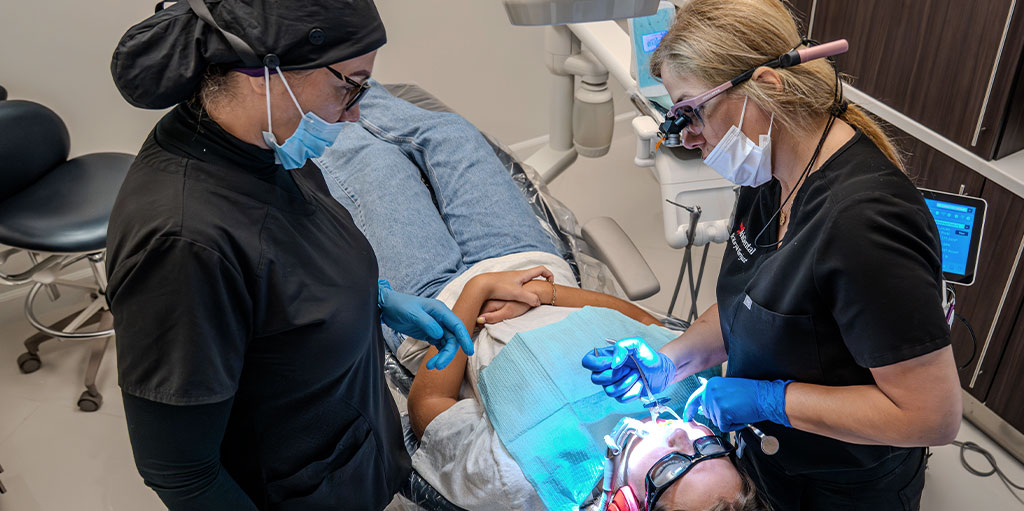
You cannot preserve what you cannot see. High-magnification loupes are the minimum. A dental operating microscope is the gold standard, allowing the clinician to distinguish infected dentin that must be removed from affected dentin that can be preserved and remineralized. If an office performs deep caries excavation without magnification, the conservative promise is difficult to keep.
Digital Radiography and 3D Cone Beam Imaging
Low-dose digital X-rays reduce radiation exposure compared with older film systems. Cone beam computed tomography adds three-dimensional information for implant planning, airway assessment, and evaluating bone or root anatomy that flat images cannot reveal.
Intraoral Cameras and Digital Scanning
Intraoral cameras let you see what the dentist sees, which changes the consent conversation entirely. Digital impression scanners eliminate conventional impression material for most patients and improve the fit precision of bonded ceramic restorations.
Laser Dentistry
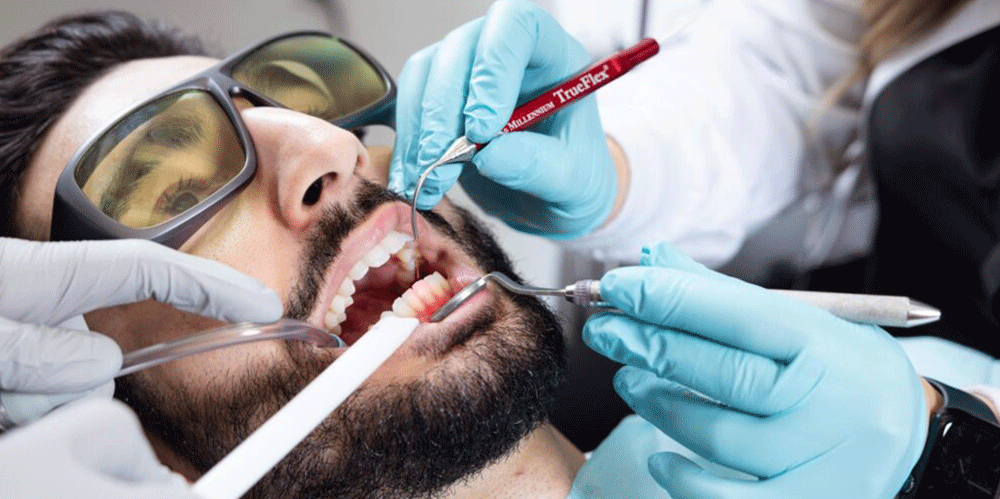
Dental lasers can support soft tissue management, decontamination of a preparation before bonding, and certain periodontal therapies with reduced need for scalpels and sutures in appropriate cases.
Rubber Dam Isolation
This one is simple, inexpensive, and enormously revealing. Adhesive bonding is moisture-sensitive. Saliva contamination during bonding compromises the seal. A practitioner serious about adhesion isolates the field. If you never see a rubber dam, ask why.
Ozone Therapy and Air Abrasion
Ozone application is used by many biological and biomimetic practices as an adjunct for disinfecting a preparation before sealing it. Air abrasion allows for extremely selective removal of decay in some situations without the vibration and heat of a conventional handpiece. These technologies reflect the practice philosophy at Aria Dental Care and are used as adjuncts to, not replacements for, established restorative protocols.
Materials: The Biocompatibility Question Every Patient Should Ask
Material selection is where biomimetic dentistry and biological dentistry meet most directly.
Metal-Free Restorative Options
A modern conservative practice should offer:
- Layered direct composite for small and moderate restorations
- Bonded ceramic inlays, onlays, and overlays for larger areas of structural loss
- Lithium disilicate and zirconia for indirect restorations where strength requirements are high
- Zirconia and ceramic implants for patients who prefer a metal-free implant option
Understanding the Amalgam Conversation
Silver-colored amalgam fillings contain mercury, and they require the removal of more tooth structure than a bonded restoration does because they rely on mechanical retention. The U.S. Food and Drug Administration has published guidance identifying certain populations that may warrant additional consideration regarding amalgam, which you can review directly at the FDA’s dental amalgam page. The American Dental Association maintains its own position on the subject, available through the ADA’s oral health topic on dental amalgam.
Patients are entitled to hear both perspectives and to choose. What matters clinically is that if amalgam is being removed, it is removed under protective protocol. Aria Dental Care is a 100 percent mercury-free practice and follows the IAOMT SMART protocol for safe amalgam removal, which includes high-volume suction, isolation, supplemental oxygen, and appropriate barrier protection.
Biocompatibility Testing
Some patients, particularly those with autoimmune conditions, chemical sensitivities, or a history of adverse material reactions, want individualized guidance. A biological practice can discuss serum-based biocompatibility testing options so that material selection reflects your specific profile rather than a default. This is offered as an informational service and is not a substitute for medical diagnosis.
Clinical Judgment: The Skill That Separates Good From Excellent
Technology can be purchased. Judgment cannot. When evaluating a biomimetic dentist in Orange County, pay attention to how decisions are explained.
Crown Versus Onlay Decision-Making
A full crown circles the entire tooth and typically requires reduction of all surfaces. A bonded onlay or overlay covers only the compromised areas. Many teeth that are routinely crowned can be restored more conservatively. A dentist practicing biomimetic principles should be able to articulate why a given tooth needs full coverage rather than defaulting to it.
Avoiding Unnecessary Root Canal Therapy
Deep decay does not automatically doom a nerve. Techniques including selective caries removal, calcium silicate liners, and immediate dentin sealing are used to protect vital pulp tissue in appropriate cases. Root canal therapy remains a legitimate and often necessary treatment. The biomimetic position is simply that it should be a considered decision rather than a reflex.
Managing Cracked Teeth
Cracked tooth syndrome is common in adults, particularly those who clench or grind. Bonded restorations that splint the cusps together can stabilize a cracked tooth while preserving structure. Diagnosis here requires magnification, transillumination, and careful bite analysis.
Occlusion and Airway Awareness
Restorations fail faster when the bite is not addressed. An excellent practitioner examines how your teeth come together, screens for signs of clenching and grinding, and looks at airway factors that may be driving parafunctional habits. This is where restorative dentistry connects to sleep quality, jaw comfort, and long-term stability.
What the Patient Experience Should Feel Like
Credentials and equipment set the floor. The experience tells you whether the philosophy is real.
A Thorough, Unhurried First Visit
Expect a comprehensive examination that includes photographs, appropriate imaging, a periodontal assessment, an occlusal evaluation, and a conversation about your health history, medications, sleep, and diet. A fifteen-minute glance is not a comprehensive exam.
Treatment Options Presented as Options
You should hear more than one path forward whenever more than one exists, along with the tradeoffs of each. Conservative dentistry involves genuine judgment calls, and you deserve to participate in them.
Clear, Written Financial Information
Bonded ceramic restorations and microscope-assisted work often take longer than conventional treatment. Fee structures should be transparent, provided in writing, and explained before treatment begins.
Comfort Options
Sedation options, quiet operatories, and thoughtful appointment pacing matter, particularly for anxious patients and for children.
Follow-Up and Documentation
A conservative restoration should be photographed, documented, and reviewed at recall visits. Offices confident in their work track it over time.
Red Flags Worth Noticing
While researching a biomimetic dentist near you, be cautious when you encounter:
- A single recommended treatment for every problem. Universal solutions rarely fit universal patients.
- Same-day comprehensive treatment plans with heavy pressure. Complex restorative work deserves reflection time.
- Guaranteed cures for systemic conditions. Dentistry contributes to overall health. It does not replace medical care, and claims that specific dental procedures cure systemic diseases are not supported by established evidence.
- No visible isolation during bonding. Adhesion without moisture control is compromised adhesion.
- Before-and-after galleries that look like stock photography. Case documentation should be the office’s own work.
- Reluctance to answer questions about materials. You are entitled to know exactly what is being placed in your body.
Biomimetic Dentistry for Children and Families
Conservative principles matter even more in pediatric care, because a child’s teeth have decades of function ahead of them.
Look for a practice that emphasizes prevention, uses BPA-conscious sealant materials, applies minimally invasive caries management, and evaluates airway and jaw development. Early identification of narrow arches, mouth breathing, and crowding can shape a child’s growth trajectory. The American Academy of Pediatrics and the American Dental Association both publish accessible guidance for parents on pediatric oral health that is worth reviewing alongside any treatment discussion.
Aria Dental Care approaches pediatric care with the same conservative and biocompatible standards applied to adult treatment, which is one reason families across Mission Viejo, Laguna Niguel, Rancho Santa Margarita, San Clemente, and Ladera Ranch choose the practice for multiple generations at once.
Practical Questions to Ask Before You Book
Bring these to your consultation. The quality of the answers will tell you a great deal.
- What specific training have you completed in adhesive and minimally invasive restorative dentistry?
- Do you use magnification for restorative procedures, and at what level?
- Under what circumstances would you recommend a crown instead of a bonded onlay?
- How do you decide whether a deeply decayed tooth needs root canal therapy?
- Which restorative materials do you use, and are metal-free options available for my situation?
- Do you use rubber dam isolation for bonded restorations?
- If I need existing amalgam fillings removed, what protective protocol do you follow?
- May I see documentation of cases similar to mine?
- How do you evaluate my bite before placing a restoration?
- What does long-term follow-up look like in your practice?
Why Orange County Patients Choose Aria Dental Care
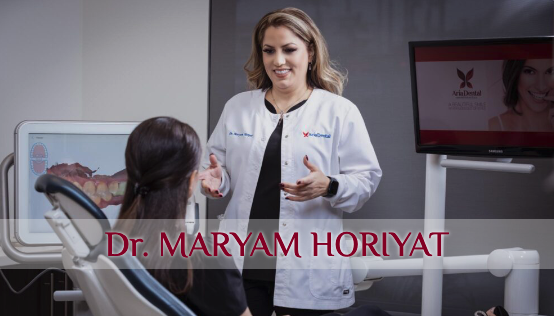
Aria Dental Care in Mission Viejo has built its reputation on the integration of conservative restorative technique with biological and holistic principles. Under the care of Dr. Maryam Horiyat, DDS, AIAOMT, CIABDM, the practice combines:
- 100 percent mercury-free and amalgam-free treatment
- IAOMT and IABDM accreditation with SMART protocol amalgam removal
- Metal-free restorative options including bonded ceramics and zirconia implants
- Ozone therapy and laser dentistry as adjunctive technologies
- Digital imaging, 3D cone beam scanning, and intraoral photography
- Airway-focused evaluation integrated into restorative planning
- Comprehensive care for adults and children in a single practice
Patients travel from across Orange County, including Mission Viejo, Laguna Niguel, Irvine, San Clemente, Rancho Santa Margarita, and Ladera Ranch, for care that prioritizes preservation over replacement.
Ready to talk with a biomimetic dentist about your options? Schedule your consultation with Aria Dental Care.