

You just got a dental implant. You’re home, you’re sore, and you’re staring at the fridge. A bowl of yogurt seems like the perfect soft, cool, comforting snack, so why did your dentist tell you to avoid it? The question of why no dairy after dental implant surgery is one of the most common, and most genuinely puzzling, pieces of post-operative advice patients receive at Aria Dental Care.
At first, it sounds counterintuitive. Dairy is packed with calcium and protein, two nutrients that support bone health. Shouldn’t that make it ideal for recovery? The reality is more nuanced, and the answer involves the biology of wound healing, the delicate chemistry of osseointegration, and some specific risks that dairy uniquely introduces into a surgical environment.
In this comprehensive guide, we’ll explain exactly what happens inside your mouth after implant surgery, precisely why dairy can interfere with that process, how long the restriction actually lasts, what you should eat instead, and the warning signs that your recovery may need attention. By the end, you’ll understand this dietary guideline at a level most patients, and even some providers, never fully explore.
What Happens Inside Your Mouth After Dental Implant Surgery?
To truly understand why no dairy after dental implant placement is recommended, you first need to understand what your body is doing in the hours, days, and weeks following the procedure. This isn’t just a wound healing, it’s a complex, multi-phase biological process that is uniquely vulnerable to disruption.
The Dental Implant Procedure: A Quick Overview
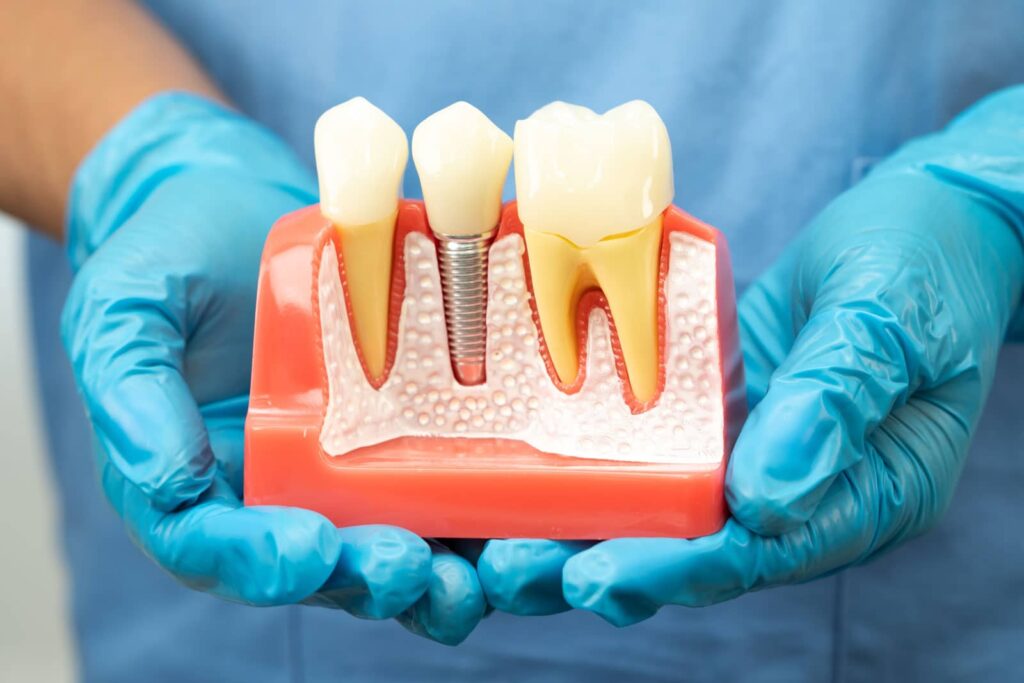
A dental implant is a small titanium post that is surgically placed directly into the jawbone to serve as an artificial tooth root. Once in place, it supports a crown, bridge, or other prosthetic restoration. The titanium material is chosen specifically because it is biocompatible, the body does not recognize it as a foreign threat, and because of its remarkable ability to bond directly with living bone tissue through a process called osseointegration.
According to research published through the National Institutes of Health (NIH PubMed Central), osseointegration was first described by Professor Per-Ingvar Brånemark in 1969 as “a direct structural and functional connection between ordered living bone and the surface of a load-bearing implant.” It remains the cornerstone of modern implant dentistry and the single most critical factor in long-term implant success.
The Phases of Healing After Implant Placement
Your body moves through several overlapping stages of healing after implant surgery:
Phase 1: Immediate Post-Surgical Response (Hours 0–72) The moment the implant is placed, your body launches an inflammatory response. A blood clot forms at the surgical site, this clot is not a complication; it is essential. It acts as the foundation for new tissue growth and protects the exposed bone from bacteria, debris, and environmental contamination. This clot is fragile, and almost anything that disturbs it can significantly slow healing or lead to serious complications.
Phase 2: Soft Tissue Healing (Days 3–14) The gum tissue begins to close around the implant site. New blood vessels form (a process called angiogenesis), and fibroblasts start laying down the collagen framework needed for stable soft tissue attachment around the implant. During this phase, the surgical site is highly susceptible to bacterial infection.
Phase 3: Early Osseointegration (Weeks 3–12) Bone cells, specifically osteoblasts, begin to attach directly to the titanium surface of the implant and deposit new bone matrix. By approximately 8–12 weeks, the peri-implant interface begins to be replaced by mature lamellar bone in direct contact with the implant surface, completing the initial phase of osseointegration.
Phase 4: Bone Maturation and Full Integration (Months 3–6+) Osseointegration continues and deepens. The bone remodels and strengthens around the implant. For most patients, the process takes between 3 and 6 months from the date of implant placement, though patients with lower bone density, systemic health conditions, or other complicating factors may take longer.
Key Insight: The entire success of a dental implant depends on each of these phases progressing without disruption. This is why post-operative dietary guidelines, including the restriction on dairy, are not arbitrary rules. They are evidence-informed protections for a precisely calibrated biological process.
Why No Dairy After Dental Implant Surgery? The Science Explained
Now we arrive at the central question. There is not a single reason why no dairy after dental implant surgery is advised, there are several distinct mechanisms, each representing a legitimate risk. Understanding all of them gives you the full picture.
Reason 1: Dairy Can Trigger an Inflammatory Response
Dairy products, particularly whole milk, cream, butter, and full-fat cheese, contain saturated fats, which are well-documented to promote pro-inflammatory cytokine production in soft tissues. In a healthy individual on a regular day, this low-grade inflammatory response is minimal and easily managed by the body. But immediately after oral surgery, when your gum tissue and bone are already in an inflammatory state as part of the normal healing response, introducing additional pro-inflammatory stimuli is the last thing you want.
Excessive inflammation in the peri-implant tissues can interfere with blood clot stability, disrupt fibroblast activity, slow collagen deposition, and ultimately delay or compromise the early stages of osseointegration. This is particularly true in the first 48–72 hours, when the surgical wound is at its most vulnerable.
Reason 2: Dairy Creates a Favorable Environment for Bacterial Growth
The oral cavity is home to hundreds of bacterial species, both beneficial and harmful. After implant surgery, the goal is to keep bacterial load at the surgical site as low as possible while the protective clot and new tissue form. Dairy products, particularly milk, cream-based foods, and soft cheeses, are nutrient-rich substrates that oral bacteria thrive on.
Lactose (the sugar in dairy) and the proteins and fats in dairy products provide ideal conditions for bacterial proliferation in the warm, moist environment of the mouth. Increased bacterial activity near the implant site raises the risk of peri-implant infection, one of the leading causes of early implant failure. Even a mild infection in the first few days post-surgery can compromise the osseointegration process before it has had a chance to properly begin.
Reason 3: Dairy May Interact With Post-Surgical Antibiotics
Most dental implant patients are prescribed a course of antibiotics following surgery to prevent infection. What many patients don’t realize is that dairy products can meaningfully interfere with the absorption and effectiveness of certain classes of antibiotics.
Specifically, tetracyclines and certain fluoroquinolones, antibiotics sometimes prescribed in oral surgery contexts, bind to the calcium ions abundant in dairy products through a process called chelation. This binding prevents the antibiotic from being properly absorbed into the bloodstream, reducing its therapeutic effectiveness at exactly the time it is most needed. Taking antibiotics with dairy, or eating dairy within two hours of an antibiotic dose, can significantly reduce the drug’s ability to do its job.
Important Note from Aria Dental Care: Always check with your prescribing dentist or pharmacist about whether your specific antibiotic is affected by calcium or dairy. The interaction is real and clinically significant for certain medications.
Reason 4: Dairy Can Cause Nausea and Vomiting, With Serious Consequences
This reason is often overlooked but is arguably the most immediately dangerous. Many dental implant patients are given local anesthesia combined with oral sedation or IV sedation for the procedure. The combination of post-anesthesia nausea, post-surgical discomfort, and the gastrointestinal effects of dairy, particularly for patients with any degree of lactose intolerance, can induce nausea or vomiting in the hours following surgery.
Vomiting after dental implant surgery is a genuine medical concern because:
- The forceful physical action can dislodge the protective blood clot at the surgical site
- Stomach acid introduced into the oral cavity is highly corrosive and can damage delicate healing tissues
- Acid exposure around the implant site can directly compromise osseointegration by affecting the titanium surface and surrounding bone environment
- The pressure changes associated with vomiting can disrupt sutures placed to close the surgical wound
Even patients who are not generally lactose-intolerant can experience increased digestive sensitivity in the immediate post-surgical period, when the body is under systemic stress and often taking medications that affect the gastrointestinal system.
Reason 5: Mucus Production and Nasal Congestion
Some patients experience increased mucus production after consuming dairy products, a phenomenon linked to the protein casein found in milk. While the scientific debate around dairy and mucus continues, the clinical reality is that increased congestion and post-nasal drip can encourage mouth breathing, reduce nasal airflow, and create discomfort during a recovery period that already demands careful management of swallowing and breathing patterns. This is a secondary concern compared to the others above, but worth noting for patients who know they are sensitive to dairy in this way.
How Long Should You Avoid Dairy After a Dental Implant?
This is the question most patients want answered most specifically, and the honest answer is: it depends on the phase of recovery, but the critical window is the first 2–3 days.
The Timeline Broken Down
| Recovery Phase | Time Period | Dairy Recommendation |
| Immediate post-surgical | First 24–48 hours | Avoid completely, highest risk period for clot disruption, nausea, and infection |
| Early healing | Days 3–7 | Avoid or minimize, antibiotic interaction and inflammation risk remain elevated |
| Soft tissue healing | Weeks 2–4 | Gradually reintroduce with caution, following your dentist’s specific guidance |
| Osseointegration phase | Months 1–6 | Normal dairy consumption generally permitted once soft tissue has healed |
| Full integration | 6+ months | No restriction, enjoy your normal diet |
The Most Important Window: The First 72 Hours
The 48–72 hours immediately following dental implant surgery represent the period of highest vulnerability. The blood clot is at its most fragile, the antibiotic interaction risk is at its peak, the potential for nausea from anesthesia and medication is highest, and the soft tissues are at their most permeable to bacterial invasion. This is the window where the dairy restriction most firmly and unambiguously applies.
After the first 72 hours, many of these acute risks begin to diminish. The clot stabilizes, soft tissue healing progresses, and gastrointestinal sensitivity typically improves. Your dentist at Aria Dental Care will give you specific guidance based on your individual healing progress, and this personalized guidance is always the authority over any general timeline.
Aria Dental Care Recommendation: When in doubt, wait. The cost of avoiding dairy for an extra few days is essentially zero. The cost of a compromised implant, financially, physically, and emotionally, is significant. There is no situation in which the nutritional benefits of dairy in the first week post-surgery outweigh the risks.
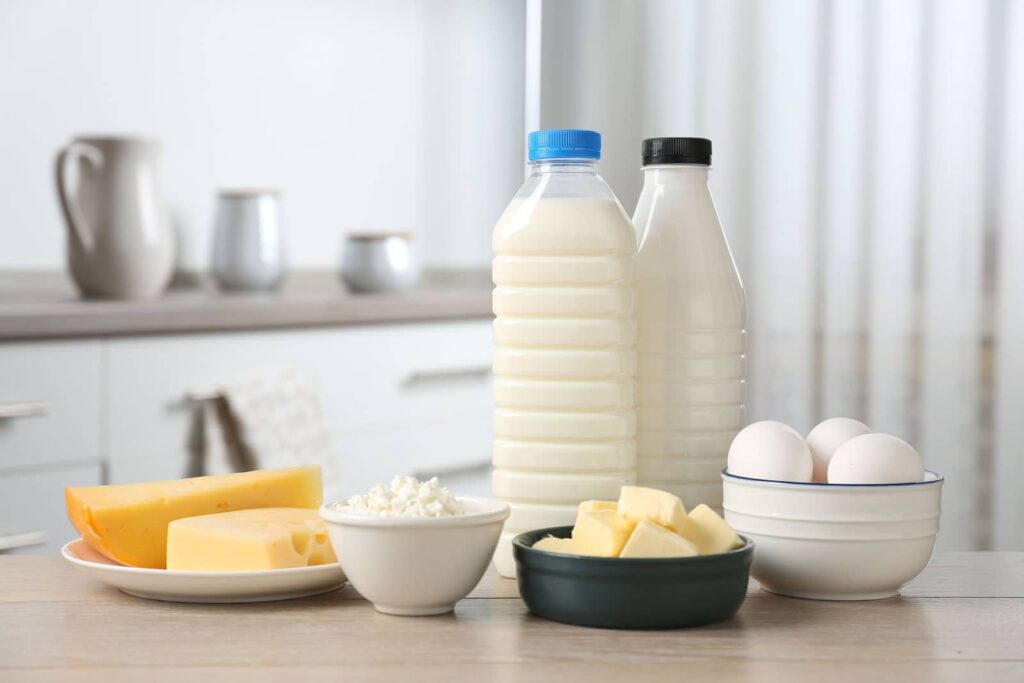
Which Dairy Products Are Most Problematic and Why?
Not all dairy products carry identical risk levels, but all dairy should be avoided in the first 48–72 hours. After that initial period, understanding which products carry higher versus lower risk can help guide your gradual reintroduction.
Highest Risk, Avoid for the Full First Week
- Whole milk and cream: high in saturated fat (inflammation risk) and lactose (bacterial substrate); thick consistency can also cling to the surgical site
- Soft and processed cheeses: high fat content, often high in sodium which can cause tissue swelling, and sticky textures that can disturb the wound site
- Ice cream: despite popular belief that ice cream is a good post-surgery food, the dairy content carries all the risks above; extreme cold can also cause sensitivity and minor vasoconstriction that temporarily affects healing blood flow
- Cream-based soups and sauces: often consumed at temperatures that can irritate the surgical site and carry the inflammatory fat content of cream
Moderate Risk, Reintroduce Cautiously After Day 3–5
- Yogurt: often cited as lower risk due to its probiotic content and smooth texture, but the dairy base still carries inflammatory and bacterial substrate risks; plain, unsweetened yogurt at room temperature is the safest option if reintroducing early
- Soft cheese (brie, ricotta, cottage cheese): smoother textures reduce mechanical risk to the wound site, but fat content and bacterial substrate concerns remain
Lower Risk, Generally Acceptable After Week 1 (Per Dentist Guidance)
- Hard aged cheeses: lower in lactose and less sticky; mechanical pressure on the implant site is the main remaining concern
- Kefir: fermented dairy with probiotic properties; some evidence suggests probiotics may support healing, but consult your dentist before introducing this early
What Should You Eat After Dental Implant Surgery?
Avoiding dairy doesn’t mean going hungry. There is a wide range of soft, nutrient-dense, non-dairy foods that actively support healing and are safe for the surgical site.
Ideal Foods in the First 24–48 Hours
Focus on cool or room-temperature liquids and near-liquid foods. Hot temperatures increase blood flow and can disturb the clot; cold temperatures are better tolerated.
- Blended fruit smoothies (without dairy) using water, oat milk, or plant-based milk as a base
- Lukewarm broth and bone broth, rich in collagen, glycine, and minerals that directly support soft tissue and bone healing
- Mashed avocado, soft, anti-inflammatory fats, rich in vitamins C, E, and K
- Pureed vegetable soups (cooled to lukewarm), nutrient-dense and gentle on the wound
- Applesauce and pureed fruits, easy to consume with minimal chewing and no mechanical pressure on the implant site
- Cooled mashed sweet potato, soft, high in vitamin A which supports immune function and wound healing
Foods That Support Osseointegration
As you move into the soft tissue healing phase (days 3–14), start incorporating foods that specifically support bone and tissue healing:
- Soft scrambled eggs: high in protein, biotin, and vitamin D; one of the best early post-surgical foods
- Soft-cooked fish (salmon, tilapia): omega-3 fatty acids are potently anti-inflammatory and support cellular repair
- Hummus: plant-based protein and healthy fats; smooth texture is gentle on healing tissues
- Soft-cooked lentils and legumes: excellent plant-based protein and iron sources
- Mashed banana: easy to eat, contains potassium and magnesium which support nerve and muscle function
- Oatmeal (cooled): good source of zinc, which plays a direct role in wound healing and immune response
Non-Dairy Calcium Sources
Since dairy is temporarily off the table, ensure you’re still meeting calcium needs through alternative sources:
- Fortified plant-based milks (oat, almond, rice milk): most are enriched with calcium and vitamin D at levels comparable to cow’s milk
- Leafy greens (cooked spinach, kale, collards): pureed or very soft-cooked for early recovery
- Tofu (soft silken variety): an excellent calcium and protein source with a texture ideal for post-surgical eating
- Canned salmon or sardines with soft bones: among the richest non-dairy calcium sources available
- White beans and cannellini beans: blended into soups or pureed for easy consumption
Other Foods and Habits to Avoid During Implant Recovery
Dairy isn’t the only post-surgical hazard. A comprehensive recovery approach means understanding the broader dietary and behavioral landscape.
Foods to Avoid
- Hard, crunchy foods: nuts, chips, raw vegetables, crusty bread, can exert direct mechanical pressure on the implant site and dislodge the clot or damage sutures
- Chewy foods: tough meats, gummy candies, bagels, create repetitive mechanical force near the implant
- Spicy foods: can irritate the surgical site’s mucosal tissue and increase local inflammation
- Acidic foods and drinks: citrus fruits, tomato products, vinegar-based foods, can erode the delicate healing tissue margins and affect the local pH environment around the implant
- Very hot foods and drinks: can promote bleeding by dilating blood vessels near the surgical site
- Carbonated drinks: the bubbling action can disturb the clot and introduce air pressure into the wound area
- Alcohol: interferes with blood clotting, impairs immune function, and can interact dangerously with pain medications and antibiotics
Behavioral Habits to Avoid
- Smoking: tobacco use is one of the strongest independent predictors of dental implant failure. Nicotine reduces blood flow to healing tissues, impairs osteoblast activity, and dramatically increases infection risk. According to NIH research on osseointegration, nicotine directly inhibits the bone-forming cell activity essential to implant integration.
- Drinking through a straw: the suction creates negative pressure in the oral cavity that can dislodge the blood clot
- Vigorous rinsing or spitting: similarly, forceful oral activity in the first 24 hours can disturb the clot; gentle salt water rinsing (after 24 hours) is appropriate
- Touching or probing the surgical site: with your tongue, fingers, or any object; introduces bacteria and can disturb healing tissue
Signs Your Implant Healing May Be Compromised
Knowing when something is wrong is just as important as knowing how to promote healing. Contact Aria Dental Care promptly if you experience any of the following:
- Persistent or worsening pain beyond the first 3–4 days that is not responding to prescribed pain management
- Swelling that is increasing after day 3 rather than gradually resolving
- Fever above 100.4°F (38°C), which may indicate systemic infection
- Foul taste or odor from the surgical site, suggesting bacterial infection
- Visible implant movement or loosening: the implant should feel completely stable at all times
- Numbness or tingling in the lip, chin, or tongue that persists beyond the initial anesthesia period
- Bleeding that doesn’t stop with gentle pressure within 30–60 minutes of the procedure
Early intervention is almost always more effective and less costly than delayed treatment. If you are concerned about any aspect of your healing, call us. That is always the right call.
When Can You Return to a Normal Diet After a Dental Implant?
The timeline for returning to a fully normal diet, including unrestricted dairy consumption, follows the phases of osseointegration outlined earlier. The MedlinePlus resource from the U.S. National Library of Medicine emphasizes that post-surgical dietary guidance should always be tailored to the individual patient’s healing progress.
Here is a practical, stage-by-stage guide:
Days 1–3: Liquid and near-liquid diet Cool or room-temperature liquids, broths, smoothies, pureed foods. No dairy. No hot foods. No straws.
Days 4–7: Soft foods diet Mashed, soft, and easily chewed foods. Continue to avoid dairy, crunchy, chewy, spicy, acidic, or very hot foods. Begin gentle salt water rinses after meals.
Weeks 2–4: Gradual soft food expansion Most soft foods are now appropriate. Begin cautious reintroduction of dairy (plain yogurt, soft cheese) only if your dentist confirms healing is proceeding well and you have completed your antibiotic course. Continue avoiding hard, crunchy, or sticky foods.
Months 1–3: Modified normal diet Most foods are appropriate at this stage. Continue to avoid extremely hard or crunchy foods that could exert significant force on the implant while osseointegration continues. Full dairy consumption is generally fine by this stage for most patients.
Months 3–6+: Unrestricted normal diet Once your dentist confirms successful osseointegration (typically verified with X-ray imaging), you can return to a completely unrestricted diet. Your dental implant is now functioning as a permanent, integrated part of your jaw.
The Aria Dental Care Approach to Implant Recovery
At Aria Dental Care, we believe that a successful dental implant outcome is built on three pillars: exceptional surgical technique, high-quality implant materials, and thorough, personalized patient education. The third pillar, patient education, is where dietary guidance like the dairy restriction lives, and it is something we take as seriously as the procedure itself.
When you receive a dental implant at Aria Dental Care, you leave with:
- A detailed written recovery guide covering dietary phases, oral hygiene protocols, medication instructions, and behavioral restrictions specific to your procedure
- A direct line of contact to our clinical team for any questions or concerns during your recovery, you will never be left wondering whether something is normal
- Scheduled follow-up appointments at key intervals to monitor healing progress, adjust guidance as needed, and confirm successful osseointegration
- Personalized nutrition counseling for patients who need support maintaining adequate protein, calcium, and micronutrient intake during the dietary transition period
- Collaborative care coordination with any other healthcare providers involved in your overall health management
We understand that recovering from implant surgery requires patience and discipline. Our role is to make that process as clear, comfortable, and predictable as possible, and to be your partner in ensuring the long-term success of your investment in your smile and your health.
If you have questions about dental implant surgery, recovery, or whether implants are right for you, we invite you to schedule a consultation with our team. We’re here to help you every step of the way.