









It is one of the most frightening questions patients ask in the treatment chair, usually in a quiet voice after they have been told they have bleeding gums or deep periodontal pockets. Can gum disease kill you? It sounds dramatic. It sounds like something a dentist might say to scare you into scheduling a cleaning.
But it is a fair question, and it deserves a fair, evidence-based answer rather than a scare tactic or a dismissive wave of the hand.
The short version: gum disease itself is very rarely the direct cause of death, but in uncommon situations an untreated oral infection can spread and become life threatening, and in far more common situations advanced periodontal disease is strongly linked to serious systemic conditions that absolutely do shorten lives. Understanding the difference between those two realities is what allows you to act sensibly instead of panicking or ignoring the problem.
At Aria Dental Care in Mission Viejo, our approach to periodontal health is rooted in biological dentistry, which means we look at the mouth as part of the whole body rather than as a separate mechanical system. This article walks through what the research actually shows, which symptoms warrant urgent attention, and what a realistic prevention plan looks like.
Educational content, not medical advice. If you are experiencing facial swelling, difficulty breathing, or difficulty swallowing, seek emergency medical care immediately.
Can Gum Disease Kill You? The Honest, Evidence-Based Answer
Let us separate the question into two parts, because they have very different answers.
Directly? Almost never, but not never. Death from a dental infection is rare in countries with accessible healthcare, yet documented cases exist every year in the United States. When it happens, it is not the gum inflammation itself that kills. It is a bacterial infection that escapes the confines of the gum tissue and spreads into the deep spaces of the neck, the bloodstream, the chest, or the brain.
Indirectly? This is where the honest answer becomes more sobering. Severe periodontitis is consistently associated in the research literature with cardiovascular disease, poorly controlled diabetes, respiratory infections, adverse pregnancy outcomes, and cognitive decline. Association is not the same thing as proof of causation, and it is important to be precise about that distinction. But the pattern is strong enough and consistent enough across large populations that major health organizations now treat oral health as a legitimate component of overall health rather than a cosmetic afterthought.
So when someone asks whether gum disease can kill you, the accurate answer is that untreated periodontal disease is far more likely to shorten your healthspan through its systemic connections than to end your life through an acute infection. Both risks are real. Only one is common.
When an Oral Infection Becomes a Medical Emergency
There are a handful of complications where a dental or periodontal infection crosses the line from serious to genuinely dangerous:
- Ludwig’s angina. A rapidly spreading infection of the floor of the mouth and neck that can swell the airway shut. It is a true medical emergency requiring hospitalization, IV antibiotics, and sometimes surgical airway management.
- Sepsis. When bacteria and inflammatory mediators from a deep infection enter the bloodstream, the body’s response can cascade into organ dysfunction. Sepsis carries significant mortality even with modern intensive care.
- Infective endocarditis. Oral bacteria can colonize damaged or prosthetic heart valves. This is why patients with certain cardiac conditions are advised to take antibiotic premedication before some dental procedures.
- Cavernous sinus thrombosis and brain abscess. Extremely rare, but infections in the upper jaw can track along venous pathways toward the skull base.
- Descending mediastinitis. Infection tracking downward into the chest cavity. Rare, aggressive, and associated with high mortality.
These outcomes are uncommon, and they typically follow weeks or months of an ignored infection, often in someone who is immunocompromised, diabetic, or without access to routine care. That said, the reason to know about them is simple: they are almost entirely preventable with timely treatment.
Understanding Periodontal Disease: How It Progresses
Gum disease does not appear overnight. It moves through recognizable stages, and the earlier you intervene, the more reversible it is.
Stage One: Gingivitis
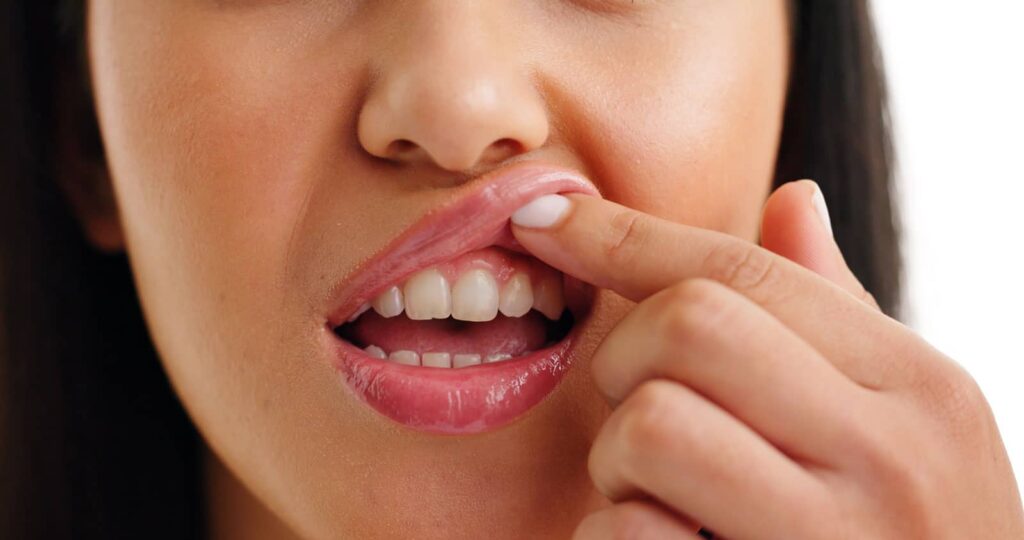
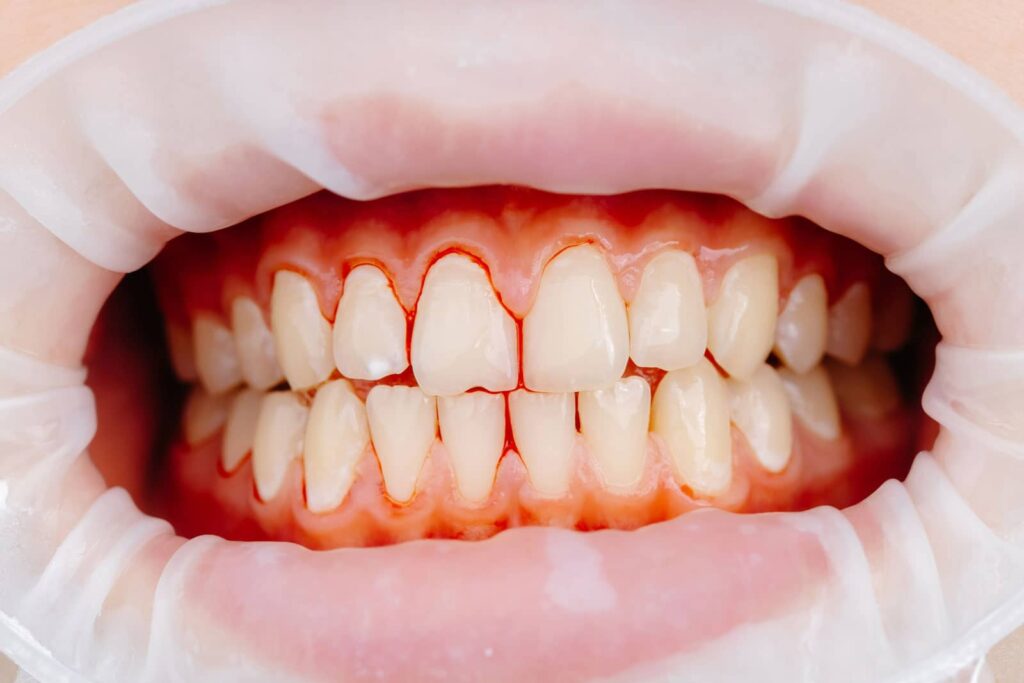
This is inflammation of the gum tissue caused by bacterial plaque accumulating along and just beneath the gumline. Signs include redness, puffiness, tenderness, and bleeding when you brush or floss.
The critical point about gingivitis is that it is fully reversible. No bone has been lost. No attachment has been destroyed. With improved home care, professional cleaning, and attention to underlying contributors like nutrition and stress, gum tissue can return to complete health.
Stage Two: Early Periodontitis
When gingivitis persists, the inflammatory process begins to damage the fibers that attach gum tissue to the tooth and starts to erode the supporting bone. Pockets form between the tooth and gum. These pockets are deeper than a toothbrush can reach and become protected reservoirs for anaerobic bacteria.
At this stage, bone loss has begun. It can be halted, but the bone that has already been lost does not spontaneously return.
Stages Three and Four: Moderate to Advanced Periodontitis
Pocket depths increase, bone loss becomes substantial, and teeth may begin to loosen, shift, or drift. Gum recession exposes root surfaces. Abscesses may form. Chewing becomes uncomfortable, and teeth are eventually lost.
This is also the stage at which the systemic inflammatory burden becomes most relevant. The total ulcerated surface area of inflamed periodontal pockets in a mouth with advanced disease has been compared to a wound roughly the size of the palm of your hand, continuously exposed to bacteria and continuously feeding inflammatory signals into the bloodstream. That framing helps explain why researchers keep finding connections between the mouth and the rest of the body.
How Gum Disease Affects the Rest of Your Body
Here is where the question of whether gum disease can kill you becomes genuinely interesting from a whole-body perspective. The proposed mechanisms fall into three broad categories: direct bacterial spread, circulating inflammatory mediators, and shared risk factors such as smoking and metabolic dysfunction.
Cardiovascular Disease and Stroke
The link between periodontal disease and cardiovascular disease is the most studied of all oral-systemic connections. People with severe periodontitis show higher rates of coronary artery disease and stroke in large population studies. Oral bacteria, including Porphyromonas gingivalis, have been identified within atherosclerotic plaque.
An important caveat: the American Heart Association has stated that while the association is well documented, current evidence does not establish that treating gum disease reduces cardiovascular events. The relationship may be driven partly by shared risk factors. Anyone who tells you that a deep cleaning will prevent a heart attack is overstating the science. What is reasonable to say is that both conditions share an inflammatory foundation, and reducing chronic inflammation anywhere in the body is a sensible health goal.
Type 2 Diabetes
This connection appears to run in both directions, which makes it particularly important. Elevated blood glucose impairs immune function and wound healing, making periodontal infection more likely and more severe. In turn, the inflammatory load from periodontitis appears to worsen insulin resistance and glycemic control.
Several clinical trials have found modest improvements in HbA1c following periodontal therapy in patients with type 2 diabetes. For a patient managing diabetes, periodontal treatment is not a cure, but it is a genuinely useful piece of the overall management picture. This is one area where the evidence for intervention is stronger than most.
Respiratory Infections
Oral bacteria can be aspirated into the lower airway. In hospitalized patients, nursing home residents, and people with compromised swallowing or immune function, poor oral hygiene is associated with higher rates of pneumonia. Structured oral care protocols in long-term care settings have shown measurable reductions in pneumonia incidence.
Pregnancy Outcomes
Periodontal disease during pregnancy has been associated with preterm birth and low birth weight. The proposed mechanism involves inflammatory mediators influencing the timing of labor. Treatment trials have produced mixed results, so periodontal therapy should not be presented as a proven way to prevent preterm birth. It remains true that pregnancy hormones increase gum sensitivity and that periodontal care during pregnancy is safe and worthwhile.
Cognitive Decline and Dementia
This is an active and genuinely fascinating area of research. P. gingivalis and its enzymes have been detected in brain tissue of Alzheimer’s patients, and some longitudinal studies show associations between tooth loss, periodontal disease, and cognitive decline. This research is early. It has not established causation, and it would be irresponsible to suggest that flossing prevents dementia. It is, however, one more reason to take oral inflammation seriously.
Rheumatoid Arthritis, Kidney Disease, and Certain Cancers
Associations have also been reported between periodontitis and rheumatoid arthritis, chronic kidney disease, and some cancers including pancreatic and colorectal. Each of these is at a different stage of scientific maturity, and none should be presented as settled.
The reasonable synthesis across all of these findings is this: chronic oral infection contributes to your body’s total inflammatory burden, and chronic inflammation is a common thread running through most of the diseases that shorten modern lifespans.

Warning Signs of Gum Disease You Should Never Ignore
Periodontal disease is often called a silent condition because it is usually painless until it is advanced. Pain is a late signal, not an early one. That is precisely what makes it dangerous.
Early Warning Signs
- Gums that bleed when you brush or floss (bleeding is not normal, no matter how often you have been told it is)
- Red, swollen, or tender gum tissue
- Persistent bad breath or a bad taste that does not resolve with brushing
- Gums that feel spongy rather than firm
- A change in the color of the gum tissue from coral pink to dark red or purplish
Moderate to Advanced Warning Signs
- Gum recession, or teeth that appear longer than they used to
- New sensitivity along the gumline or on exposed root surfaces
- Pus between the teeth and gums
- Teeth that feel loose, shift position, or no longer fit together the way they did
- A partial denture or bite that suddenly feels different
- Dull aching pressure when chewing
Red Flag Symptoms Requiring Immediate Care
Call your dentist urgently, or go to an emergency department, if you experience any of the following:
- Rapidly spreading facial or neck swelling
- Difficulty breathing or swallowing
- Inability to open your mouth fully
- Fever above 101 degrees Fahrenheit combined with oral pain or swelling
- Swelling extending toward the eye
- Confusion, rapid heartbeat, or feeling profoundly unwell alongside a dental infection
These are the symptoms that separate a chronic problem from an emergency. This short list is the practical answer to the underlying worry behind the question of whether gum disease can kill you. Chronic periodontitis needs a treatment plan. Acute spreading infection needs care today.
Who Is Most at Risk for Severe Periodontal Disease?
Risk is not distributed evenly. Some people brush inconsistently and never develop significant disease, while others maintain excellent hygiene and still struggle. Genetics, immune response, and systemic health all play a role.
Higher-risk groups include:
- Smokers and tobacco users. Tobacco is the single strongest modifiable risk factor. It also masks bleeding, which delays diagnosis.
- People with diabetes, particularly when glycemic control is poor.
- People with a family history of early tooth loss or aggressive periodontitis.
- Individuals under sustained psychological stress, through elevated cortisol and immune suppression.
- Patients taking medications that reduce salivary flow, including many antidepressants, antihistamines, and blood pressure medications.
- People with compromised immune function, whether from disease or immunosuppressive therapy.
- Those with nutritional deficiencies, particularly vitamin C, vitamin D, and omega-3 fatty acids.
- Patients with untreated bruxism or bite imbalance, where mechanical stress compounds inflammatory damage.
- Individuals with airway or breathing disorders, since chronic mouth breathing dries oral tissue and shifts the oral microbiome.
That last point reflects something we pay close attention to at Aria Dental Care. Airway health, sleep quality, and periodontal health are more connected than most people realize, and a patient with recurring gum inflammation who also snores heavily deserves a broader evaluation than a cleaning alone.
How Periodontal Disease Is Diagnosed
A proper periodontal evaluation is more than a visual glance. It should include:
- Full-mouth pocket depth charting at six points per tooth. Healthy readings are typically one to three millimeters.
- Bleeding on probing, which is a key indicator of active inflammation.
- Assessment of recession and attachment loss.
- Radiographs to evaluate bone levels.
- Tooth mobility and furcation involvement testing.
- Review of medical history, medications, and systemic risk factors.
Some practices also use salivary diagnostics or bacterial testing to identify specific pathogenic species. In a biological dentistry setting, we also consider nutritional status, inflammatory markers where appropriate, and coordination with a patient’s physician when systemic conditions are involved.
If you have never had your pockets charted, you have never actually been screened for periodontal disease.
Treatment Options: From Conservative to Advanced
The encouraging news is that periodontal disease responds well to treatment at nearly every stage.
Non-Surgical Therapy
Scaling and root planing, often called deep cleaning, removes plaque, calculus, and bacterial biofilm from root surfaces below the gumline and smooths those surfaces so tissue can reattach. For most patients with early to moderate disease, this is the foundation of treatment and frequently sufficient on its own.
Laser-Assisted Periodontal Therapy
Laser treatment can be used to remove diseased tissue and reduce bacterial load in periodontal pockets with less bleeding and less postoperative discomfort than traditional surgery. LANAP, the laser-assisted new attachment procedure, has FDA clearance for use in periodontal regeneration and is an option we offer for patients who want to avoid conventional gum surgery.
Ozone Therapy
Ozone is used adjunctively in many biological dental practices for its antimicrobial properties in periodontal pockets and root surfaces. It is important to be clear that ozone therapy is used at Aria Dental Care as a complement to conventional periodontal treatment based on our practice philosophy, not as a replacement for it, and it is not an FDA-approved treatment for periodontal disease in the United States.
Surgical Intervention
Advanced cases may require flap surgery for access, bone grafting, or soft tissue grafting to cover exposed roots. These procedures are performed when non-surgical therapy has not achieved adequate pocket reduction.
Maintenance
Periodontal disease is a chronic condition. After active treatment, most patients move to a three or four month periodontal maintenance interval rather than the standard six month recall. This is not upselling. Bacterial repopulation of treated pockets follows a fairly predictable timeline, and maintenance intervals are set accordingly.
Prevention: What Actually Works
Prevention is unglamorous and highly effective. The fundamentals matter more than any product.
Daily habits:
- Brush twice daily for two full minutes with a soft-bristled brush, angled toward the gumline at forty-five degrees
- Clean between the teeth every day with floss, interdental brushes, or a water flosser, since roughly forty percent of tooth surface area is missed by brushing alone
- Consider tongue cleaning to reduce overall bacterial load
- Stay well hydrated to support salivary flow, which is your body’s primary natural defense against oral pathogens
Nutrition and lifestyle:
- Reduce refined sugar and processed carbohydrate frequency, since it is frequency of exposure rather than total quantity that drives bacterial activity
- Ensure adequate vitamin C for collagen synthesis in gum tissue
- Discuss vitamin D status with your physician, since deficiency is associated with periodontal inflammation
- Include omega-3 fatty acids, which support the resolution phase of inflammation
- Stop smoking and using tobacco products, which is the single highest-impact change most at-risk patients can make
- Address sleep quality and chronic stress
Professional care:
- Attend cleanings at the interval appropriate to your risk level, not simply the default
- Request periodontal charting at least annually and ask what your numbers are
- Address bruxism and bite imbalance
- Have breathing and airway concerns evaluated
- Treat active decay and failing restorations promptly, since they harbor bacteria
Coordinate with your physician if you have diabetes, cardiovascular disease, autoimmune conditions, or are pregnant. Your dentist and physician should be aware of each other’s findings.
The Biological Dentistry Perspective on Gum Health
Biological and holistic dentistry approaches periodontal disease as a manifestation of systemic imbalance rather than purely a local hygiene failure. In practice, that means asking why a particular patient’s immune system is losing this fight, not simply cleaning the teeth more aggressively.
At Aria Dental Care, that translates into a few concrete commitments. We use biocompatible, BPA-conscious materials so that restorative work does not add to the body’s burden. We are one hundred percent mercury free and follow SMART protocol for safe amalgam removal. We evaluate airway and sleep alongside periodontal findings. We use ozone and laser therapy as conservative adjuncts to preserve as much natural tissue as possible. And we take the time to explain what your numbers actually mean.
None of this replaces the fundamentals of periodontal therapy. It surrounds them.
The Bottom Line
Can gum disease kill you? Directly, only rarely, and almost always in cases where a spreading infection went untreated. Indirectly, the picture is more serious, because advanced periodontal disease is woven into the same inflammatory processes that drive many of the chronic conditions that shorten lives.
That is not a reason to panic. It is a reason to get your gums properly evaluated, to know your pocket depths the way you know your blood pressure, and to treat bleeding gums as the meaningful signal they are rather than a normal inconvenience.
If you are in Mission Viejo, Laguna Niguel, Rancho Santa Margarita, or anywhere in Orange County and you have noticed bleeding, recession, persistent bad breath, or loose teeth, we would be glad to take a careful look and give you a straight answer about where you stand.