





If your tooth hurts after a filling, you are in good company. Mild sensitivity to cold, air, sweets or biting pressure is one of the most common experiences after a new restoration, and it usually fades within one to two weeks. Deeper fillings can take up to four weeks to settle. The most effective tooth hurts remedy during that window is simple: an over-the-counter pain reliever taken as directed, a desensitizing toothpaste, avoiding temperature extremes, and chewing on the other side while the tooth recovers.
Some post-filling pain, however, is not part of normal healing. A filling that sits slightly too high, a hidden crack, or an irritated nerve can cause discomfort that no home care will fix. This guide explains why teeth hurt after a filling, what is normal, a realistic recovery timeline, nine safe ways to ease the discomfort, and the warning signs that mean it is time to call your dentist.
Key takeaways
- Mild, short-lived sensitivity after a filling is normal and usually improves within one to two weeks.
- Deep fillings close to the nerve may stay sensitive for two to four weeks.
- Sharp pain when biting is most often a high bite, which a quick adjustment can fix.
- Lingering pain after hot or cold, throbbing that wakes you up, or facial swelling are not normal.
- The best tooth hurts remedy combines gentle home care, patience, and a professional check when symptoms do not steadily improve.
Why Does Your Tooth Hurt After a Filling?
A filling repairs damage, but placing one is still a procedure on living tissue. At the center of each tooth is the pulp, which contains nerves and blood vessels. Decay, drilling, bonding and the new material itself can all temporarily irritate the pulp or the tissues around the tooth. Identifying the cause helps you choose the right tooth hurts remedy.
Pulp Inflammation From Deep Decay
The deeper a cavity reaches, the closer the filling sits to the nerve. Removing decay creates vibration and heat, and the dentin left over the pulp contains thousands of microscopic tubules that carry sensation toward the nerve. The result is a mild, temporary inflammation that dentists call reversible pulpitis.
This sensitivity typically feels like a brief “zing” when cold water, ice cream or cold air hits the tooth. The key feature is that it fades within a few seconds once the trigger is gone, and it becomes weaker as the pulp heals.
A High Bite That Needs Adjusting
While you are numb, it is hard to judge how your teeth meet. If a filling is even a fraction of a millimeter too tall, that tooth hits first every time you close, and the extra force bruises the ligament that holds it in place. Signs of a high bite include:
- Sharp pain or tenderness specifically when biting or chewing
- A feeling that the tooth “hits first” or that your bite feels different
- Soreness that gets worse over several days instead of better
No home tooth hurts remedy will correct a high bite. An adjustment takes a few minutes, usually needs no anesthetic, and often brings relief within a day or two.
Composite Shrinkage and Bonding Sensitivity
Tooth-colored composite fillings are bonded to the tooth and hardened with a curing light, and they shrink very slightly as they cure. In larger fillings on back teeth, this can create stress at the bonding interface. Bonding-related sensitivity often feels like a sharp twinge when you bite down or release. Many cases settle with time; persistent ones may need the filling sealed or replaced.
Gum, Jaw and Injection Site Soreness
Not all discomfort comes from the tooth itself. The gum can be pressed by a matrix band or clamp, the injection site may feel bruised, and holding your mouth open can tire your jaw muscles. This soreness is usually most noticeable in the first 24 to 72 hours.
Referred Pain and Galvanic Sensations
Nerves in the mouth share pathways, so pain from the treated tooth can be felt in neighboring teeth, the opposite jaw, or the ear. Separately, when two different metals touch, such as a new amalgam filling contacting a gold crown, saliva can conduct a tiny current that produces a brief shock. This is one reason biological dentists favor metal-free restorations. Learn more about oral galvanism.
What’s Normal After a Filling and What’s Not
Use this table as a general guide, not a diagnosis.
| Symptom after a filling | Usually normal? | What it may mean |
| Brief sensitivity to cold, air or sweets that fades in seconds | Yes | Mild pulp irritation that typically resolves |
| Sore gum or injection site for 1 to 3 days | Yes | Tissue irritation from instruments or the injection |
| Mild ache in nearby teeth | Usually | Referred pain from the treated tooth |
| Sharp pain when biting that worsens over days | No | High bite that needs an adjustment |
| Sensitivity lasting 30 seconds or longer after hot or cold | No | Inflamed pulp that may not be healing |
| Throbbing, spontaneous pain or pain that wakes you at night | No | Possible irreversible pulp inflammation |
| Pain when releasing a bite | No | Possible crack or bonding issue |
| Facial swelling, gum boil, fever or a bad taste | No | Possible infection that needs urgent care |
The most reassuring pattern is steady improvement. If your tooth feels a little better each day or week, healing is on track. If it stays the same or gets worse, call your dentist rather than trying another tooth hurts remedy at home.
How Long Does Tooth Pain After a Filling Last? A Realistic Timeline
According to the Cleveland Clinic’s overview of dental fillings, minor tooth sensitivity and gum soreness are normal after a filling and typically go away within a week or two. Here is how recovery usually unfolds.
The First 24 Hours
Numbness usually wears off within two to five hours. As it fades, you may notice injection site soreness, a tired jaw, and some sensitivity in the treated tooth. Avoid chewing until the numbness is gone so you do not bite your cheek or tongue. Composite fillings are fully hardened before you leave, while amalgam needs several hours to reach full strength.
Days 2 to 7
This is when temperature sensitivity is most noticeable. Cold drinks and cold air are the most common triggers, and each episode should be brief and gradually lessen. If biting pain is increasing rather than decreasing, suspect a high bite.
Weeks 2 to 4
For small and medium fillings, sensitivity is usually gone or nearly gone by the end of week two. Deep fillings may stay mildly sensitive for up to four weeks, but the trend should still be clearly downward.
Beyond 4 Weeks
Sensitivity that continues past a month, or pain that returns after the tooth had settled, deserves an evaluation. It can point to a bite issue, a crack, a leaking margin or a pulp that is not recovering.
Factors That Affect Healing Time
- Cavity depth. The closer to the nerve, the longer the recovery.
- Size and location. Large fillings on molars take more chewing force.
- Material. Metal conducts temperature quickly; composite and ceramic insulate better.
- Clenching and grinding. Bruxism stresses a healing tooth.
- Existing sensitivity. Gum recession or worn enamel can extend recovery.

9 Tooth Hurts Remedy Options for Sensitivity After a Filling
These steps are ordered from most to least impactful for typical post-filling sensitivity. Use them together, and stop any measure that causes irritation.
1. Use an Over-the-Counter Pain Reliever Correctly
In the first few days, an over-the-counter pain reliever is often the most effective tooth hurts remedy. Anti-inflammatory medications such as ibuprofen target inflammation in the pulp and surrounding tissue, while acetaminophen relieves pain without the anti-inflammatory effect.
- Follow the dosing instructions on the label exactly.
- Check with your physician or pharmacist first if you take blood thinners, have kidney, liver or stomach conditions, are pregnant, or take other medications.
- If you need pain medication for more than a few days, call your dentist.
2. Switch to a Desensitizing Toothpaste
The American Dental Association’s MouthHealthy guide to sensitive teeth explains that desensitizing toothpastes contain compounds that help block sensation from traveling from the tooth surface to the nerve, and that several applications are usually needed before sensitivity decreases.
Common active ingredients include potassium nitrate and stannous fluoride. For patients who prefer fluoride-free products, formulas with potassium nitrate or nano-hydroxyapatite are available, and research on nano-hydroxyapatite for sensitivity is growing. Tip: at night, dab a small amount on the sensitive tooth after brushing and do not rinse.
3. Avoid Temperature Extremes and Trigger Foods
While the pulp heals, reduce what provokes it:
- Choose lukewarm drinks over iced or very hot ones.
- Sip cold beverages through a straw positioned away from the treated tooth.
- Limit sugary foods, which trigger sensitivity and feed decay-causing bacteria.
- Cut back on acidic foods and drinks such as citrus, soda and sports drinks.
4. Chew on the Other Side and Choose Softer Foods
For the first several days, especially after a large filling, give the tooth a break. Favor eggs, yogurt, soups, cooked vegetables, fish and oatmeal. Avoid ice, nuts, hard candy and sticky caramel. If you have an amalgam filling, avoid chewing on it for at least 24 hours.
5. Brush and Floss Gently, Not Less
Plaque around a new filling can irritate the gums and increase sensitivity. Use a soft-bristled toothbrush, brush gently at the gumline, rinse with lukewarm water, and keep flossing. If floss catches or shreds on the new filling, tell your dentist, because a rough edge can be polished smooth in moments.
6. Rinse With Warm Salt Water for Gum Soreness
For a tender gum or injection site, dissolve half a teaspoon of salt in eight ounces of warm water, swish gently for about 30 seconds, and spit. Repeat two to three times a day for a few days. This soothes gum tissue, although it will not change sensitivity coming from inside the tooth.

7. Apply a Cold Compress for Jaw Soreness
Hold a cloth-wrapped ice pack against the outside of the cheek for 10 to 15 minutes, then remove it for at least 15 minutes before reapplying. Never place ice directly on a sensitive tooth.
8. Protect the Tooth From Clenching and Grinding
Clenching and grinding put far more force on a healing tooth than chewing does. During the day, practice keeping your lips together and teeth slightly apart. If you wake with a sore jaw or headaches, ask about a protective night guard. Our guide to an occlusal adjustment vs. a night guard explains both options.
9. Track Your Symptoms and Give the Tooth Time
Patience is a genuine tooth hurts remedy, but it works best with information. For a week or two, note what triggers the sensitivity, how long each episode lasts, and whether it is improving. This record shows real progress and gives your dentist useful clues if a follow-up becomes necessary.
Home Remedies to Skip
- Aspirin placed on the gum. It can cause a painful chemical burn to soft tissue.
- Undiluted clove oil. Its eugenol has a numbing effect, but undiluted oil can burn the gums. If used, dilute it and apply briefly with a cotton swab.
- Undiluted hydrogen peroxide. It irritates gum tissue and does not treat pulp sensitivity.
- Heat on facial swelling. Warmth can worsen an infection. Swelling needs a dental evaluation.
- Numbing gels used for many days. They mask symptoms and can delay needed care.
When Your Tooth Hurts After a Filling: Warning Signs to Call Your Dentist
Home care is ideal for normal, short-lived sensitivity. Call your dentist if you notice:
- Pain when biting that does not improve after a few days
- Hot or cold sensitivity that lingers 30 seconds or longer
- Spontaneous, throbbing pain, or pain that wakes you at night
- Sensitivity that has not clearly improved after two weeks, or remains after four
- Pain that returns after the tooth had settled
- A filling that feels rough, cracked, loose or sharp
Seek prompt care for facial or gum swelling, a pimple-like bump on the gum, a bad taste, fever, or severe pain that medication does not control. The Cleveland Clinic advises calling your dentist right away for severe pain that does not improve with medication, a swollen face or jaw, or signs of infection such as fever or chills.
For new pain in a tooth that was never filled, see our guide to sudden tooth pain.
What Your Dentist Can Do If the Pain Does Not Go Away
When post-filling pain persists, the solution is often simpler than patients expect:
- A bite adjustment. Using articulating paper, the dentist finds and smooths the high spot in minutes.
- A desensitizing treatment. In-office sealing agents can block exposed dentin tubules.
- Replacing or resealing the filling. A failed bond or leaking margin can be corrected, often with a protective liner.
- Evaluating for a crack. Bite tests, transillumination and magnification can reveal one; cracked teeth often need a crown or onlay.
- Upgrading the restoration. Very large fillings may be better served by a dental inlay or onlay or a crown. Compare options in our article on dental crowns vs. dental fillings.
- Treating the pulp. If the nerve is irreversibly inflamed or infected, the tooth needs pulp treatment, which may mean root canal therapy or extraction. Dr. Horiyat reviews every option, including conventional treatment and the practice’s holistic alternatives to root canal therapy.
Filling Materials and Post-Filling Sensitivity
The National Institute of Dental and Craniofacial Research notes that dentists commonly treat cavities by removing the decayed tissue and restoring the tooth with a filling. The material you choose can influence what you feel afterward:
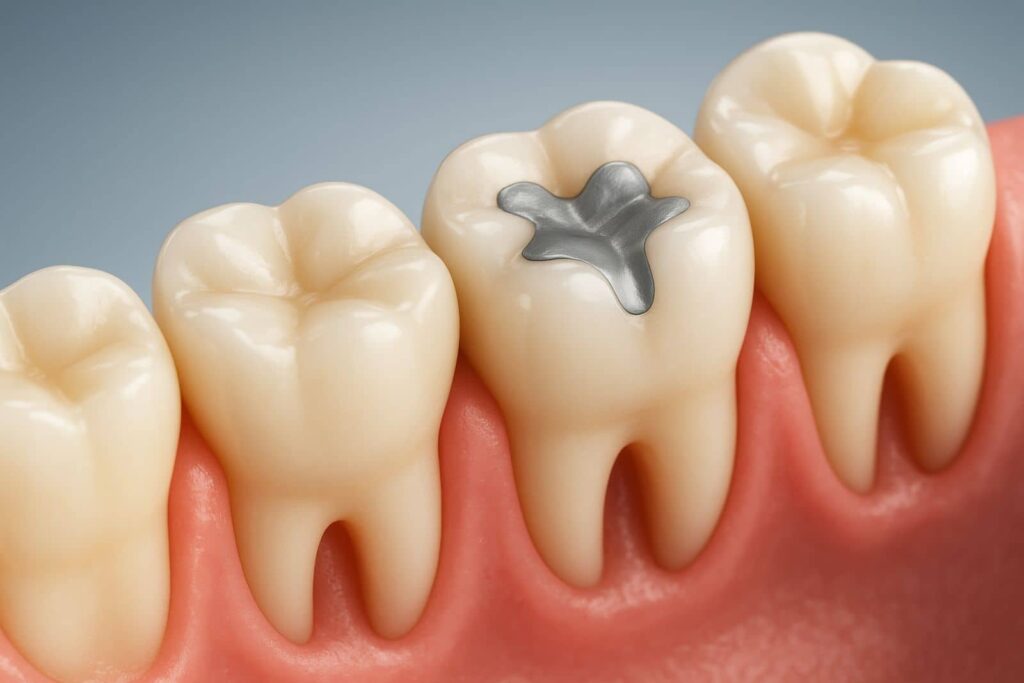
- Amalgam (silver). Metal conducts heat and cold quickly, and amalgam requires removing more healthy structure to hold it in place. It also contains mercury, which is why biological dentists choose to avoid it.
- Composite resin. It bonds to the tooth, allows more conservative preparation, and insulates better than metal. Sensitivity usually relates to bonding, curing shrinkage or cavity depth.
- Ceramic inlays and onlays. Crafted outside the mouth and bonded in place, they avoid much of the shrinkage stress of large direct composites and offer excellent durability.
Read more about biocompatible fillings. If you are considering replacing old amalgam, Aria Dental Care follows the SMART protocol for safe amalgam removal, designed to reduce mercury exposure during removal.
The Aria Dental Care Approach: Biocompatible Fillings With Comfort in Mind
At Aria Dental Care in Mission Viejo, every filling aims to restore the tooth with as little trauma to the pulp as possible, using materials chosen for biocompatibility. Dr. Maryam Horiyat is accredited by the International Academy of Oral Medicine and Toxicology (AIAOMT) and certified by the International Academy of Biological Dentistry and Medicine (CIABDM).
What that means for your comfort:
- Metal-free materials. The practice places metal-free fillings and inlays, avoiding galvanic sensations and rapid temperature conduction.
- Minimally invasive preparation. Removing only what is necessary preserves healthy tooth structure.
- Careful bite checks. Bites are verified before you leave, and follow-up adjustments are welcome once the numbness wears off.
- Laser and ozone as practice tools. Laser dentistry may be used in selected cases, and ozone is part of the practice’s biological philosophy. Research on ozone in restorative care is still developing, and Dr. Horiyat discusses its role and limits with each patient.
- Whole-person context. Clenching, airway, nutrition and overall health all influence how teeth heal.
Get Relief and Expert Care for Tooth Pain After a Filling
Some sensitivity after a filling is a normal part of healing, and for most people a consistent tooth hurts remedy at home is all it takes: be gentle with the tooth, limit triggers, use a desensitizing toothpaste, and watch for steady improvement. If the pain is sharp when you bite, lingers after hot or cold, wakes you at night, or simply is not getting better, a professional evaluation is the fastest and safest tooth hurts remedy available.
Aria Dental Care welcomes patients from Mission Viejo, Laguna Niguel, Rancho Santa Margarita, Lake Forest, Ladera Ranch, Irvine and across Orange County. Visit us at 27652 Crown Valley Pkwy, Mission Viejo, CA 92691, call (949) 364-9600, or request an appointment online.