







Smoking stains on teeth are one of the most stubborn, visible, and emotionally difficult cosmetic consequences of tobacco use. They build quietly over months and years, a shade darker here, a deeper yellow there, until one day you catch yourself avoiding smiling in photos or covering your mouth when you laugh. If that experience sounds familiar, this guide is written specifically for you.
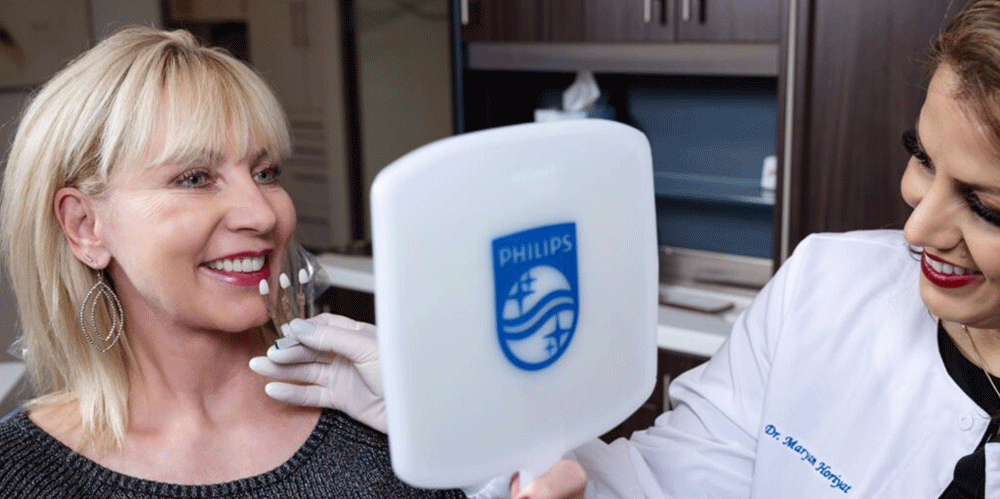
At Aria Dental Care in Orange County, Dr. Maryam Horiyat, DDS, AIAOMT, CIABDM, treats patients with tobacco discoloration teeth every week. Some have smoked for decades. Some recently switched to vaping and are now discovering that e-cigarettes are not the tooth-friendly alternative they were told. Some have already quit and simply want to reclaim the bright, healthy smile that tobacco use took from them. Whatever your story, the message is the same: smoking stains on teeth are treatable, and with the right holistic, biological approach, the results can be genuinely life-changing.
In this comprehensive 3,000-word guide, we will cover the precise science behind how tobacco damages and discolors your teeth, the critical difference between nicotine stains on teeth and tar stains on teeth, the growing evidence on smoking vs. vaping teeth stains, every treatment option available from professional in-office care to evidence-supported home strategies, and exactly how Aria Dental Care approaches this issue differently from conventional cosmetic dentistry. By the end, you will have everything you need to make a confident, informed decision about restoring your smile.
The Science of Smoking Stains on Teeth: Why Tobacco Discoloration Is So Stubborn
To understand how to effectively treat smoking stains on teeth, you first need to understand precisely what is happening at the molecular level when tobacco contacts your teeth. The discoloration is not a single process, it is a complex, multi-layered assault on your enamel driven by two very different chemical culprits.
Nicotine Stains on Teeth: The Yellow Layer
The first culprit is nicotine, the addictive compound found in all tobacco products and in most vaping liquids. In its pure form, nicotine is actually colorless. However, the moment nicotine is exposed to oxygen, it undergoes a rapid chemical oxidation reaction that transforms it into a deeply pigmented yellow-brown compound. This oxidized nicotine is both sticky and microscopic, small enough to penetrate the pores and tubules of your tooth enamel and settle into the dentin layer beneath.
Nicotine stains on teeth are characterized by a yellow to amber discoloration that appears to come from within the tooth rather than simply sitting on the surface. This is precisely why nicotine stains on teeth are so resistant to standard brushing and over-the-counter whitening products, the pigment is not just on the enamel, it has infiltrated it. Over years of tobacco use, nicotine staining accumulates in the dentin, which is naturally more yellow than enamel, amplifying the discoloration significantly.
Tar Stains on Teeth: The Dark, Adhesive Layer
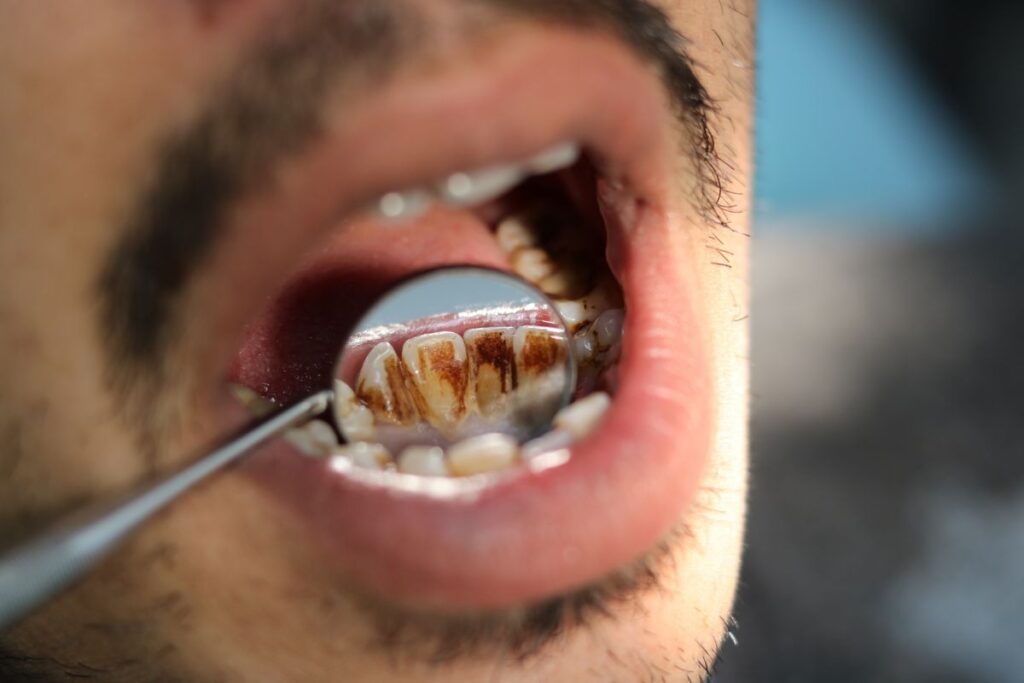
The second culprit is tar, the thick, dark, resinous byproduct produced when tobacco burns. Tar stains on teeth are fundamentally different from nicotine stains in both their chemical nature and their appearance. Where nicotine creates a yellow-to-amber internal stain, tar produces a dark brown to black extrinsic stain that coats the outer surface of the enamel and the margins of the gums.
Tar is extraordinarily adhesive. It bonds tenaciously to any surface it contacts, including the rough, slightly porous outer surface of tooth enamel. Every cigarette deposits a fresh layer of tar on the teeth. Over time, these layers accumulate into visible dark deposits that concentrate particularly around the gumline, between the teeth, and in the grooves and pits of the molars.
Tar stains on teeth are also compounded by the fact that tar accelerates plaque and calculus buildup. Tobacco use reduces saliva production, and saliva is the mouth’s natural cleaning and buffering system. With less saliva to wash away food particles, neutralize acids, and remineralize enamel, plaque accumulates faster in smokers, and that plaque readily absorbs additional tar pigments, creating a self-reinforcing cycle of increasingly severe staining.
Cigarette Stains on Enamel: The Combined Effect
The combined effect of nicotine and tar on tooth enamel is what creates the characteristic appearance of cigarette stains on enamel, a layered discoloration that includes both surface tar deposits and deeply embedded nicotine pigmentation. Because both mechanisms operate simultaneously and continuously in active smokers, cigarette stains on enamel are considerably more complex and more difficult to treat than the staining caused by dietary sources such as coffee or red wine, which primarily affect only the enamel surface.
Additionally, the heat from cigarette smoke causes repeated thermal cycling of the enamel, micro-expansions and contractions that, over time, create microscopic surface cracks that tar and nicotine pigments exploit as additional pathways into the tooth structure. This is one reason why long-term smokers tend to develop significantly more severe tobacco discoloration teeth than occasional smokers, even when accounting for equivalent cumulative exposure.
According to research published by the National Institutes of Health, tobacco use is among the most significant single predictors of severe extrinsic tooth staining, more impactful than dietary habits, coffee consumption, or most other lifestyle factors combined.
Smoking vs. Vaping Teeth Stains: Is Vaping Really Safer for Your Smile?
One of the most important and frequently misunderstood questions in contemporary dental care is the comparison of smoking vs. vaping teeth stains. Many patients switch from cigarettes to e-cigarettes partly under the assumption that vaping is significantly less harmful to their teeth, and the reality is more complicated than the marketing suggests.
What Causes E-Cigarette Teeth Discoloration?
E-cigarette teeth discoloration is a genuine and growing clinical concern. While it is true that e-cigarettes do not produce tar in the same way that burning tobacco does, meaning they do not create the same dark tar stains on teeth, they are far from harmless to your smile. Here is what the evidence shows:
- Nicotine delivery: The vast majority of e-cigarettes and vaping products contain nicotine. When nicotine-containing vapor contacts the teeth, the same oxidation process that creates nicotine stains on teeth from cigarettes occurs, producing yellow to amber discoloration that penetrates the enamel over time.
- Aerosol particulates: Vaping aerosol contains a complex mixture of propylene glycol, vegetable glycerin, flavorings, and ultrafine particles. These substances coat the teeth and promote the adhesion of plaque and staining compounds.
- Dry mouth: Like cigarettes, vaping significantly reduces saliva production, creating the same low-saliva environment that accelerates plaque buildup, enamel erosion, and stain accumulation.
- Gum tissue inflammation: Research published in peer-reviewed journals has documented that e-cigarette aerosol induces inflammatory responses in gum tissue that are similar to, and in some ways distinct from, the effects of cigarette smoke. Inflamed gum tissue is more permeable to staining compounds and more vulnerable to periodontal disease.
- Flavoring compounds: Many vaping flavors contain acidic compounds that weaken enamel, making the tooth surface more porous and more susceptible to both nicotine staining and discoloration from the flavoring pigments themselves.
Smoking vs. Vaping Teeth Stains: The Bottom Line
When comparing smoking vs. vaping teeth stains, the honest summary is this: cigarettes cause more severe and more rapid tobacco discoloration teeth overall due to the combined assault of tar and nicotine, thermal cycling, and dramatically reduced saliva. However, vaping is not a safe alternative for your smile. E-cigarette teeth discoloration from nicotine, aerosol deposits, and vaping-induced dry mouth is real, documented, and progressive, and many patients who switch to vaping are surprised to find their teeth continuing to yellow.
At Aria Dental Care, we see patients with e-cigarette teeth discoloration with increasing frequency. If you vape and have noticed your teeth yellowing or feel increased sensitivity, these are not coincidences, they are early warning signs that your oral health needs professional attention.
Yellow Teeth From Smoking: How Severe Is Your Staining?
Not all yellow teeth from smoking are equally severe, and understanding where you fall on the spectrum helps determine which treatments will deliver the best results for your specific situation.
The Spectrum of Tobacco Discoloration Teeth
- Mild (early staining): Light yellow discoloration primarily affecting the upper front teeth and the margins near the gumline. Surface tar deposits are modest. This stage responds very well to professional cleaning combined with in-office or take-home whitening.
- Moderate: Visible yellow to amber discoloration across most visible teeth, with more substantial tar buildup at the gumline and between teeth. Some nicotine penetration into enamel. Responds well to professional whitening but may require multiple sessions for optimal results.
- Severe (long-term staining): Deep brown to near-black discoloration with heavy tar deposits, significant nicotine saturation of the enamel and dentin, and possible structural enamel changes from years of thermal cycling and acid exposure. Professional whitening can achieve meaningful improvement, but porcelain veneers may be the most practical path to a fully restored smile.
Dr. Horiyat evaluates every patient with tobacco discoloration teeth individually, assessing not just the shade and depth of staining but also the underlying health of the gums, enamel integrity, and any signs of more serious tobacco-related oral health changes, before recommending a personalized treatment path.
Professional Treatment Options for Smoking Stains on Teeth
Step One: Professional Deep Cleaning
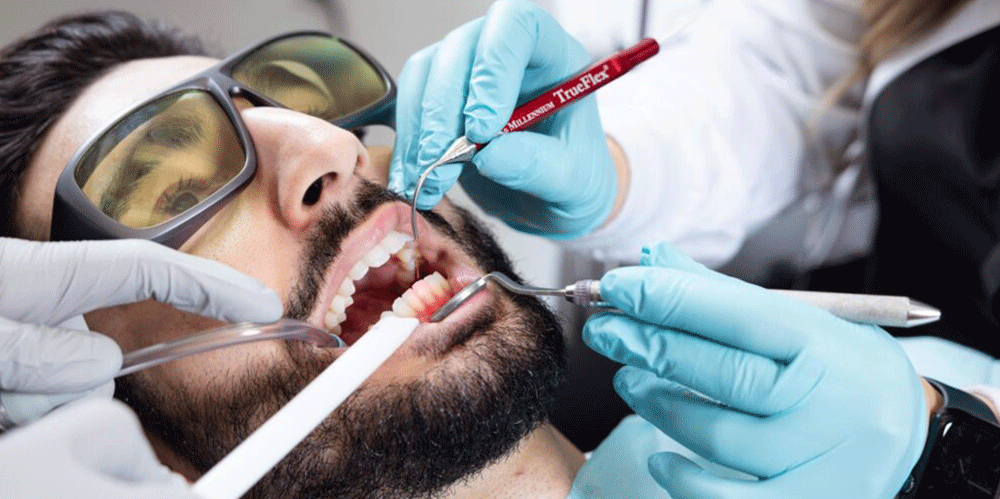
Before any whitening treatment can be optimally effective, the accumulated tar deposits, plaque, and calculus that characterize cigarette stains on enamel must be professionally removed. At Aria Dental Care, this begins with a thorough dental scaling and polishing, removing both the hardened calculus that harbors tar pigments and the surface biofilm that prevents whitening agents from penetrating evenly.
This step is non-negotiable. Attempting to whiten over heavy tar stains on teeth without first cleaning the surface produces uneven, disappointing results. It is the dental equivalent of painting over rust, the underlying problem simply shows through. A professional cleaning not only prepares the enamel for whitening but also gives Dr. Horiyat the opportunity to assess gum health, screen for oral mucosal changes, and evaluate the full clinical picture.
Step Two: Professional In-Office Whitening
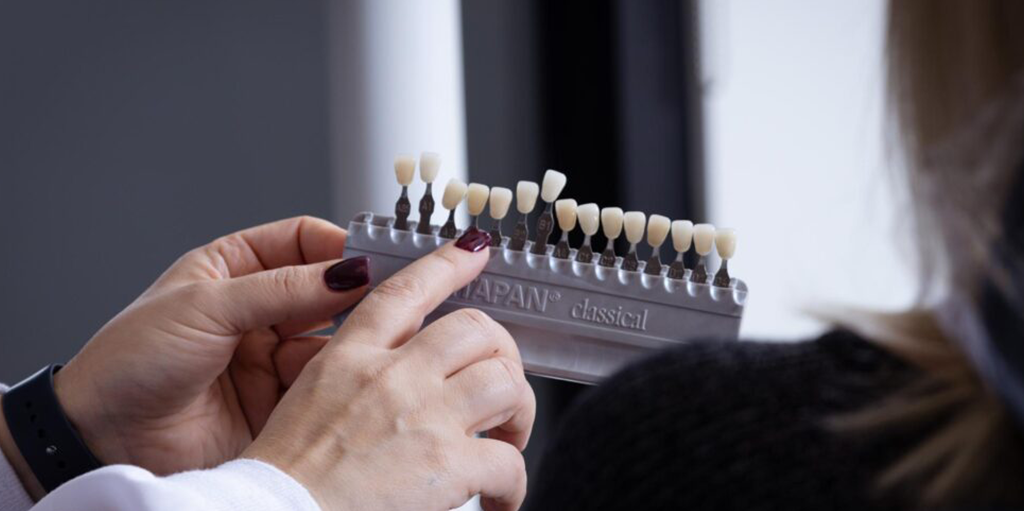
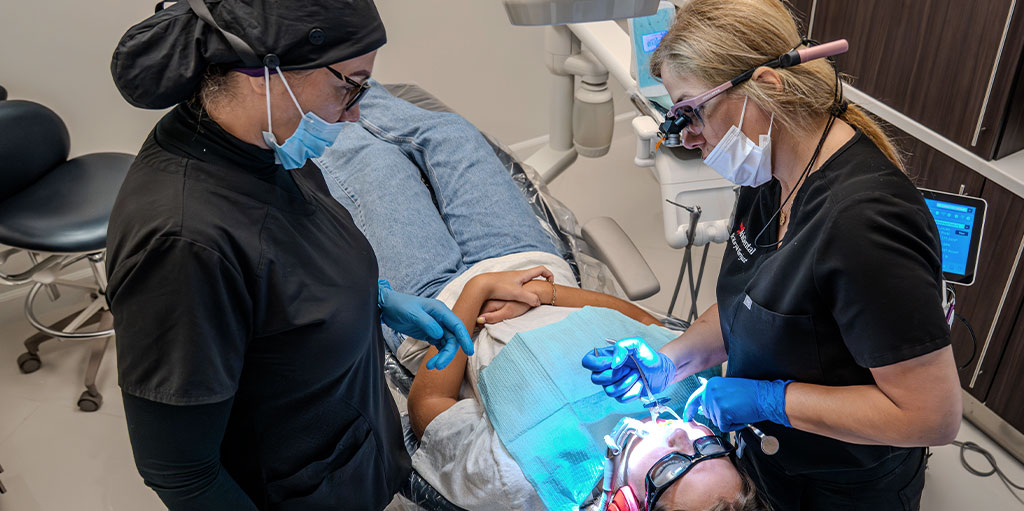
Professional in-office whitening is the most powerful single treatment available for smoking stains on teeth. Using high-concentration hydrogen peroxide or carbamide peroxide gel applied under precise clinical conditions, in-office whitening can brighten teeth by multiple shades in a single 60-to-90-minute appointment.
The whitening agent works by penetrating the enamel and oxidizing the pigmented molecules responsible for both nicotine stains on teeth and the shallower tar-derived discoloration that has infiltrated the enamel surface. The concentration of professional whitening agents, typically 25–40% hydrogen peroxide, is dramatically higher than anything available over the counter, which is why professional treatment produces results that consumer products simply cannot match.
For patients with moderate to severe tobacco discoloration teeth, two to three in-office sessions spaced several weeks apart may be recommended to achieve optimal results. Dr. Horiyat monitors the process carefully to maximize whitening while protecting gum tissue and managing sensitivity.
Step Three: Custom Take-Home Whitening Trays
Following in-office whitening, custom-fabricated take-home whitening trays are prescribed for maintenance. Unlike one-size-fits-all over-the-counter trays, these are precision-molded to your exact dental anatomy, ensuring complete, even contact between the whitening gel and every tooth surface while minimizing gel contact with the gums.
For patients still working through tobacco cessation, custom trays with professional-strength gel used one to two times per week represent an important tool for managing ongoing nicotine stains on teeth and keeping the overall stain burden from rebounding. This maintenance regimen significantly extends the longevity of in-office whitening results.
Porcelain Veneers for Severe Cigarette Stains on Enamel
For patients whose cigarette stains on enamel are severe, deeply intrinsic, or accompanied by structural enamel damage, such as erosion, surface crazing, or thinning from years of tobacco-related dry mouth and acid exposure, porcelain veneers offer the most comprehensive and longest-lasting cosmetic restoration.
Veneers are ultra-thin, custom-crafted porcelain shells bonded permanently to the front surfaces of the teeth. They completely conceal tobacco discoloration teeth, enamel damage, and other imperfections beneath a natural-looking, highly polished surface. Because dental-grade porcelain is significantly more resistant to staining than natural tooth enamel, veneers hold their color far better against ongoing tobacco use and dietary staining, though smoking cessation remains strongly recommended for the health of the underlying gum tissue and bone.
At Aria Dental Care, every veneer case is approached with Dr. Horiyat’s hallmark precision, artistic eye, and commitment to biocompatible materials, creating smiles that are not just beautiful, but biologically sound.
Composite Bonding for Localized Staining
For patients with tobacco discoloration teeth that is localized to specific teeth rather than affecting the entire smile, tooth-colored composite bonding offers a cost-effective, minimally invasive alternative. Bonding applies a custom-shaded resin directly to the affected surface, concealing the stain and blending seamlessly with surrounding teeth in a single appointment.
Holistic Teeth Whitening for Smokers: The Aria Dental Care Difference
At Aria Dental Care, holistic teeth whitening for smokers means something fundamentally different from simply applying a bleaching agent and sending patients on their way. As Orange County’s #1 holistic, biologic, and cosmetic dental practice, we integrate the science of cosmetic dentistry with the principles of whole-body biological health, because tobacco’s impact on the mouth is never purely cosmetic.
What Holistic Teeth Whitening for Smokers Looks Like in Practice
- Comprehensive oral health screening first: Every patient presenting with smoking stains on teeth at Aria Dental Care receives a full periodontal assessment, oral cancer screening, and evaluation of enamel integrity before any whitening protocol begins. We never treat the stain while ignoring the health environment around it.
- Biocompatible whitening agents: We select whitening products formulated without unnecessary chemical additives, synthetic preservatives, or compounds inconsistent with a biological approach to care.
- Remineralization support: Whitening, particularly at higher concentrations, temporarily increases enamel porosity. We pair every whitening protocol with remineralization therapy using hydroxyapatite or other biocompatible enamel-strengthening agents to restore mineral density after treatment.
- Ozone therapy: Medical-grade ozone is applied as a natural antimicrobial and healing agent, reducing the bacterial load that tobacco use elevates and supporting healthier gum tissue as part of the overall treatment environment.
- Laser-enhanced treatment: Our dental laser technology enhances the effectiveness of whitening by activating whitening agents more evenly and precisely, while simultaneously reducing gum inflammation and promoting tissue health.
- Systemic health integration: Dr. Horiyat discusses the relationship between tobacco use, systemic inflammation, gut microbiome health, nutritional status (particularly vitamins C and D), and oral health, because holistic teeth whitening for smokers means treating the whole person, not just the teeth.

How to Remove Smoking Stains From Teeth at Home: Evidence-Based Strategies
Professional treatment produces the most dramatic results, but a strong home care routine is essential for maintaining your investment and managing ongoing staining between visits.
What Actually Works
- Whitening toothpaste with ADA Seal: Look for products carrying the American Dental Association Seal of Acceptance. Whitening toothpastes with low-abrasion formulations and low-concentration peroxide can reduce fresh surface nicotine stains on teeth and tar deposits before they set. Use twice daily as your regular toothpaste.
- Electric toothbrush: Clinical research consistently shows that powered toothbrushes remove significantly more plaque and surface staining than manual brushing, a meaningful difference for patients managing cigarette stains on enamel.
- Baking soda toothpaste: Research cited by the American Dental Association confirms that baking soda-containing toothpastes are more effective at removing extrinsic stains than non-baking-soda formulations. Use two to three times per week as part of your routine.
- Water flosser: A water flosser removes plaque and tar deposits from between teeth and at the gumline more effectively than string floss alone, targeting the areas where tar stains on teeth tend to concentrate most heavily.
- Saltwater rinses: Rinsing with warm saltwater once daily reduces gingival inflammation, supports a healthier oral pH, and helps dislodge superficial deposits.
- Oil pulling: Swishing with coconut oil for 10–15 minutes is a traditional practice with some supportive evidence for reducing surface bacteria and mild extrinsic staining, and is entirely consistent with the biological, non-toxic approach at Aria Dental Care.
What to Avoid
- Charcoal toothpastes: Despite aggressive marketing, activated charcoal toothpastes have not demonstrated reliable whitening efficacy in peer-reviewed research and have unacceptably high abrasivity scores that can thin enamel over time, making cigarette stains on enamel worse in the long run.
- Lemon juice or apple cider vinegar: These highly acidic home remedies cause permanent enamel erosion. Damaged enamel is more porous and absorbs tobacco pigments even more readily than intact enamel.
- Hydrogen peroxide rinses used daily: While diluted hydrogen peroxide can be used sparingly, daily use at home concentrations disrupts the oral microbiome and can irritate soft tissues.
Preventing Smoking Stains on Teeth From Returning
Commit to Tobacco Cessation
This is the single most important recommendation for any patient dealing with smoking stains on teeth, e-cigarette teeth discoloration, or any form of tobacco discoloration teeth. Quitting stops new staining immediately, allows gum tissue to begin healing, restores saliva production, and dramatically extends the results of any professional whitening treatment. Evidence-based cessation support is available through your primary care physician and through the CDC’s tobacco cessation resources.
Maintain a Rigorous Home Oral Hygiene Routine
- Brush twice daily for two full minutes with a soft-bristled electric toothbrush
- Floss or use a water flosser once daily, paying particular attention to the gumline where tar stains on teeth accumulate most heavily
- Use an alcohol-free antibacterial mouthwash to reduce bacterial load without drying oral tissues
Increase Professional Cleaning Frequency
Patients managing smoking stains on teeth benefit from professional cleanings every three to four months rather than the standard six months. More frequent cleaning appointments prevent fresh tobacco deposits from setting deeply into the enamel and keep the overall stain burden manageable between whitening sessions.
Dietary Stain Management
Tobacco is not the only staining challenge, dietary sources compound tobacco discoloration teeth significantly. Reduce consumption of coffee, black tea, red wine, dark sodas, and deeply pigmented sauces. When consuming staining beverages, use a straw to minimize tooth surface contact. Rinse with water immediately after consuming staining foods or drinks.
Warning Signs That Require Immediate Dental Evaluation
Not all dark spots or discoloration in a tobacco user’s mouth are simple stains. The following changes require prompt professional evaluation, not home treatment:
- White patches (leukoplakia) on the gums, tongue, or cheeks, potential precancerous lesions
- Red patches or mixed red-and-white lesions (erythroplakia), carry high malignant transformation risk
- Sores or ulcers that do not heal within two weeks
- Unexplained lumps, swellings, or areas of numbness in the mouth, jaw, or neck
- Sudden changes in bite or appliance fit
Oral cancer risk is significantly elevated in tobacco and e-cigarette users. According to the Centers for Disease Control and Prevention, tobacco use accounts for the vast majority of oral cancer cases. Every cosmetic consultation at Aria Dental Care includes a thorough oral cancer screening, because your health always comes before your smile.
Frequently Asked Questions About Smoking Stains on Teeth
FAQ 1: What is the difference between nicotine stains on teeth and tar stains on teeth?
Nicotine stains on teeth and tar stains on teeth are two distinct types of tobacco discoloration that occur simultaneously in smokers but through different mechanisms. Nicotine stains are caused by the oxidation of nicotine after it contacts air, this produces a yellow-to-amber pigment that penetrates the porous structure of tooth enamel and settles into the dentin beneath, creating a stain that comes from within the tooth. Tar stains are caused by the dark, adhesive resinous byproduct of burning tobacco, tar coats the outer surface of the enamel and concentrates at the gumline and between teeth, producing the dark brown to black discoloration characteristic of heavy smokers. Both types require professional treatment for effective removal, but tar stains on teeth tend to respond more readily to scaling and polishing, while nicotine stains on teeth penetrating the enamel require whitening agents to oxidize and break down the embedded pigment.
FAQ 2: Do e-cigarettes cause the same teeth stains as cigarettes?
E-cigarettes and traditional cigarettes cause smoking vs. vaping teeth stains through overlapping but distinct mechanisms. Cigarettes cause both tar stains on teeth (from burning tobacco) and nicotine stains on teeth, producing the most severe combined staining. E-cigarette teeth discoloration does not involve tar, since vaping does not burn tobacco, but it absolutely involves nicotine staining, because most vaping products contain nicotine, which oxidizes on contact with air and penetrates enamel just as it does from cigarette smoke. Vaping also contributes to e-cigarette teeth discoloration through aerosol deposits, vaping-induced dry mouth (which accelerates plaque and stain buildup), gum tissue inflammation, and acidic flavoring compounds that weaken enamel. The bottom line: vaping is not safe for your teeth, and patients experiencing yellow teeth from vaping should seek professional evaluation and holistic teeth whitening for smokers at Aria Dental Care.
FAQ 3: What is the most effective holistic teeth whitening for smokers?
The most effective holistic teeth whitening for smokers combines several layers of professional and home care. At Aria Dental Care, the protocol begins with a comprehensive professional cleaning to remove tar stains on teeth, calculus, and surface deposits. This is followed by in-office professional whitening using biocompatible, high-concentration whitening agents to address nicotine stains on teeth and tobacco discoloration teeth at the enamel level. Remineralization therapy is applied after whitening to restore enamel mineral density. Custom take-home whitening trays are prescribed for ongoing maintenance. The entire protocol is enhanced with ozone therapy and laser-assisted treatment to support gum health and maximize results. For patients with severe cigarette stains on enamel that do not respond sufficiently to whitening, porcelain veneers offer the most lasting cosmetic solution. Dr. Horiyat personalizes every plan based on the specific degree and type of staining, enamel health, gum status, and aesthetic goals.
FAQ 4: Can yellow teeth from smoking be fully reversed?
Whether yellow teeth from smoking can be fully reversed depends on the severity of the staining and how long it has been present. Mild to moderate tobacco discoloration teeth, including both surface tar stains on teeth and moderate nicotine stains on teeth within the enamel, responds very well to professional whitening, often achieving dramatic improvement that patients describe as life-changing. Severe, long-standing staining with deep nicotine penetration into the dentin may not achieve full reversal through whitening alone, but significant lightening is achievable in almost all cases. For patients where whitening reaches its limits, porcelain veneers completely conceal the residual discoloration and provide a stain-resistant surface going forward. Patients who quit smoking before or during treatment consistently achieve better and longer-lasting results, since new tobacco staining stops immediately upon cessation and the gum tissue environment stabilizes and improves over time.
FAQ 5: How long do professional whitening results last for patients with tobacco discoloration teeth?
For patients who have quit smoking, professional whitening results for tobacco discoloration teeth typically last one to three years with proper maintenance, including regular professional cleanings every three to four months and periodic use of custom take-home whitening trays. For patients who continue to smoke, results fade considerably faster, often within three to six months, because active nicotine stains on teeth and tar stains on teeth are continuously re-deposited on the freshly whitened enamel. For patients with e-cigarette teeth discoloration, the timeline is intermediate, longer than for cigarette smokers due to the absence of tar staining, but still significantly shorter than for non-tobacco users because nicotine staining continues with every vaping session. Porcelain veneers offer a substantially longer-lasting aesthetic result because dental porcelain is far more stain-resistant than natural enamel, though cessation of tobacco and vaping remains strongly recommended for gum and bone health regardless of the cosmetic treatment chosen.
Conclusion: Smoking Stains on Teeth Are Treatable, Your Smile Deserves Expert Care
Whether you are dealing with yellow teeth from smoking, dark tar stains on teeth, persistent nicotine stains on teeth, or the increasingly common e-cigarette teeth discoloration from vaping, one truth remains constant: smoking stains on teeth are treatable, and you do not have to live with them.
The science is clear. The treatments are proven. And at Aria Dental Care, the approach is unlike anything offered by conventional cosmetic dentistry, because Dr. Maryam Horiyat and her team understand that restoring your smile from tobacco discoloration teeth means treating the whole person: your enamel, your gum tissue, your systemic health, and your confidence. From holistic teeth whitening for smokers to precision porcelain veneers, every treatment we offer is delivered with the highest standards of biological dentistry, biocompatible materials, and genuine, personalized care.
Your smile is worth fighting for. Take the first step today. Visit ariadentalcare.com to schedule your comprehensive smile evaluation at Aria Dental Care in Orange County, and discover what truly holistic, biological cosmetic dentistry can do for you.