






Sore gums can turn brushing, eating and even talking into a chore. Most gum soreness is mild, has an identifiable cause, and responds well to simple care at home. This guide explains how to relieve sore gums quickly and safely, which remedies dental authorities support, and which warning signs mean the problem needs a dentist rather than another rinse.
Quick answer: The fastest way to relieve sore gums at home is to rinse with warm salt water, hold a cold compress against the outside of the cheek, brush gently with a soft-bristled toothbrush, and take an over-the-counter pain reliever exactly as the label directs. Gum soreness that lasts longer than about a week, keeps returning, or comes with swelling, pus, fever or loose teeth should be checked by a dentist.
Key Takeaways
- Most sore, tender gums are caused by plaque buildup (gingivitis), rough brushing, minor injuries, canker sores or erupting wisdom teeth.
- For most people, the answer to how to relieve sore gums is simple: warm salt water rinses, cold compresses and gentle oral hygiene.
- Bleeding is not a reason to stop brushing. Gentle, thorough cleaning is usually part of the cure.
- Gingivitis is reversible, but periodontitis is not. Early professional care protects the gums and the bone that supports your teeth.
- Facial swelling, fever, a pimple-like bump on the gum, or difficulty swallowing are signs to call a dentist the same day.

What Causes Sore Gums? Common Reasons Your Gums Hurt
Learning how to relieve sore gums starts with knowing why they hurt. Gum tissue is soft, rich in blood vessels and constantly exposed to bacteria, food and pressure, so it reacts quickly and usually heals quickly once the irritant is removed.
Gingivitis and Plaque Buildup
The most common cause of sore gums is gingivitis, the earliest stage of gum disease. Plaque, a sticky film of bacteria, collects along the gumline. When it is not removed, the gums respond with inflammation: redness, puffiness, tenderness and bleeding when you brush or floss. According to the CDC’s overview of periodontal (gum) disease, gingivitis is largely preventable and treatable with routine brushing, flossing and professional cleanings.
Plaque that stays in place hardens into tartar (calculus), which a toothbrush cannot remove, so the inflammation continues no matter how many home remedies you try.
Brushing Too Hard or Flossing Aggressively
More pressure does not mean cleaner teeth. A hard-bristled brush, a scrubbing motion or snapping floss can bruise gum tissue and, over time, contribute to gum recession.
Canker Sores and Other Mouth Irritation
Canker sores are small, shallow ulcers with a white or yellow center and a red border. They can form on the gums and usually heal on their own within one to two weeks. Our guide to canker sores after dental work covers this situation in more detail.
Wisdom Teeth and Erupting Teeth
When a wisdom tooth partially breaks through the gum, a flap of tissue can trap food and bacteria. The result, called pericoronitis, causes localized swelling, tenderness at the back of the mouth, a bad taste, and sometimes pain when opening wide. If this is a recurring trouble spot, read about whether wisdom teeth need to be removed.
Hormones, Medications, Food Injuries and Appliances
Hormonal shifts during pregnancy, menstruation and menopause make gums more reactive to plaque. Many medications reduce saliva, and a dry mouth lets bacteria build up faster. Sharp chips, very hot coffee and acidic foods can scrape or burn gum tissue, and new braces, aligners or dentures can rub against the gums.
Periodontitis and Gum Abscesses
Untreated gingivitis can progress to periodontitis, where the gums pull away from the teeth, form infected pockets, and the supporting bone breaks down. It often causes only mild discomfort until it is advanced. A gum abscess, a pocket of pus, usually produces throbbing pain, a swollen bump and sometimes fever.
How to Relieve Sore Gums Fast: 9 At-Home Remedies
If you want to know how to relieve sore gums today, these simple, inexpensive steps suit most adults. If you are pregnant, managing a medical condition or caring for a child, ask your dentist or physician before trying anything beyond gentle rinsing and brushing.
1. Rinse With Warm Salt Water
A warm salt water rinse is the classic first step for sore gum relief. It gently cleans the area, loosens trapped food and soothes irritated tissue.
- Dissolve about half a teaspoon of salt in a cup (8 ounces) of warm, not hot, water.
- Swish gently for 30 seconds, focusing on the sore area, then spit.
- Repeat two to three times a day, especially after meals.
Salt water soothes but does not remove plaque, so pair it with brushing and flossing.
2. Apply a Cold Compress
Cold reduces swelling and dulls pain. Wrap an ice pack in a thin cloth and hold it against the outside of your cheek for 10 to 15 minutes at a time. Never place ice directly on the gums.
3. Switch to a Soft-Bristled Toothbrush and a Gentler Technique
If you are wondering how to relieve sore gums without giving up brushing, the answer is to change the tool and the technique. Use a soft-bristled manual brush or an electric brush with a pressure sensor. Angle the bristles at 45 degrees toward the gumline and use small, gentle circles rather than a back-and-forth scrub. Brush twice a day for two minutes.
4. Keep Flossing, But Do It Gently
Bleeding tempts people to stop flossing, yet plaque between teeth is often the reason gums are sore. Slide floss gently between teeth and curve it into a C shape around each tooth. Water flossers and soft interdental picks are good options for tender gums. In most cases, bleeding from gingivitis decreases within a week or two of consistent, gentle cleaning.
5. Use an Over-the-Counter Pain Reliever as Directed
Over-the-counter pain relievers can take the edge off gum pain. Follow the label, and check with a pharmacist or physician if you take other medications, are pregnant, or have stomach, kidney, liver or bleeding concerns. Swallow tablets; placing a pill against the gum can cause a chemical burn.
6. Try a Topical Oral Gel or Antiseptic Rinse
Oral numbing gels can provide short-term relief for a canker sore or a localized sore spot. Use them sparingly and follow the label, and note that benzocaine products are not recommended for young children. An antimicrobial or therapeutic mouth rinse can help reduce plaque and gingivitis when used in addition to brushing and flossing. Alcohol-free formulas tend to be gentler on tender tissue and less likely to dry the mouth.
7. Diluted Clove Oil and Other Natural Options, With Care
Clove oil contains eugenol, long used in dentistry for its numbing effect, but undiluted clove oil can burn soft tissue. If you try it, dilute a drop or two in a teaspoon of a carrier oil such as coconut or olive oil, dab a small amount on the sore spot with a cotton swab, and stop if the area stings or turns white. Keep it away from children.
Some patients also find cooled chamomile tea rinses or pure aloe vera gel soothing. None of these removes plaque, so they complement, not replace, daily hygiene. For more, see our article on natural treatment for periodontal disease.
8. Avoid Gum Irritants for a Few Days
Give inflamed gums a break from anything that scrapes, burns or stings:
- Very hot drinks and foods
- Spicy, salty or highly acidic foods such as citrus and tomato sauce
- Hard, crunchy or sharp foods such as chips, crusty bread and popcorn hulls
- Tobacco and vaping products, which reduce blood flow to the gums and slow healing
- Alcohol, including alcohol-based mouthwash
9. Stay Hydrated and Support Healing With Nutrition
Saliva is the mouth’s natural rinse, so drink water throughout the day. Vitamin C supports healthy connective tissue, and cutting back on sugary snacks reduces the fuel plaque bacteria rely on.
Sore Gum Relief at a Glance: Matching the Remedy to the Cause
Use this table as a quick reference for how to relieve sore gums based on the likely cause. It is a general guide, not a diagnosis.
| Likely cause | Typical signs | Best first steps at home | See a dentist if |
| Gingivitis (plaque buildup) | Red, puffy gums that bleed when brushing | Gentle brushing, daily flossing, salt water rinse, therapeutic rinse | Bleeding or soreness lasts beyond 1 to 2 weeks of good hygiene |
| Brushing or flossing too hard | Tenderness in specific spots, worn or receding gumline | Soft-bristled brush, gentler technique | Gums are visibly receding or teeth feel sensitive |
| Canker sore | Small, round ulcer with a white or yellow center | Salt water rinse, topical gel, avoid acidic foods | Sore lasts longer than 2 weeks, is unusually large, or returns often |
| Erupting wisdom tooth | Swelling and pain at the back of the mouth, bad taste | Salt water rinse after meals, cold compress | Swelling spreads, opening the mouth is difficult, or fever develops |
| Food injury or burn | Sudden soreness after eating | Cool water, salt water rinse, soft foods | Pain worsens after 3 to 5 days or a fragment feels stuck |
| Gum abscess or advanced periodontitis | Throbbing pain, swollen bump, pus, loose teeth | Salt water rinse for comfort only | Always. Call a dentist promptly, the same day if swelling or fever is present |

What Not to Do When Your Gums Are Sore
Part of learning how to relieve sore gums is knowing which popular shortcuts make gum pain worse or hide a problem that needs treatment:
- Do not stop brushing and flossing. Skipping hygiene lets plaque build up, which keeps the gums inflamed.
- Do not place aspirin or other pills on the gums. This can cause a chemical burn.
- Do not apply undiluted essential oils or strong hydrogen peroxide solutions directly to the tissue.
- Do not use heat on facial swelling. Heat can encourage an infection to spread. Use cold instead.
- Do not squeeze or pop a bump on the gum. A swollen bump may be an abscess that needs professional drainage.
- Do not mask ongoing pain for weeks. Pain relievers and gels treat symptoms, not causes.
When to See a Dentist for Sore Gums
Knowing how to relieve sore gums at home is useful, but recognizing when home care is not enough matters just as much. The National Institute of Dental and Craniofacial Research notes that gum disease is an infection of the tissues that hold your teeth in place, and early treatment gives the best outcome.
Book an Appointment Within a Few Days If You Notice
- Gum soreness or bleeding that has not improved after about a week of gentle, consistent home care
- Gums that bleed easily every time you brush or floss
- Persistent bad breath or a bad taste that does not go away
- Gums that look like they are pulling away from the teeth, making teeth look longer
- Teeth that feel loose, sensitive, or seem to be shifting
- A change in how your bite or partial denture fits
- A sore, white patch or red patch that has not healed within two weeks
Seek Same-Day Care If You Have
- A painful, swollen bump on the gum or pus around a tooth
- Swelling of the face, jaw or cheek
- Fever along with gum or tooth pain
- Severe pain that over-the-counter medication does not control
If swelling makes it hard to breathe or swallow, go to an emergency room or call 911 right away. Spreading dental infections can become serious medical emergencies.
The good news is that gingivitis is reversible. The American Dental Association’s MouthHealthy guide to gingivitis explains that a professional cleaning combined with daily brushing and flossing is often enough to clear the infection at this stage.
How a Dentist Treats Gum Pain and Gum Disease
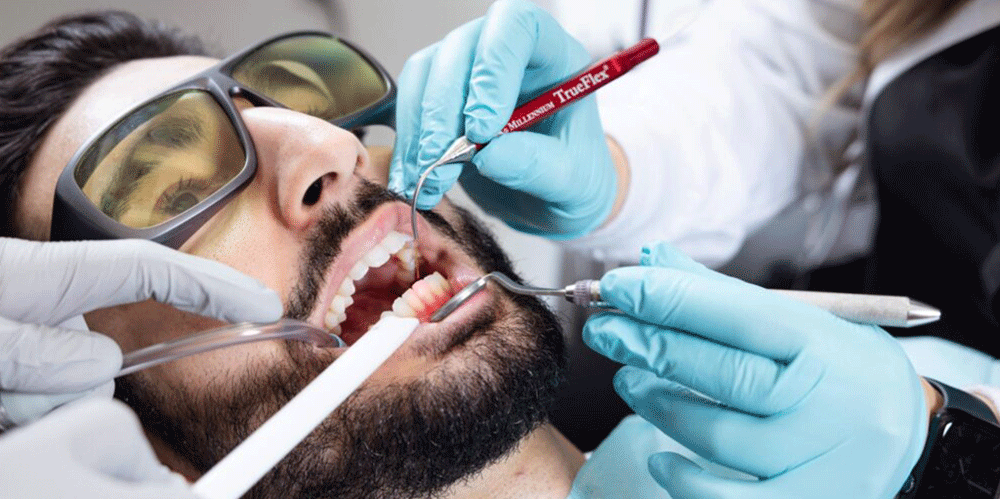
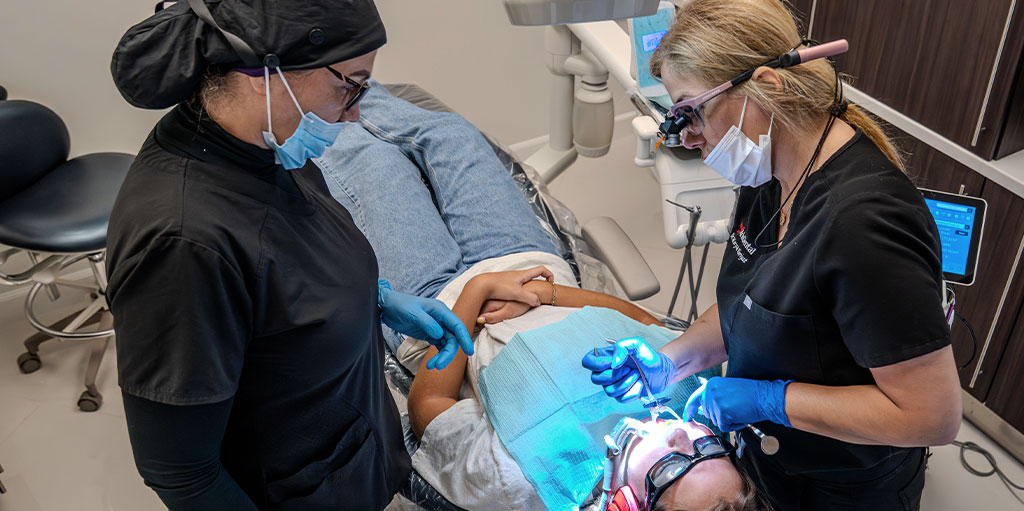
Professional care removes the cause of the soreness, not just the symptoms. At Aria Dental Care in Mission Viejo, every gum evaluation includes gentle pocket measurements and digital imaging when needed to check the supporting bone.
Professional Cleaning and Deep Cleaning
For gingivitis, a professional dental cleaning removes the plaque and tartar that home brushing cannot reach. When periodontitis has formed pockets below the gumline, scaling and root planing, often called a deep cleaning, removes bacteria and tartar from the root surfaces and smooths them so the gums can reattach. Learn more in our guide to what a dental deep cleaning involves.
Laser Gum Therapy (LANAP)
For moderate to advanced periodontitis, Aria Dental Care offers LANAP laser gum treatment, an FDA-cleared, minimally invasive protocol that uses laser energy to target diseased tissue and bacteria in the gum pocket. Candidacy is determined after a full periodontal exam. You can also review the broader range of periodontal gum treatments available at the practice.
A Biological, Whole-Body Approach to Gum Health
As a holistic and biological practice, Aria Dental Care also considers nutrition, dry mouth, breathing habits and bite forces. As part of the practice’s approach, Dr. Horiyat may add supportive therapies such as dental ozone therapy alongside conventional periodontal care. The CDC also notes that untreated periodontitis can make diabetes worse, one more reason to treat gum inflammation early.
How to Prevent Sore Gums From Coming Back
Knowing how to relieve sore gums helps in the moment, but long-term comfort comes from consistent habits:
- Brush twice a day for two minutes with a soft-bristled brush and gentle pressure.
- Clean between teeth daily with floss, a water flosser or interdental brushes.
- Replace your toothbrush every three to four months, or sooner if the bristles fray.
- Schedule regular checkups and cleanings, at least once a year and more often if your dentist recommends it.
- Avoid tobacco and vaping, which are among the most significant risk factors for gum disease.
- Protect against grinding and clenching. Excess bite forces can stress the gums and supporting bone. Our article comparing occlusal adjustment and night guards explains the options.
If your gums have already started to recede, early action matters. This guide on how to stop gum recession explains what can be done at each stage.

Why Orange County Patients Trust Aria Dental Care With Their Gum Health
Dr. Maryam Horiyat, DDS, earned her dental degree at UCSF and is an accredited member of the International Academy of Oral Medicine and Toxicology (IAOMT) and certified by the International Academy of Biological Dentistry and Medicine (IABDM). Her approach combines conventional periodontal diagnosis with biocompatible materials and minimally invasive techniques such as laser therapy.
Many patients with early gingivitis need only a thorough cleaning and a few routine changes, while patients with deeper pockets receive a staged plan designed to protect their natural teeth.
If you have tried everything you know about how to relieve sore gums and the soreness keeps returning, it is time for a professional look. Aria Dental Care welcomes patients from Mission Viejo, Laguna Niguel, Rancho Santa Margarita, Lake Forest, Irvine and across Orange County.
Book a gum health evaluation or call (949) 364-9600. Aria Dental Care is located at 27652 Crown Valley Pkwy, Mission Viejo, CA 92691.