




If you have been told you stop breathing in your sleep, or you wake up exhausted after eight hours in bed, you are probably searching for answers rather than more information. This guide walks through every major sleep apnea treatment available today, how each one actually works, who it suits, and what the first few months realistically feel like.
One thing to establish immediately, because it shapes everything that follows: sleep apnea is a medical diagnosis. It is identified by a physician through a sleep study, not by a dentist, not by an app, and not by a partner’s description of snoring. What a dental practice like Aria Dental Care contributes is screening, airway evaluation, and one specific and well-established form of therapy, delivered in coordination with your physician. Anyone who tells you otherwise is overstepping.
What Sleep Apnea Is, and Why Treatment Matters
Sleep apnea is a breathing disorder in which airflow repeatedly stops or drops during sleep. Each pause lowers blood oxygen and triggers a brief arousal, often too short to remember. Someone with moderate disease may experience this 20 to 30 times an hour, every hour, all night.
The Three Types
- Obstructive sleep apnea (OSA) is by far the most common. The airway physically collapses when throat muscles relax. The effort to breathe continues, but air cannot get through.
- Central sleep apnea is a signaling problem. The brain briefly fails to tell the muscles to breathe. It is less common and often linked to heart failure, stroke, or opioid use.
- Complex or treatment-emergent sleep apnea describes a mix of both, sometimes appearing after CPAP is started.
The distinction matters enormously for therapy selection. Oral appliances and most airway surgeries address the obstructive form. They do nothing for a central breathing disorder, which is one more reason a proper diagnosis has to come first.
What Happens Without Treatment
Untreated obstructive sleep apnea is not simply a sleep quality issue. The National Heart, Lung, and Blood Institute links it to elevated risk of high blood pressure, heart disease, stroke, type 2 diabetes, and daytime accidents. Repeated oxygen drops and arousals keep the body in a stress state overnight, night after night.
Common daily consequences include morning headaches, difficulty concentrating, irritability, low mood, reduced libido, and falling asleep at red lights or in meetings. Many patients tell us afterward that they had normalized the fatigue for years.
Dentally, we often see the signs before anyone else: worn or flattened teeth from clenching, a scalloped tongue, a narrow palate, a large tongue relative to the arch, chronic dry mouth, and enamel erosion from reflux. These findings are why airway screening belongs in a routine dental exam.
How Sleep Apnea Is Diagnosed Before Any Treatment Begins
No credible sleep apnea treatment plan starts without objective data.
In-Lab Polysomnography
The overnight sleep study in a lab remains the gold standard. Sensors track brain waves, eye movement, muscle tone, airflow, respiratory effort, oxygen saturation, and heart rhythm. It captures central events, limb movements, and sleep stages that simpler tests miss.
Home Sleep Apnea Testing
A home test uses a smaller set of sensors worn in your own bed. It is more comfortable, far less expensive, and appropriate for patients with a high likelihood of straightforward obstructive disease and no significant heart or lung conditions. It can confirm sleep apnea but is less reliable at ruling it out, so a negative home test in a highly symptomatic patient usually leads to a lab study.
Understanding Your AHI
Your result is expressed as an apnea-hypopnea index, the average number of breathing events per hour of sleep.
- Fewer than 5: normal
- 5 to 14: mild
- 15 to 29: moderate
- 30 or more: severe
Severity guides therapy selection but does not dictate it alone. Oxygen desaturation depth, symptoms, cardiovascular history, and patient preference all factor in.
Where Your Dentist Fits In
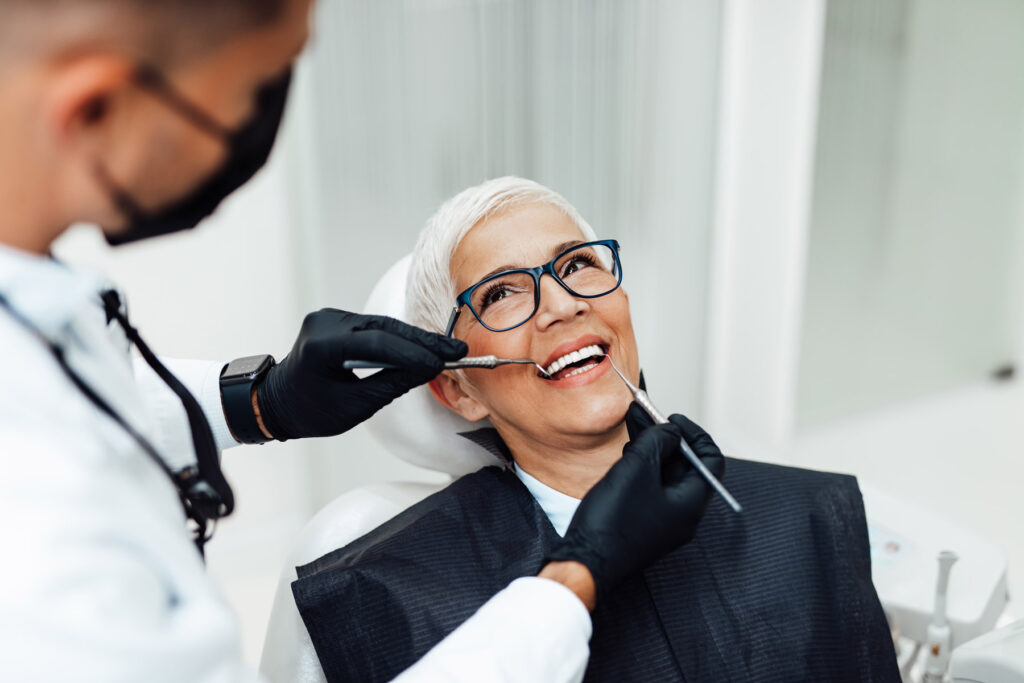
Dentists see most patients twice a year, far more often than many people see a physician. That makes us well positioned to screen. At Aria Dental Care, screening includes airway and tonsil assessment, tongue position scoring, arch width evaluation, wear pattern analysis, and validated questionnaires covering snoring, daytime sleepiness, and blood pressure history.
If screening raises concern, we refer for a sleep study. We do not diagnose, and we do not begin therapy for a suspected breathing disorder without a physician’s diagnosis in hand.
Sleep Apnea Treatment Options
Here is the full landscape, roughly from least to most invasive.
Positive Airway Pressure (CPAP, APAP, BiPAP)
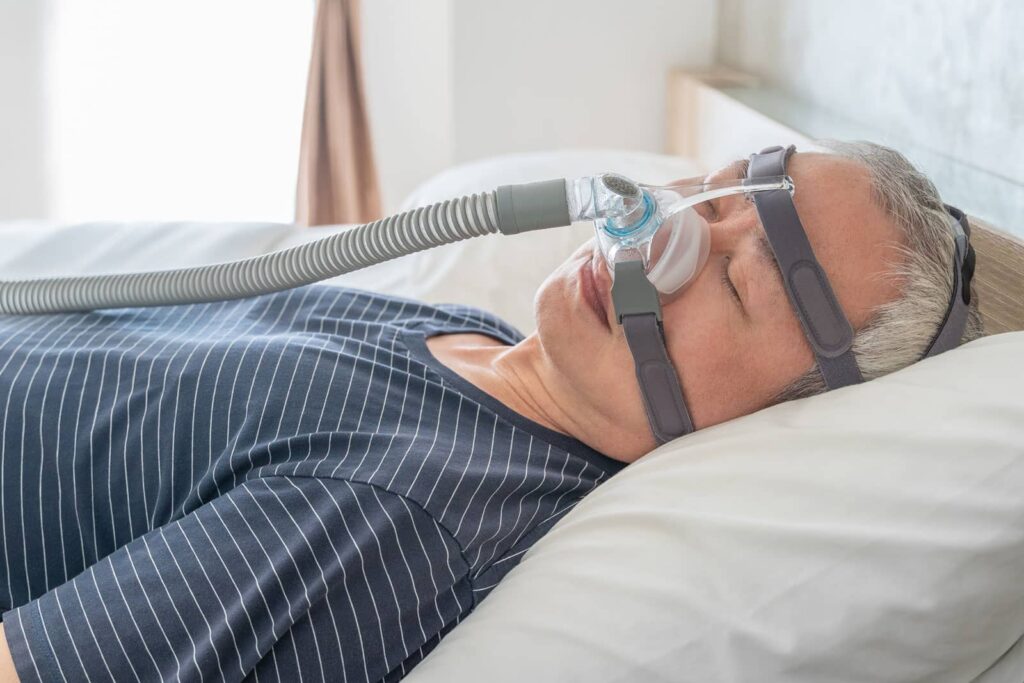
Positive airway pressure remains the most effective and best-studied therapy for obstructive sleep apnea, and it is the first-line recommendation for moderate to severe disease. A bedside unit delivers pressurized air through a mask, creating a pneumatic splint that holds the airway open.
- CPAP delivers one continuous pressure.
- APAP adjusts automatically within a range as your needs change through the night.
- BiPAP uses a higher pressure on inhalation and lower on exhalation, useful for high pressure requirements or certain lung conditions.
How well it works: when worn, it can reduce the apnea-hypopnea index to near-normal levels in most patients.
What to expect: a titration period of several weeks. Modern machines are quiet, and masks range from full-face to nasal pillows barely larger than earbuds. Common early hurdles are mask leak, dryness, nasal congestion, and claustrophobia. Nearly all of these have solutions: heated humidification, a different mask style, a chin strap, ramp settings, or treating nasal obstruction.
The honest limitation of positive airway pressure is adherence. A meaningful percentage of patients cannot tolerate it long term. That reality is precisely why alternatives exist, and it is not a reason to avoid trying it. If your physician recommends CPAP, give it a genuine effort with proper support before concluding it is not for you.
Oral Appliance Therapy
This is the sleep apnea treatment delivered by qualified dentists, and the one we provide at Aria Dental Care.
A custom mandibular advancement device is a two-piece appliance worn over the upper and lower teeth. It holds the lower jaw slightly forward during sleep, which pulls the tongue base forward and increases the space behind it. A smaller category, tongue-retaining devices, holds the tongue itself forward with gentle suction and is used mainly for patients without enough teeth to anchor a jaw-advancing appliance.
Who it suits:
- Mild to moderate obstructive sleep apnea
- Severe cases where positive airway pressure has been tried and cannot be tolerated
- Patients who travel frequently and need something portable
- Primary snoring without significant apnea
- Combination therapy alongside CPAP, allowing lower pressures
How well it works: oral appliances are generally somewhat less effective than positive airway pressure at reducing the apnea-hypopnea index, but real-world outcomes often narrow that gap because nightly adherence tends to be higher. The American Academy of Dental Sleep Medicine and the American Academy of Sleep Medicine jointly endorse oral appliance therapy for adults with obstructive sleep apnea who are intolerant of or prefer an alternative to positive airway pressure.
What it will not do: it will not treat central sleep apnea, and it is not a substitute for a physician’s care. It also requires enough healthy teeth and adequate periodontal support to anchor safely.

Positional Therapy
Some people have position-dependent sleep apnea, meaning events cluster when sleeping on the back. Positional therapy uses a wearable vibration device or a bumper worn on the back to discourage supine sleeping.
It is simple, inexpensive, and effective for a specific subgroup. Your sleep study report will show whether your events are position-dependent.
Weight Management and Lifestyle Modification
Excess weight, particularly around the neck and abdomen, contributes to airway collapse. Weight reduction can meaningfully lower the apnea-hypopnea index in patients who carry extra weight, and in some cases resolves mild disease.
Other adjustments that help:
- Avoiding alcohol within three hours of bed, since it relaxes airway muscles
- Reviewing sedatives and muscle relaxants with your physician
- Treating nasal allergies and congestion
- Stopping smoking, which inflames airway tissue
- Keeping a consistent sleep schedule
These are supportive measures. They are worth doing and rarely sufficient alone for moderate or severe disease.
Myofunctional Therapy
Myofunctional therapy is a structured program of tongue and orofacial exercises that improve tongue posture, lip seal, and nasal breathing. Published trials show a modest reduction in apnea-hypopnea index and snoring in adults, and it can be a helpful adjunct to appliance therapy or positive airway pressure. It is not a standalone therapy for moderate or severe disease, and any practice presenting it as one is overselling it.
Surgical Options
Surgery is generally considered when other approaches have failed or when there is a clear anatomical target.
- Nasal surgery such as septoplasty or turbinate reduction improves nasal airflow. It rarely resolves sleep apnea on its own but can dramatically improve CPAP tolerance.
- Tonsillectomy and adenoidectomy is highly effective when enlarged tonsils are the obstruction, especially in children.
- Uvulopalatopharyngoplasty (UPPP) removes or repositions soft palate tissue. Success rates in adults are variable.
- Maxillomandibular advancement surgically moves both jaws forward, enlarging the airway substantially. It has among the highest success rates of any surgical option and is a major procedure with a real recovery period.
- Hypoglossal nerve stimulation implants a device that senses breathing effort and gently stimulates the nerve controlling tongue protrusion. It suits selected patients with moderate to severe disease who cannot tolerate CPAP and who meet specific anatomical and body mass criteria confirmed by a drug-induced sleep endoscopy.
Pediatric Sleep Apnea Treatment
Children are not small adults. Enlarged tonsils and adenoids are the leading cause, and removing them resolves a large share of pediatric cases. Orthodontic palatal expansion can widen a narrow upper jaw and increase nasal airway volume in growing children, and myofunctional therapy addresses mouth breathing patterns.
Signs in children include snoring, restless sleep, mouth breathing, bedwetting, morning fatigue, and behavior or attention difficulties that are sometimes mistaken for ADHD. Pediatric evaluation should always involve a physician, typically a pediatric sleep specialist or ENT.
Oral Appliance Therapy: What to Expect Step by Step
Since this is the therapy we personally deliver, here is the real timeline.
Step 1: Diagnosis and Referral
You arrive with a sleep study and a physician’s diagnosis, or we screen you and refer you out for testing. Nothing begins before this.
Step 2: Dental and Airway Evaluation
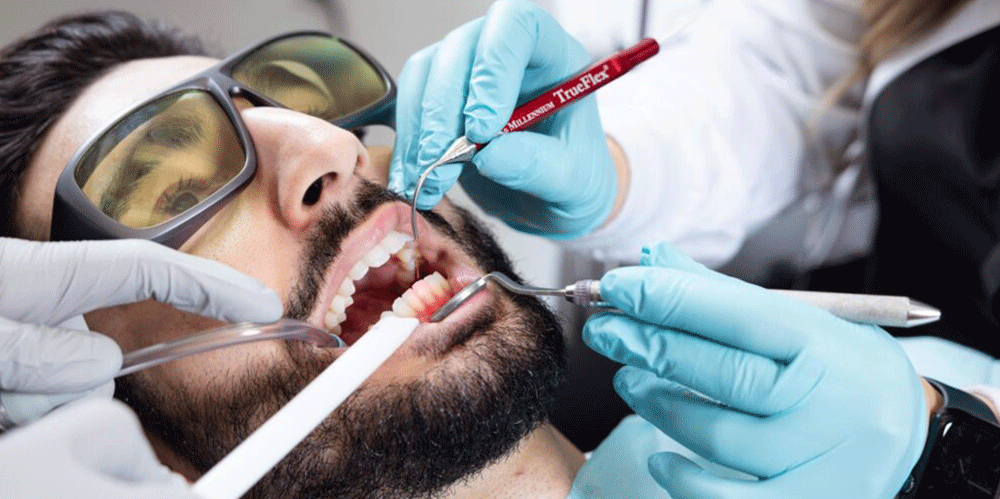
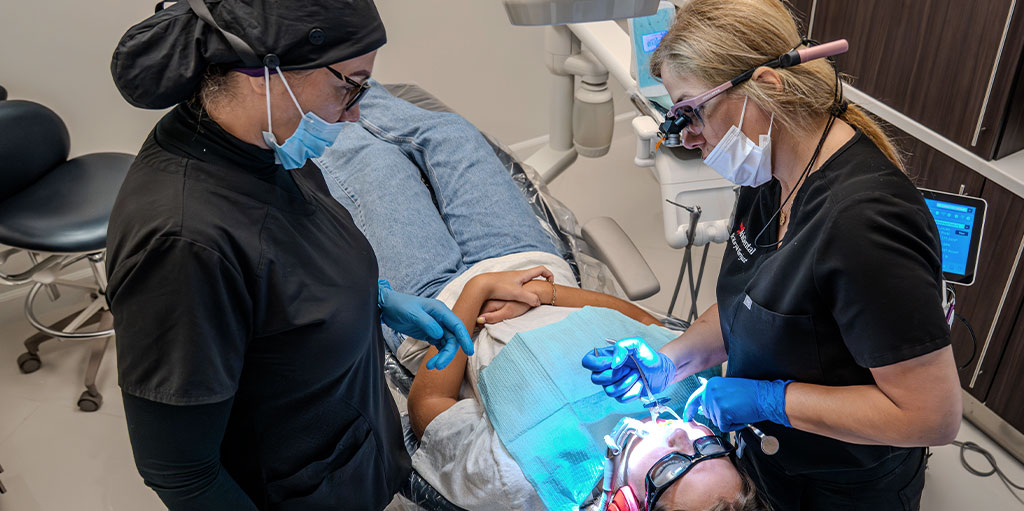
We assess whether your teeth and gums can safely support an appliance. We check periodontal health, existing restorations, tooth mobility, jaw joint function, and how far your lower jaw can comfortably advance. Patients with active gum disease, insufficient teeth, or significant temporomandibular joint problems may need those addressed first, or may not be candidates.
Step 3: Records
Digital scans replace traditional impressions in our office. We record a protrusive bite registration that sets the appliance’s starting position, usually a conservative percentage of your maximum forward movement.
Step 4: Delivery and Fitting
Two to three weeks later the appliance arrives. We verify fit, check for pressure points, and teach insertion, removal, and the use of the morning repositioning exercises that help your bite settle back after each night.
Step 5: Titration
This is the phase patients rarely anticipate. Over roughly six to twelve weeks, the jaw position is advanced in small increments while we track snoring, symptoms, and comfort. Advancing too quickly causes jaw soreness without improving outcomes.
Step 6: Efficacy Testing
Once symptoms are controlled, your physician orders a follow-up sleep study with the appliance in place. This is not optional. Feeling better is encouraging, but only objective testing confirms your airway events and oxygen levels have actually improved.
Step 7: Long-Term Follow-Up
Annual appliance checks, bite monitoring, and periodic replacement every three to five years depending on wear and any clenching or grinding.

Side Effects Worth Knowing About
Most are mild and transient, but you deserve them in plain language.
- Morning jaw soreness and muscle tenderness, usually easing within a few weeks
- Increased salivation early on, or dry mouth in some patients
- Temporary tooth tenderness
- Transient bite changes each morning
- Long-term dental movement in a minority of patients, including small changes in bite relationship over years of nightly wear
That last one is the important disclosure. It is generally slow, often clinically minor, and detected early through routine monitoring, which is exactly why annual follow-up matters.
A Biological Approach to Appliance Materials
Because Aria Dental Care is a biological and holistic practice, we pay attention to what sits in your mouth for eight hours a night.
- Nickel-free and metal-free component options for patients with metal sensitivity
- BPA-conscious material selection where suitable alternatives exist
- Attention to how a jaw-advancing device interacts with the temporomandibular joint, not just the airway
- Coordination with orthodontic arch development where a narrow upper jaw is part of the picture
- Ozone therapy and laser-assisted hygiene support for patients with dry mouth during therapy
None of this changes the mechanics of holding the airway open. It changes what your body is exposed to while it happens.
How Success Is Measured
Effective therapy should show improvement across four areas:
- Objective: apnea-hypopnea index reduced, ideally below 5, and oxygen saturation maintained
- Symptomatic: less daytime sleepiness, fewer morning headaches, clearer thinking
- Reported: snoring reduced or eliminated, per your bed partner
- Adherence: you actually use it nightly
A therapy with excellent laboratory numbers that sits in a drawer is not working. A slightly less powerful therapy used every single night frequently delivers better real-world health outcomes. This is the central tradeoff in dental sleep medicine, and it is why the best plan is the one you will follow.
Cost and Insurance, Briefly
Oral appliance therapy is usually billed to medical insurance rather than dental insurance, because sleep apnea is a medical condition. Coverage typically requires a physician diagnosis, documentation of positive airway pressure intolerance or a formal preference, and use of an FDA-cleared custom device. Over-the-counter snoring mouthpieces are not covered and are not appropriate therapy for diagnosed sleep apnea. Our team can help you understand documentation requirements before you commit to anything.
The Bottom Line
There is no single best sleep apnea treatment. There is the option that fits your severity, your anatomy, your tolerance, and your life well enough that you use it every night. For some people that is CPAP. For many it is a custom oral appliance. For others it is a combination, or surgery, or a nasal procedure that finally makes the mask bearable.
What all successful plans share is a real diagnosis, a measured response, and objective follow-up testing to confirm it is working.
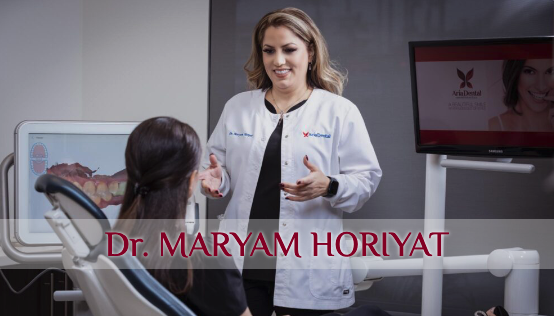
At Aria Dental Care in Mission Viejo, Dr. Maryam Horiyat provides airway screening and custom oral appliance therapy in coordination with your physician, with careful attention to materials, jaw joint health, and long-term bite stability. If you snore, wake unrefreshed, or have been diagnosed and cannot tolerate CPAP, we can help you understand what your dental options actually look like.
Take the next step. Schedule an airway consultation with Aria Dental Care and get a clear, honest assessment of whether oral appliance therapy is right for you.