






When most people hear “TMJ disorder,” they think of jaw pain, clicking sounds, or headaches. What far fewer people realize is that temporomandibular joint dysfunction can do something far more visually alarming, it can literally change the shape of your face. TMJ face distortion is one of the most underdiagnosed and emotionally distressing consequences of chronic jaw dysfunction, affecting thousands of patients who spend years seeking answers without ever connecting their changing facial appearance to a problem rooted in their jaw joints.
At Aria Dental Care, Dr. Maryam Horiyat, DDS, AIAOMT, CIABDM, has dedicated her career to the comprehensive, holistic diagnosis and treatment of complex jaw disorders, including the facial changes they cause. In this in-depth guide, we explore exactly what TMJ face distortion is, how it develops, what it looks like, and, most importantly, what can be done to stop it and restore your natural facial harmony.
Understanding TMJ Disorder and Its Connection to Facial Structure
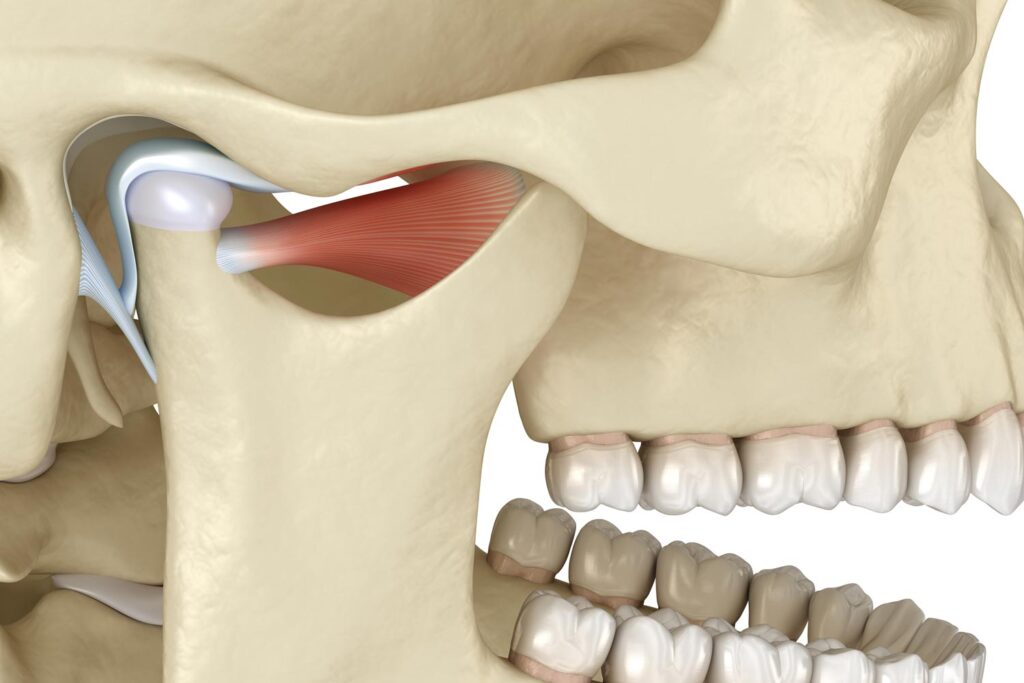
The temporomandibular joint (TMJ) is the hinge-like joint that connects your lower jaw (mandible) to your skull at the temporal bone, just in front of each ear. There are two of these joints, one on each side of your face, and together they control every movement of your jaw: opening, closing, chewing, speaking, and swallowing. They are among the most complex and frequently used joints in the entire human body, performing thousands of cycles of movement every single day.
When the TMJ is healthy, the relationship between the upper jaw (maxilla), lower jaw (mandible), and skull is balanced and harmonious. The muscles of mastication (chewing), the teeth, the joint disc, and the surrounding ligaments all work together in a finely tuned system. But when something disrupts this balance, whether through trauma, dental misalignment, bruxism, arthritis, or postural imbalance, the consequences ripple outward far beyond the joint itself.
TMJ disorders (collectively called TMD, temporomandibular disorders) are far more common than many people realize. According to the National Institute of Dental and Craniofacial Research (NIDCR), TMD affects more than 10 million Americans, and women are disproportionately affected. What makes TMD particularly challenging is that its symptoms extend well beyond jaw pain, and TMJ face distortion is one of the most striking and life-altering of those extended consequences.
What Is TMJ Face Distortion? Recognizing the Signs of Jaw-Related Facial Changes
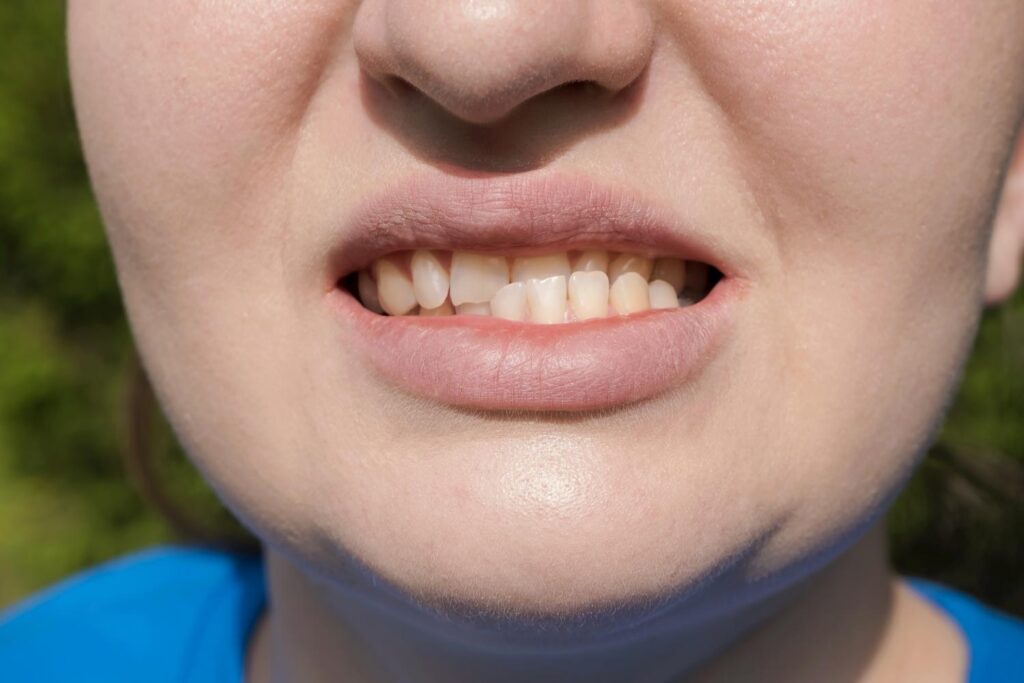
TMJ face distortion refers to visible changes in the shape, symmetry, and proportions of the face that develop as a direct result of temporomandibular joint dysfunction. These changes can be subtle at first, a slight shift in jaw position, a minor asymmetry that wasn’t there before, but over months and years of untreated dysfunction, they can become pronounced and unmistakable.
It is critical to understand that these are not cosmetic changes caused by aging or genetics alone. TMJ face distortion is a structural and functional consequence of a medical condition. The jaw is the foundation of the lower third of the face, and when that foundation shifts, everything above and around it shifts too.
The most commonly reported signs of TMJ-related facial distortion include:
- Facial asymmetry: One side of the face appears higher, lower, fuller, or more recessed than the other. This is often the first and most noticeable change.
- Jaw shifting or deviation: The lower jaw visibly shifts to one side, either at rest or when opening and closing the mouth.
- Flattened or sunken cheeks: Loss of cheek volume on one or both sides as facial muscles atrophy or reposition due to abnormal jaw function.
- Changes in chin position: The chin may appear to shift sideways, recede, or become more prominent as the mandible repositions itself in response to joint dysfunction.
- Altered jawline definition: The lower jaw may lose its natural shape and symmetry, appearing irregular or uneven along its border.
- Premature aging of the lower face: TMD-related bone loss, muscle atrophy, and altered jaw position can make the lower face appear to age more rapidly than the rest of the face.
- Uneven bite plane: The teeth no longer meet evenly, which can visually affect how the mouth and lips sit at rest.
How Does TMJ Disorder Cause Facial Distortion? The Mechanisms Behind the Changes
Understanding how TMJ face distortion develops requires looking at several interconnected mechanisms. This is not a simple cause-and-effect process, it is a cascade of structural adaptations, muscle changes, and bone responses that unfold over time when the jaw joint is chronically dysfunctional.
1. Disc Displacement and Joint Degeneration
Each TMJ contains a small fibrocartilaginous disc that sits between the condyle (the rounded head of the lower jaw) and the temporal bone of the skull. This disc acts as a cushion and guide during jaw movement. In many TMD patients, this disc becomes displaced, sliding out of its correct position, most commonly forward and medially. When the disc is displaced, the condyle no longer glides smoothly during jaw movement. Instead, it shifts, pops, clicks, and eventually begins to make direct bone-on-bone contact with the temporal bone.
Over time, this leads to condylar resorption, the gradual wearing away and collapse of the condylar head. As the condyle shrinks, the vertical dimension of the jaw on that side decreases, causing the jaw to shift upward and inward on the affected side. The result is visible facial asymmetry: one side of the face appears shorter, the chin deviates toward the affected side, and the overall facial balance is disrupted. This is one of the most significant drivers of TMJ face distortion.
2. Muscle Imbalance and Hypertrophy
The muscles of mastication, the masseter, temporalis, medial pterygoid, and lateral pterygoid, are large, powerful muscles that drape over and attach to the bones of the face and jaw. In TMD patients, these muscles are frequently in a state of chronic tension, spasm, or imbalanced activation. Bruxism (teeth grinding and clenching) often co-exists with TMD and causes the masseter muscles in particular to hypertrophy (enlarge) over time, much like a bicep muscle enlarges with repeated use.
Masseter hypertrophy contributes to TMJ face distortion by widening the lower face and creating a square, bulky jawline, particularly noticeable in front-facing photographs. When masseter hypertrophy occurs asymmetrically (more on one side than the other, which is common in TMD patients who predominantly clench on one side), the result is visible facial asymmetry with one cheek appearing larger and more prominent than the other.
3. Skeletal and Postural Adaptations
The jaw does not exist in isolation. It is intimately connected to the cervical spine (neck), the hyoid bone (throat), and the entire postural chain of the body. When the TMJ is dysfunctional, the body compensates by adapting the position of the head, neck, and spine to protect the painful joint. The head may tilt or shift forward (forward head posture), the neck may bend laterally, and the shoulders may become uneven, all of which feed back into facial appearance.
In growing children and adolescents, chronic TMD can have even more profound skeletal consequences. Because the jaw joints are growth centers, dysfunction during developmental years can alter the growth trajectory of the entire face, leading to more pronounced TMJ face distortion including underbite, crossbite, long-face syndrome, or facial elongation on the affected side.
4. Dental Changes and Vertical Dimension Loss
Bruxism, one of the most common companions of TMD, causes progressive wear of the tooth surfaces. As teeth wear down, the vertical dimension of occlusion (the height at which the upper and lower jaws meet) decreases. This loss of vertical dimension causes the lower face to collapse, the chin to move closer to the nose, and deep bite lines and jowls to develop prematurely. Patients often notice their face looks “shorter” or that their lips appear thinner and more sunken, classic signs of vertical dimension loss contributing to TMJ face distortion.
The Emotional and Psychological Impact of TMJ Facial Changes
The physical consequences of TMJ face distortion are significant enough on their own. But the psychological and emotional toll of watching your face change, without understanding why, or being dismissed by practitioners who don’t recognize the connection, can be devastating.
Patients with noticeable TMJ-related facial asymmetry or distortion frequently report:
- Decreased self-confidence and avoidance of social situations, photographs, or mirrors
- Anxiety and depression related to the perceived loss of their appearance
- Frustration and feelings of being dismissed or misunderstood by healthcare providers
- Spending thousands of dollars on cosmetic procedures that fail to address the underlying structural cause
- A sense of helplessness, particularly when the changes continue to progress despite treatment attempts
At Aria Dental Care, we understand that this is not “just a cosmetic concern.” TMJ face distortion affects quality of life in profound ways, and our team approaches every patient with the empathy, expertise, and thoroughness that this complex condition demands. We listen carefully to your history, validate your experience, and provide a genuine diagnostic pathway forward.
Diagnosing TMJ-Related Facial Distortion: What a Comprehensive Evaluation Looks Like
Accurate diagnosis is the foundation of effective TMD treatment. Because TMJ face distortion involves changes at the level of the joint, muscles, teeth, and skeleton, a comprehensive evaluation must examine all of these layers simultaneously. At Aria Dental Care, our TMD evaluation includes:
Detailed Medical and Dental History
Understanding when symptoms began, what triggers or relieves them, any history of trauma to the jaw or face, prior dental work, orthodontic treatment, sleep habits, stress levels, and postural habits provides critical diagnostic context. Many patients are surprised to find that jaw symptoms they’ve had for years are suddenly recognized as part of a cohesive clinical picture.
3D Cone Beam CT (CBCT) Imaging
Standard dental X-rays are inadequate for evaluating the TMJ in depth. At Aria Dental Care, we use cone beam computed tomography (CBCT) scanning to obtain a three-dimensional view of the jaw joints, condyles, temporal bones, and surrounding structures. CBCT allows us to precisely quantify condylar resorption, identify joint space narrowing, assess the degree of arthritic changes, and measure facial asymmetry with a level of detail impossible with traditional X-rays.
Occlusal Analysis and Bite Assessment
A precise analysis of how your upper and lower teeth meet, your occlusion, is essential in TMD evaluation. We use computerized bite analysis technology (T-Scan) to map the forces, timing, and distribution of your bite in real time. This reveals imbalances that may be driving joint overload on one side, contributing to asymmetric condylar wear and facial distortion.
Muscle Palpation and Joint Auscultation
A hands-on examination of the jaw muscles, checking for tenderness, spasm, asymmetry, and trigger points, combined with listening for joint sounds (clicking, popping, crepitus) during opening and closing provides important clinical data that imaging alone cannot capture.
Facial Photographic and Proportional Analysis
Standardized facial photographs taken from multiple angles allow for precise measurement of facial symmetry and proportions. By comparing facial thirds, midline alignment, jaw angles, and lip positions, we can document the degree of TMJ face distortion present and track changes, or improvements, over the course of treatment.
Treatment Options for TMJ Face Distortion: From Conservative Care to Advanced Intervention
The good news is that TMJ face distortion does not have to be a life sentence. With proper diagnosis and a staged, comprehensive treatment plan, it is possible to halt the progression of facial changes, relieve the underlying dysfunction, and in many cases restore a significant degree of facial balance and harmony. Treatment is always individualized, there is no one-size-fits-all approach to TMD.
Occlusal Splint Therapy (TMJ Orthotics)
A custom-fabricated TMJ orthotic (splint) is often the cornerstone of initial TMD treatment. Unlike simple nightguards purchased at a pharmacy, a therapeutic TMJ orthotic is precisely designed to reposition the lower jaw into an optimal neuromuscular position, one that decompresses the joint, reduces muscle tension, and allows the disc to potentially recapture its proper position. Worn consistently, a well-designed orthotic can halt further condylar resorption, reduce asymmetric muscle activity, and serve as a critical diagnostic tool to determine what jaw position is optimal for the patient.
Neuromuscular Dentistry and Bite Reconstruction
Once an optimal jaw position has been identified through splint therapy, the next phase of treatment may involve permanently establishing that position through dental reconstruction. This may include equilibration (selective reshaping of tooth surfaces to improve bite balance), dental restorations such as crowns and veneers to restore lost tooth structure and vertical dimension, or a full-mouth reconstruction in more advanced cases. Restoring proper vertical dimension is particularly important in addressing the lower face collapse associated with long-term bruxism and TMD.
Orthodontic Treatment and Orthognathic Surgery
In cases where significant skeletal discrepancy or jaw misalignment contributes to TMJ face distortion, orthodontic treatment, sometimes in combination with orthognathic (jaw) surgery, may be required to achieve stable, long-term correction. Orthognathic surgery physically repositions the upper and lower jaws into a more balanced relationship, which can dramatically improve both function and facial appearance simultaneously.
Botulinum Toxin (Botox) for Muscle Hypertrophy and Pain
For patients with masseter hypertrophy contributing to facial widening or asymmetry, therapeutic botulinum toxin injections into the masseter muscles can reduce muscle bulk and restore a more balanced lower face contour, while simultaneously reducing the force of clenching and grinding that drives ongoing joint damage. This is not purely a cosmetic treatment; it is a functional intervention that reduces the destructive forces acting on the TMJ.
Physical Therapy and Postural Rehabilitation
Because the TMJ is part of a larger postural system, TMD treatment at Aria Dental Care is often coordinated with skilled physical therapists who specialize in jaw and cervical spine rehabilitation. Manual therapy, therapeutic exercises, postural correction, and modalities such as ultrasound or TENS therapy can reduce muscle tension, improve joint mobility, and support the skeletal changes achieved through dental treatment.
Holistic and Biological Supportive Therapies
Consistent with Aria Dental Care’s commitment to holistic health, we also explore supportive therapies that address the systemic factors that can worsen TMD and facial distortion:
- Anti-inflammatory nutrition counseling to reduce systemic inflammation that can accelerate joint degeneration
- Stress reduction and mindfulness practices to break the cycle of emotional stress driving clenching and bruxism
- Sleep evaluation and management, as sleep-disordered breathing and sleep bruxism frequently co-occur with TMD
- Laser therapy for pain management and tissue healing at the joint level
Can TMJ Face Distortion Be Reversed? Understanding Realistic Outcomes
This is the question every patient with TMJ-related facial changes wants answered: Can the damage be undone? The honest answer is: it depends on the severity, the duration of untreated dysfunction, and the degree to which skeletal changes have already occurred.
For patients in earlier stages of TMD, before significant condylar resorption or vertical dimension loss has occurred, prompt, comprehensive treatment can halt the progression of facial distortion entirely. Muscle-related changes such as masseter hypertrophy can be significantly reduced with Botox therapy. Bite collapse can be rebuilt through restorative dentistry. Postural adaptations can be corrected through physical therapy. In these cases, the prognosis for meaningful facial improvement is excellent.
For patients with more advanced skeletal changes, particularly significant condylar resorption or established facial asymmetry, the path forward is more complex and may involve interdisciplinary care including oral surgery or orthognathic procedures. Even in these cases, however, meaningful improvement in both function and appearance is typically achievable. Patients are rarely told “nothing can be done” when they receive a genuinely comprehensive evaluation.
The most important message is this: the earlier TMD is diagnosed and treated, the better the outcome. Every month of untreated joint dysfunction is another month of potential bone loss, muscle adaptation, and facial change. If you recognize the signs of TMJ face distortion in yourself, or if you’ve been experiencing jaw pain, clicking, headaches, or bite changes, please don’t wait to seek care.
What the Research Says: Science-Backed Evidence on TMJ and Facial Changes
The connection between TMJ dysfunction and facial morphology changes is well-documented in peer-reviewed scientific literature:
- Research published in the Journal of Oral and Maxillofacial Surgery has demonstrated measurable condylar volume loss and associated facial asymmetry in patients with chronic TMD, with changes correlating with the severity and duration of joint dysfunction.
- A study in the Journal of Craniomandibular and Sleep Practice found that patients with unilateral disc displacement showed statistically significant facial asymmetry compared to healthy controls, with the chin deviating toward the affected joint in the majority of cases.
- The National Institute of Dental and Craniofacial Research (NIDCR) recognizes TMD as a complex biopsychosocial condition affecting more than 10 million Americans and recommends a comprehensive, multidisciplinary approach to diagnosis and treatment.
- A longitudinal study published in Oral Surgery, Oral Medicine, Oral Pathology, Oral Radiology documented progressive facial asymmetry in adolescent patients with untreated condylar resorption, emphasizing the critical importance of early intervention.
- We encourage you to explore the following authoritative resources for further information:
Frequently Asked Questions About TMJ Face Distortion
Q1: Can TMJ disorder really change the shape of your face?
Yes, and this is one of the most important things for patients and even many healthcare providers to understand. TMJ face distortion is a real, documented clinical phenomenon. The temporomandibular joint is the structural anchor of the lower face, and when it degenerates, shifts, or becomes chronically dysfunctional, the consequences extend to every structure it supports and connects to. Condylar resorption causes the jaw to shift and shorten on the affected side. Masseter hypertrophy from bruxism changes the contour and width of the lower face. Loss of vertical dimension from tooth wear collapses the lower facial third. And chronic postural adaptations tilt and asymmetrize the head and neck position. All of these changes are visible, measurable, and directly attributable to TMJ dysfunction. If you’ve noticed your face looking different, more asymmetric, your jaw shifted, your lower face shorter or collapsed, and you’ve been dismissing it as “just aging,” a comprehensive TMD evaluation may reveal an entirely treatable underlying cause.
Q2: What does TMJ facial asymmetry look like, and how do I know if I have it?
TMJ facial asymmetry typically manifests as a visible unevenness between the left and right sides of the face, most commonly in the lower face and jaw region. Signs to look for include a chin that appears to deviate to one side (especially noticeable when you open your mouth wide), one cheek appearing flatter or more sunken than the other, an uneven jawline when viewed straight on, one side of the face appearing shorter or higher than the other, or lips that tilt asymmetrically at rest. In patients with bruxism-related masseter hypertrophy, one cheek may appear bulkier or more square than the other. Some of these asymmetries are subtle in the early stages and may only be apparent in photographs or under careful clinical measurement. Others become quite pronounced with time. If you’re concerned about facial changes that seem to be progressively worsening, or that correspond to jaw pain, clicking, or bite changes, we strongly recommend scheduling a comprehensive TMD evaluation at Aria Dental Care.
Q3: Is TMJ face distortion permanent, or can it be treated?
The answer depends significantly on how advanced the changes are and how early treatment is pursued. Muscle-related changes, such as masseter hypertrophy and postural asymmetry, are generally very responsive to treatment with Botox therapy, physical therapy, splint-based jaw repositioning, and stress management. These changes can often be substantially reversed with appropriate intervention. Bone-level changes, particularly condylar resorption, are harder to reverse once established, though halting further progression is absolutely achievable with proper TMD management. In cases where significant skeletal changes have already occurred, reconstructive options including dental restoration of vertical dimension, orthodontics, or orthognathic surgery can restore meaningful facial balance and function even in advanced cases. The key takeaway: do not assume TMJ face distortion is permanent or untreatable without consulting a practitioner who truly specializes in comprehensive TMD diagnosis and treatment. Many patients who had given up hope have experienced transformative improvements with the right care.
Q4: How does Aria Dental Care approach TMJ face distortion differently from other dental practices?
At Aria Dental Care, our approach to TMJ face distortion begins with something that is, surprisingly, quite rare: truly listening to the patient. Many of our TMD patients have been to multiple providers who addressed individual symptoms, headaches treated by a neurologist, neck pain by a chiropractor, bite issues by a general dentist, without anyone connecting the dots to identify the underlying TMJ disorder driving all of them. Dr. Horiyat’s training in holistic and biological dentistry, combined with her membership in the International Academy of Oral Medicine and Toxicology (IAOMT) and her advanced TMD credentials, positions her uniquely to take a whole-body view of each patient’s situation. Our diagnostic approach uses the most advanced available technology, CBCT 3D imaging, computerized bite analysis, facial photographic analysis, to build a comprehensive picture of exactly what is happening and why. Our treatment approach is staged, collaborative, and always guided by the principle of doing what is necessary and no more: starting conservatively and escalating to more involved interventions only when clearly needed.
Q5: Can children and teenagers develop TMJ face distortion?
Yes, and in some ways, younger patients face a greater risk of significant facial distortion from TMD because their jaws are still actively growing. The TMJ condyle is a growth center in developing children and adolescents, meaning that dysfunction or damage to the joint during these critical years can alter the growth trajectory of the entire lower face. Conditions such as juvenile idiopathic arthritis, trauma to the jaw, and early-onset bruxism can all cause condylar damage that leads to progressive facial asymmetry during adolescence, a phenomenon sometimes called progressive condylar resorption or idiopathic condylar resorption (ICR), which disproportionately affects teenage girls and young women. Parents should watch for warning signs in their children including jaw pain, clicking or popping sounds, difficulty chewing, complaints of headaches, or visible changes in how the face is developing. Early evaluation and intervention in growing patients can prevent the severe skeletal consequences that are much harder to address once growth is complete.
Conclusion: Your Face Tells the Story, Aria Dental Care Can Help You Rewrite It
TMJ face distortion is more than an aesthetic concern, it is a visible manifestation of a complex disorder that, left untreated, will continue to progress and deepen. The changes it causes are real, they are documented in the scientific literature, and they are directly connected to what is happening inside your jaw joints, muscles, and bite. But they are also, in most cases, stoppable, and in many cases, significantly improvable.
At Aria Dental Care, Dr. Maryam Horiyat and her dedicated team bring together advanced diagnostic technology, holistic treatment philosophy, and genuine compassion to help patients across Orange County reclaim their jaw health, their facial harmony, and their quality of life. If you’ve been living with jaw pain, facial asymmetry, or bite changes, or if you simply suspect that TMD may be affecting you, we warmly invite you to take the first step.
You deserve answers. You deserve a face that reflects how you feel inside. And you deserve care from a team that will take your concerns seriously from the very first appointment.