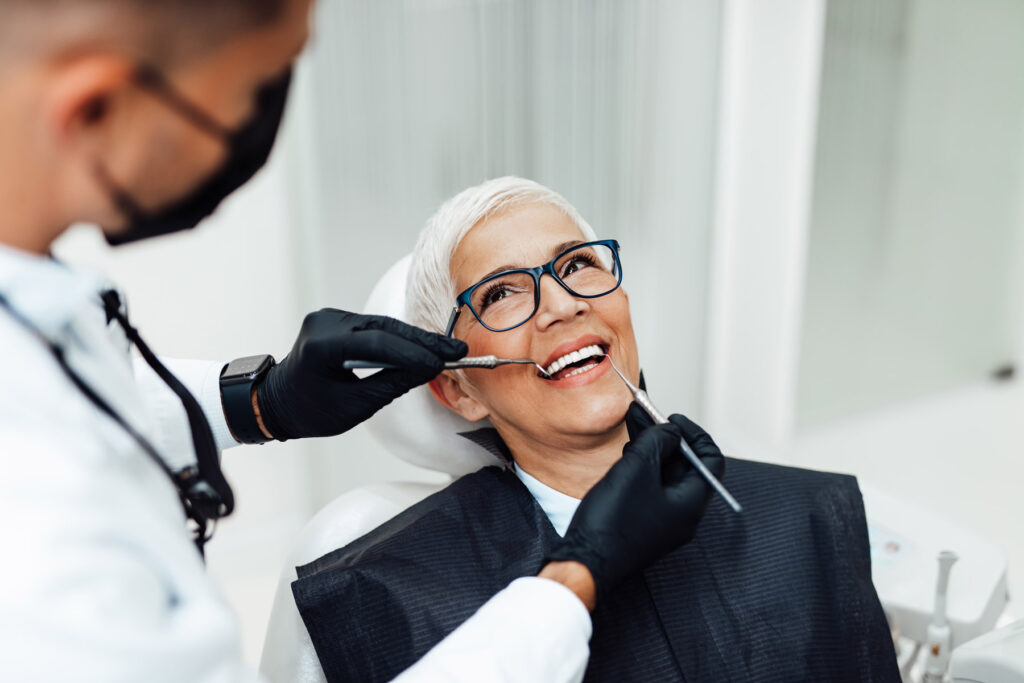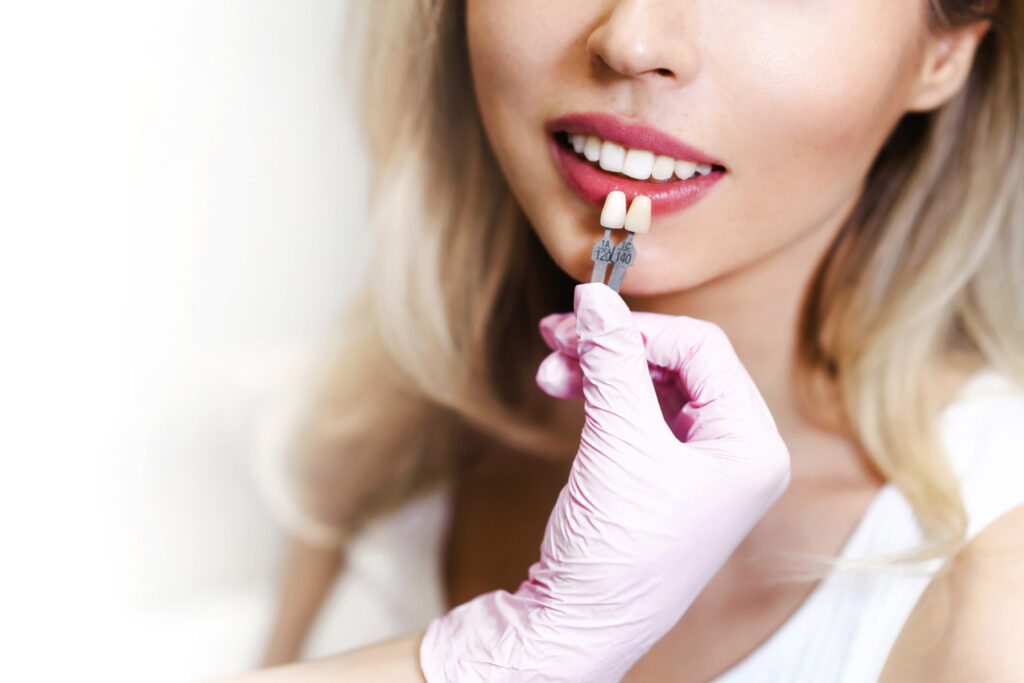




A ceramic teeth cap is a fully metal-free dental crown, crafted from porcelain, lithium disilicate, or zirconia, that fits over a damaged tooth to rebuild its strength and give it a natural, tooth-colored finish. A metal crown serves the same purpose but is made of gold or other alloys, or it hides a metal shell beneath a layer of porcelain. For most of the last century, metal was the safe default. That has changed. Patients now request a ceramic teeth cap by name, and modern research gives them good reason to.
What is driving the change? Three themes come up again and again in our Mission Viejo office: patients want crowns that look like real teeth, they want restorations that last, and many prefer to keep metal out of their mouths altogether. This article compares both options honestly, including the situations where metal still has merit, so you can walk into your next appointment ready to make an informed choice.
Quick answer: For most teeth, a modern ceramic teeth cap matches the durability of a metal-based crown while looking far more natural and avoiding metal entirely. Monolithic zirconia handles molars, while lithium disilicate and porcelain excel on front teeth. A metal crown may still be considered in uncommon cases of very limited space or extreme grinding.
Ceramic Teeth Cap Explained
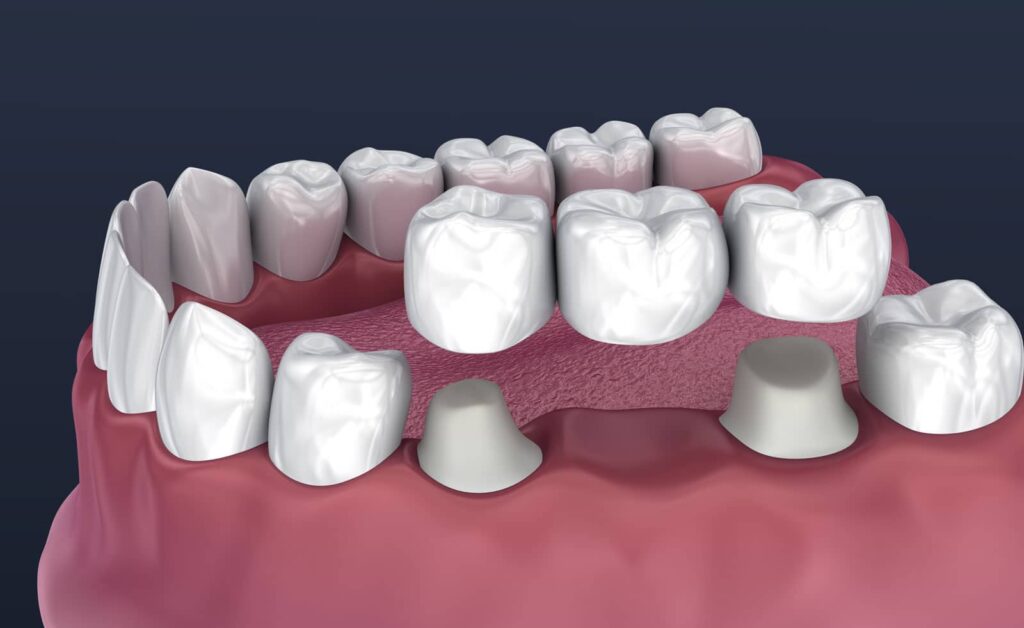
Dental “caps” and dental “crowns” are the same restoration. The MedlinePlus medical encyclopedia from the National Library of Medicine describes a crown as a tooth-shaped cap that replaces the part of a tooth above the gumline, used to support a weak tooth or improve its appearance. Dentists typically recommend one when a cavity is too large for a filling, when a tooth is cracked, chipped, or worn down from grinding, or when a tooth is badly discolored or misshapen.
What Makes a Crown “Ceramic”
A crown counts as ceramic only when it is ceramic throughout. Some crowns look white on the surface yet conceal a metal framework inside. A true ceramic teeth cap, also called an all-ceramic crown, has no metal anywhere in its structure.
Ceramic Crown Materials Compared
Not every ceramic behaves the same way. The main options are:
- Feldspathic porcelain: Exceptional translucency and color depth, best reserved for front teeth that do not take heavy biting forces.
- Lithium disilicate (often known as e.max): A strong, highly aesthetic glass ceramic that bonds well to natural tooth structure, making it a favorite for front teeth and premolars.
- Monolithic zirconia: A solid block of zirconium dioxide with no porcelain overlay, offering the highest strength of any ceramic teeth cap and excellent chip resistance on molars.
- Layered zirconia: A zirconia base with porcelain added on top for extra realism. It is beautiful, but the porcelain layer can chip under heavy load.
Our zirconia crown and porcelain dental crown pages describe each option in greater detail.
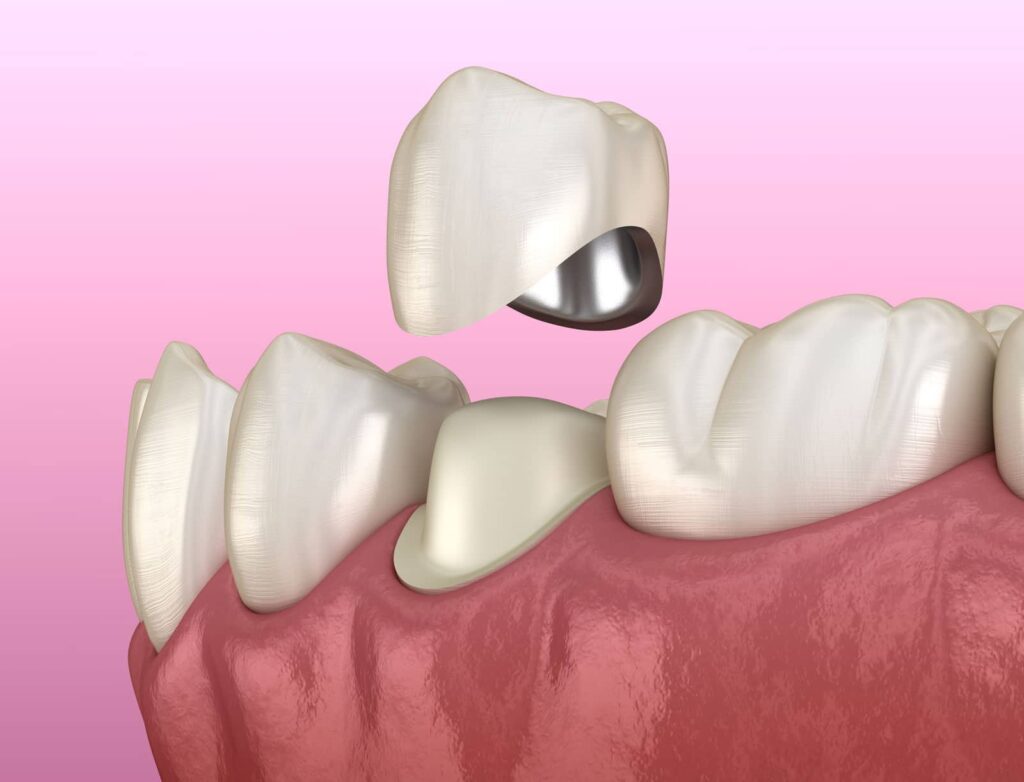
Metal Crowns: Full Metal and Porcelain-Fused-to-Metal
The term “metal crown” covers two very different restorations, and only one of them looks metallic.
Full Metal Crowns
Full metal crowns are made entirely from alloy. High-noble versions are rich in gold, palladium, or platinum, while base-metal versions rely on nickel, chromium, or cobalt. MedlinePlus describes metal crowns as strong under chewing and grinding, rarely prone to chipping, and the longest-lasting crown type, while noting that they do not look natural in color.
Why PFM Crowns Are Not Truly Metal-Free
Porcelain-fused-to-metal (PFM) crowns bond a porcelain exterior to a metal understructure. They were the go-to “tooth-colored” crown for decades, but the porcelain has to mask a dark core, so PFM crowns often appear more opaque than natural enamel. As gums recede or the crown edge wears, a gray margin may show at the gumline. MedlinePlus adds that the porcelain on a PFM crown is more prone to fracture than an all-porcelain crown.
Many patients discover during their exam at Aria Dental Care that crowns they assumed were ceramic actually contain metal.
Side-by-Side: Ceramic Teeth Cap vs Metal Crown
| Feature | Ceramic Teeth Cap (All-Ceramic) | Full Metal Crown | Porcelain-Fused-to-Metal (PFM) |
| Look | Natural, translucent, tooth-colored | Gold or silver-gray | White but opaque; gray gumline possible |
| Metal inside | None | 100 percent alloy | Metal core beneath porcelain |
| Strength | High (zirconia) to moderate-high (lithium disilicate) | Very high | Strong core; porcelain may chip |
| Chipping | Low with monolithic designs | Very rare | Moderate |
| Metal sensitivity | Not a concern | Possible with some alloys | Possible with some alloys |
| Hot and cold transfer | Low | High | Moderate |
| Typical location | Front and back teeth | Back molars | Front and back teeth |

Why More Patients Are Choosing Metal-Free Crowns
The growth of metal-free dentistry reflects genuine progress in dental materials, together with a broader shift in how patients think about what goes into their bodies.
A Lifelike Look From Every Angle
Natural enamel is semi-translucent. Light enters it, scatters, and reflects back, which gives healthy teeth their depth. Metal stops that light cold. Even beneath porcelain, a metal core can make a crown appear flat and can cast a faint shadow onto the gum. A ceramic teeth cap allows light to travel through it much as it does through enamel, so the crown blends in with neighboring teeth rather than standing out. For front teeth, or for anyone who shows a lot of tooth when smiling, this is often the deciding factor.
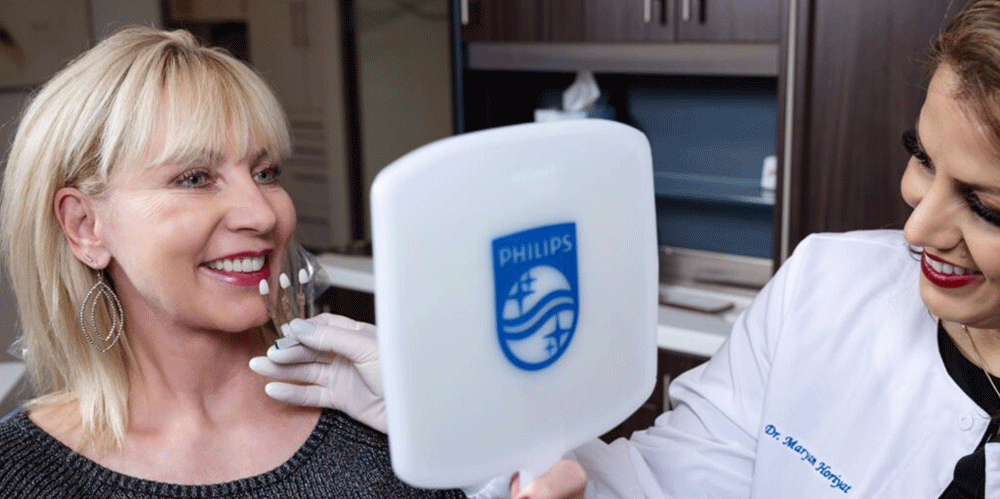
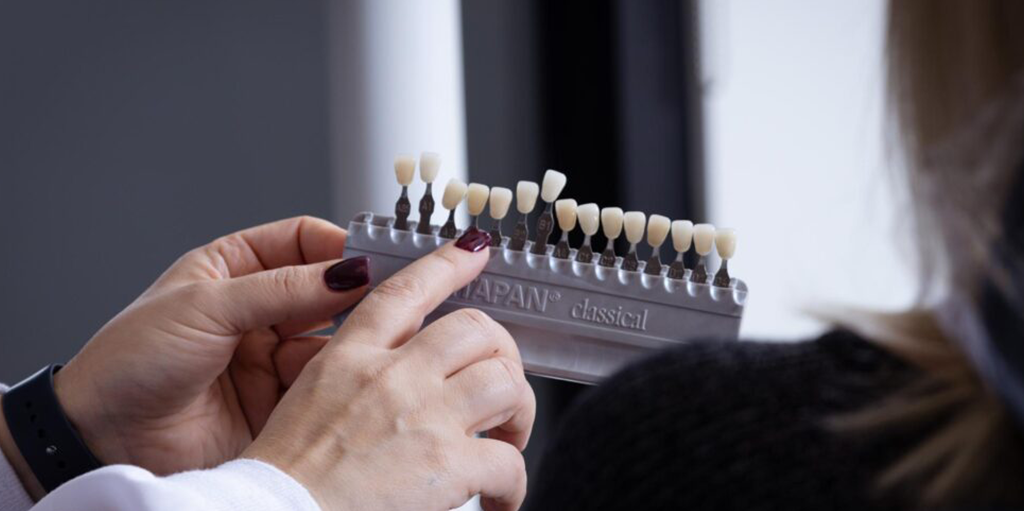
Our team confirms each shade with digital color-matching technology instead of relying on the eye alone. Patients planning a larger smile makeover can see how crowns work alongside whitening and veneers on our cosmetic dentistry page.
Better Biocompatibility for Sensitive Patients
Metal allergy is more widespread than most people realize. A review indexed by the National Library of Medicine estimated that up to 17 percent of women and 3 percent of men are allergic to nickel, with smaller percentages sensitive to cobalt and chromium, and it names dental restorations among everyday sources of metal exposure. Several base-metal alloys used in full metal crowns and in PFM cores contain these elements.
A positive skin patch test does not always mean a person will react to a crown, and confirmed reactions to dental alloys are considered uncommon. Still, MedlinePlus notes that ceramic or porcelain crowns may be a good choice for people with a metal allergy. For anyone who already reacts to costume jewelry, watch backs, or belt buckles, choosing a ceramic teeth cap removes that uncertainty.
Proven Durability in Clinical Research
The old belief that ceramic crowns are fragile dates back to earlier porcelain systems. Current evidence paints a very different picture. A recent systematic review and meta-analysis indexed in PubMed combined 64 studies covering 3,509 metal-ceramic crowns and 8,051 all-ceramic crowns, and found that lithium disilicate and zirconia single crowns achieve five-year survival rates comparable to metal-ceramic crowns. The review also reported that monolithic designs reduce fracture and chipping. Five-year survival reached about 98.5 percent for monolithic lithium disilicate and about 96.8 percent for monolithic zirconia, compared with roughly 97.1 percent for metal-ceramic crowns.
In practical terms, the right ceramic teeth cap on the right tooth performs on par with a crown built over metal.
Avoiding Mixed Metals and Oral Galvanism
When two different metals share a moist environment like the mouth, such as an amalgam filling next to a gold or base-metal crown, saliva can conduct a tiny electrical current between them. Some people notice this as a metallic taste or a brief jolt when a fork touches a restoration, an effect called oral galvanism. Its broader health significance remains debated. As a matter of practice philosophy, though, Dr. Horiyat prefers to avoid mixing metals, and because zirconia and other dental ceramics do not conduct electricity, a ceramic teeth cap sidesteps the question.
Alignment With Mercury-Free Dentistry
People who have chosen to remove their silver amalgam fillings usually want every other restoration to follow the same principles. Swapping old fillings for metal-free fillings and inlays, then placing a brand-new metal crown beside them, would work against that goal. At Aria Dental Care, amalgam is removed using the IAOMT-based Safe Mercury Amalgam Removal Technique (SMART), and crowns are planned as part of a whole-mouth, metal-free approach. Our guide to biocompatible fillings and metal-free restorations explores these material choices further.
This is a philosophy of care rather than a claim that all metal restorations are harmful. The aim is to give patients a real choice and a clear explanation of the trade-offs, which is central to our holistic and biological dentistry philosophy.
Less Sensitivity to Hot and Cold
Metal transfers heat and cold rapidly, while ceramics act as insulators. Some patients notice that a metal crown passes along the chill of ice water or the heat of soup more sharply than their natural teeth. A ceramic teeth cap responds to temperature more like enamel, which can make meals more comfortable, particularly during the first few weeks after placement.
Are There Cases Where Metal Still Makes Sense?
A trustworthy comparison has to include the other side. Gold crowns have a long clinical history, and MedlinePlus notes that ceramic and porcelain crowns can wear down opposing teeth more than metal crowns do. Metal may still be discussed in a few circumstances:
- Limited room between teeth: When the upper and lower teeth meet very closely, a thin metal crown can sometimes require less reduction of the natural tooth.
- Extreme grinding without a night guard: Severe bruxism puts enormous force on any restoration.
- Patient preference: Some people are comfortable with metal on a far-back molar that no one will see.
Monolithic zirconia has closed most of these gaps. It remains strong in relatively thin sections, and a well-polished zirconia surface is generally considered gentler on opposing teeth than rough or older porcelain surfaces. Patients who clench or grind can protect both their new crown and their natural teeth with a custom night guard for bruxism.
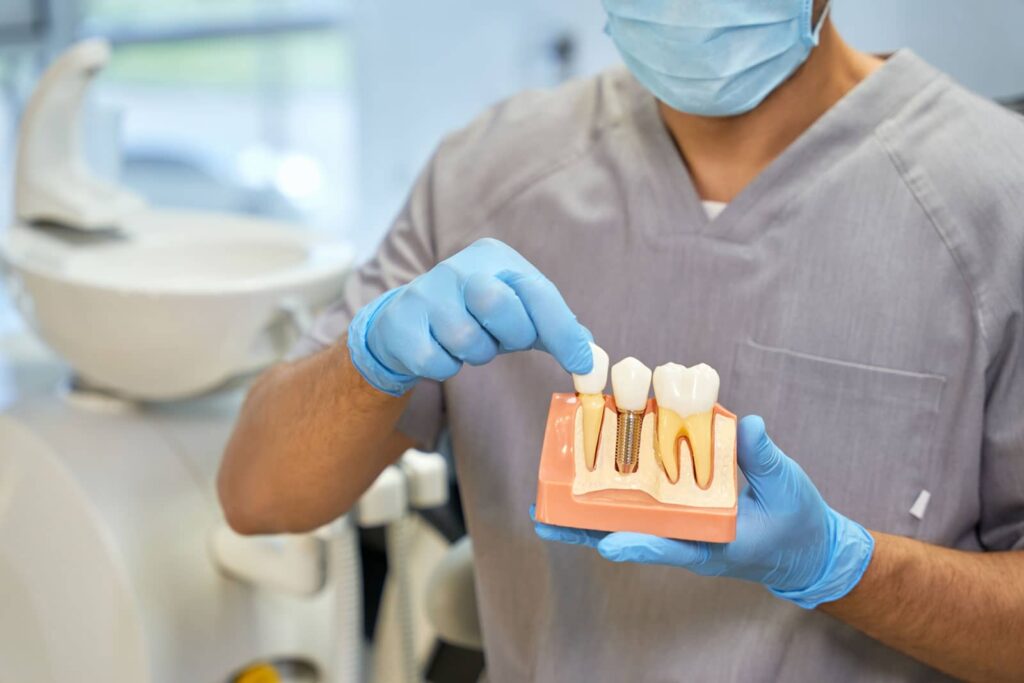
Choosing the Best Ceramic Teeth Cap for Each Tooth
There is no one-size-fits-all ceramic teeth cap. Tooth position, bite force, and appearance goals each influence the final choice.
Front Teeth: Translucency and Shade Matching
Front teeth are the most visible and the least stressed. Lithium disilicate and finely layered porcelain reproduce the subtle translucency and color gradients of natural enamel, so they are ideal when a crown has to blend with untreated teeth beside it.
Premolars: Balancing Beauty and Strength
Premolars are visible in many smiles yet still take meaningful chewing force. Lithium disilicate or a high-translucency zirconia often strikes the right balance here, depending on the patient’s bite and how much of the tooth shows.
Molars and Heavy Biters: Monolithic Zirconia
Back molars do the heavy grinding work. Monolithic zirconia resists fracture and has no outer porcelain that could chip, making it the preferred ceramic teeth cap for this area. Modern zirconia also looks considerably more natural than the chalky, opaque material of earlier years.
When an Onlay Can Replace a Full Crown
A conservative, tooth-preserving approach always asks first whether a full crown is truly necessary. If enough healthy tooth remains, a ceramic onlay or inlay may restore it while keeping more natural enamel intact. Dr. Horiyat assesses each tooth individually before recommending full coverage.
Getting a Ceramic Teeth Cap at Aria Dental Care: Step by Step
MedlinePlus notes that most crowns are completed over two visits. Here is what that looks like at our Mission Viejo practice.
Step 1: Evaluation and 3D Imaging
Treatment starts with a detailed exam. Our team uses low-radiation digital X-rays and, when appropriate, a 3D cone beam CT scan to assess the tooth, root, and surrounding bone. This visit is also the time to discuss metal sensitivities, existing restorations, and the look you want to achieve.
Step 2: Comfortable, Conservative Preparation
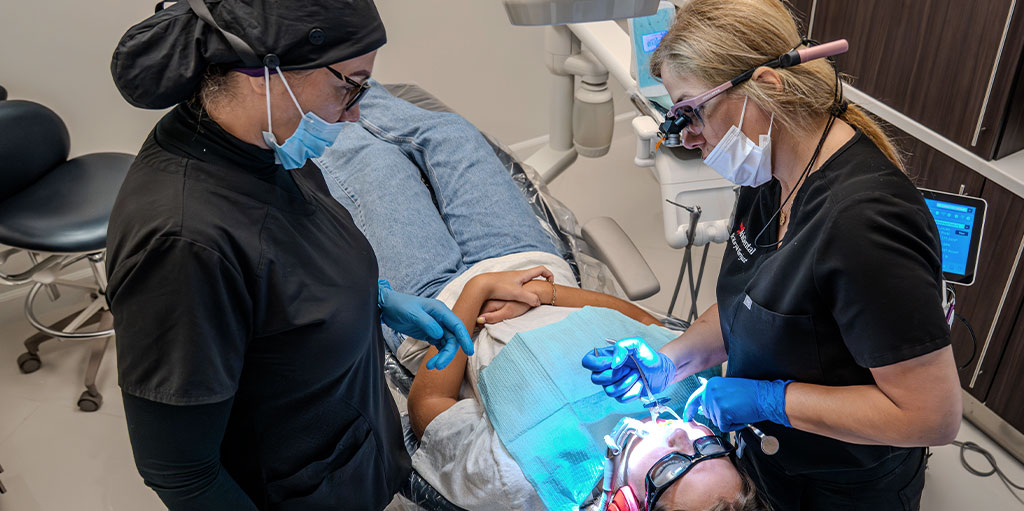
The tooth is gently reshaped to make space for the crown, and decay or failing old restorations are removed. All-ceramic crowns often permit a more conservative preparation than PFM crowns, which need room for both metal and porcelain. A computer-assisted anesthetic system helps make numbing more comfortable, and ozone therapy may be included as part of our biological protocol.
Step 3: Digital Impressions and a Temporary Crown
Rather than goopy impression trays, an iTero intraoral scanner records a precise 3D image of the prepared tooth. The shade is confirmed digitally, and a temporary crown protects the tooth while the permanent restoration is made. Learn more about these tools on our dental technology page.
Step 4: Bonding and Bite Refinement
At the second appointment, the crown is evaluated for fit, color, and comfort, then bonded with biocompatible, BPA-free materials. A crown that strikes too hard can lead to soreness or jaw tension, so Dr. Horiyat uses T-Scan digital bite analysis to measure the force and timing of every contact and fine-tune the bite. This process is explained on our occlusal bite correction page. If a crown feels slightly high later on, minor adjustments are often possible, as discussed in our article on whether a porcelain crown can be reshaped.
Switching From a Metal Crown to a Ceramic Teeth Cap
Replacing an older metal or PFM crown with a ceramic teeth cap is one of the most frequent requests at Aria Dental Care. Common motivations include a dark line at the gumline, chipped porcelain, ongoing sensitivity, or simply the decision to become metal-free. Before designing the new crown, Dr. Horiyat examines the tooth beneath the old one, because older crowns sometimes rest on amalgam core build-ups that should be removed under SMART protocol.
Patients restoring several teeth can coordinate their crowns within a comprehensive full-mouth reconstruction plan, and missing teeth can be replaced with metal-free zirconia dental implants for a smile that is metal-free from root to crown.
Caring for Your Ceramic Crown
According to MedlinePlus, most crowns last at least five years and can last 15 to 20 years. A carefully chosen ceramic teeth cap on a healthy tooth can reach the upper end of that range. Key factors include:
- The health of the gums and tooth structure under the crown
- Choosing a material suited to the bite forces in that location
- Grinding or clenching habits
- Consistent home care and professional visits
Good habits go a long way. Brush twice daily, clean between teeth every day, skip chewing ice and hard candy, and wear a night guard if you grind. Because the tooth under any crown can still develop decay along the margin, regular dental cleanings and preventive exams are essential.
How Much Does a Ceramic Teeth Cap Cost?
The price of a ceramic teeth cap depends on the individual case. Factors that influence cost include:
- The ceramic chosen, such as monolithic zirconia, lithium disilicate, or layered porcelain
- Any core build-up or preparatory treatment
- Removal of an existing crown or amalgam filling
- Advanced imaging used for planning
- Dental insurance coverage
Our team shares a clear estimate before treatment begins, and patients can review flexible payment and financing options in advance.
Meet Dr. Maryam Horiyat, Holistic and Cosmetic Dentist
Choosing a material is only part of the decision. The expertise and philosophy of the dentist placing the crown matter just as much.
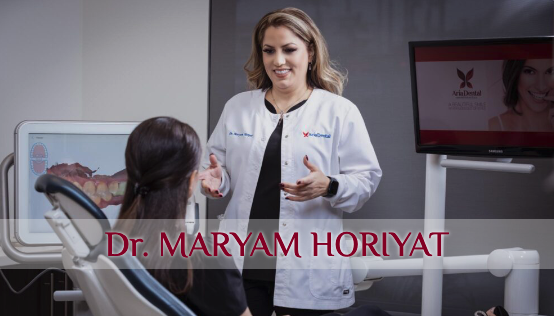
Dr. Maryam Horiyat, DDS, AIAOMT, CIABDM, trained at UCLA and UCSF and leads Aria Dental Care as a biological, holistic, and cosmetic dentist. She is an accredited member of the International Academy of Oral Medicine and Toxicology (IAOMT) and is certified by the International Academy of Biological Dentistry and Medicine (IABDM). She is also a member of the Holistic Dental Association, the American Academy of Cosmetic Dentistry, and the International Academy of Ceramic Implantology.
Her work combines artistry with conservative principles: preserve as much natural tooth as possible, use materials that work with the body, and design every restoration to function in harmony with the bite and jaw. Aria Dental Care serves patients from Mission Viejo, Laguna Niguel, Rancho Santa Margarita, San Clemente, Ladera Ranch, Irvine, Newport Beach, and throughout Orange County. Read more about her background on the Meet Dr. Maryam Horiyat page.
Schedule Your Ceramic Crown Consultation in Mission Viejo
Comparing a ceramic teeth cap with a metal crown, or ready to trade an old metal crown for a more natural one? Dr. Horiyat and the Aria Dental Care team will review every option during a personalized consultation focused on both your smile and your overall health.
Call or text (949) 364-9600, visit us at 27652 Crown Valley Pkwy, Mission Viejo, CA 92691, or book your appointment online.